Applications
Engineers bio-print structures from sugar
It appears that bioprinting is gaining more ground as engineers at the University of Illinois have reportedly developed a new sugar-based biomaterial that could have a significant impact on medical engineering and cancer research. The team of engineers has opted…
- 3 min read
- Applications
- Six more stories
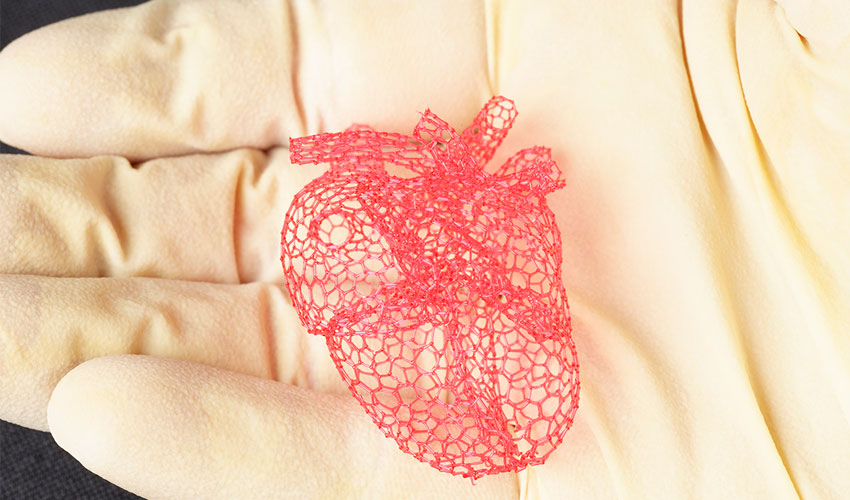
It appears that bioprinting is gaining more ground as engineers at the University of Illinois have reportedly developed a new sugar-based biomaterial that could have a significant impact on medical engineering and cancer research. The team of engineers has opted out of using a bio-ink or hydrogel, instead choosing to create a soluble and biodegradable material along with a new printing method that allows them to create intricately designed structures.
Bioprinting could be the future of customized medicine, thanks to the different methods that have allowed researchers to create tissues, cells, and more; all of which are fully adapted to the patient. There are different types of biomaterials today that take on many forms; The American engineers started with an isomalt-based material, an ingredient found in the sugar used in cough drops. It is water soluble and biodegradable, a key benefit in creating tissue supports for cell culture.
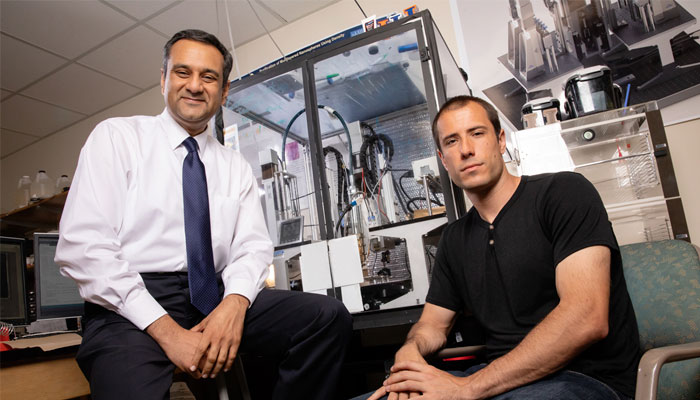
Professor Rohit Bhargava (left) and Matthew Gelber who developed the 3D printer (Photo credits: L. Brian Stauffer)
The team explains that they have also designed a very precise, free-form 3D printer to print complex structures. It works a little differently than a traditional 3D printer: instead of depositing the material layer-by-layer, the 3D printer prints isomalt ribbons and tubes that harden on contact with the air, much like a high-performance 3D pen. “This is a great way to create shapes around which we can pattern soft materials or grow cells and tissue, then the scaffold dissolves away,” says Rohit Bhargava, professor of bioengineering and director of the Cancer Center in Illinois. “For example, one possible application is to grow tissue or study tumors in the lab. Cell cultures are usually done on flat dishes. That gives us some characteristics of the cells, but it’s not a very dynamic way to look at how a system actually functions in the body. In the body, there are well-defined shapes, and shape and function are very closely related.”
More from the desk
Six other notes from the rest of the bench.
 NewsTop 5 Videos of the Week: 3D Printed Embryos!This week’s Top 5 Videos is an interesting one, with videos relating to 3D printing your baby whilst still in the womb, the first 3D printed consumer car, 3D printed sushi, and much more! Remember, a new Top 5 Videos…
 Materials3D printed soft robots can fold like origamiSoft robotics is one of the subfields of robotics dealing with constructing robots from highly compliant materials, similar to those found in living organisms. This field looks at the way in which living organisms move and adapt to their surroundings…
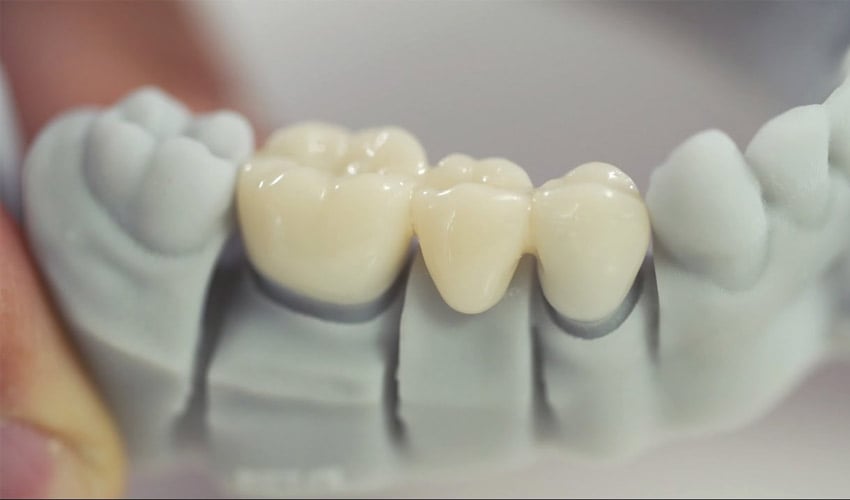 ApplicationsAre the resins used in dental 3D printing dangerous for reproductive health?At Northwestern University, a team of researchers developing the first female reproductive tract on a chip (EVATAR) in order to enable sex-based ex vivo (outside of the organism) research discovered something worrying about their “biocompatible” materials. While using
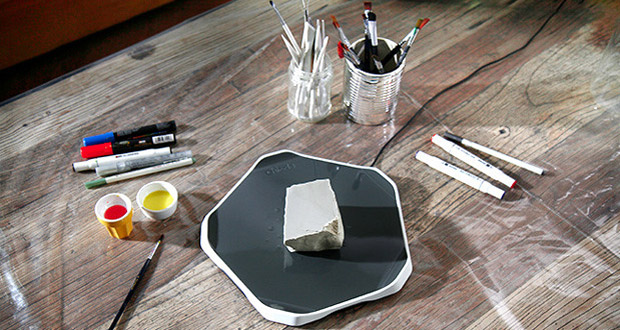 PrintersChizzle, the new 3D scanning tool with a modeling surfaceChizzle is a new tool that makes it easier than ever to create objects from clay, thanks to a connected modeling surface and a 3D scanner. The startup has recently started its crowdfunding campaign, hoping to give a solution to…
 GuidesOur Guide to Intellectual Property in 3D PrintingIntellectual Property is a controversial and sometimes confusing issue. The moniker covers such a broad spectrum, that it requires years of experience to master. This is bad for designers who want to create 3D-printed models and share them for both…
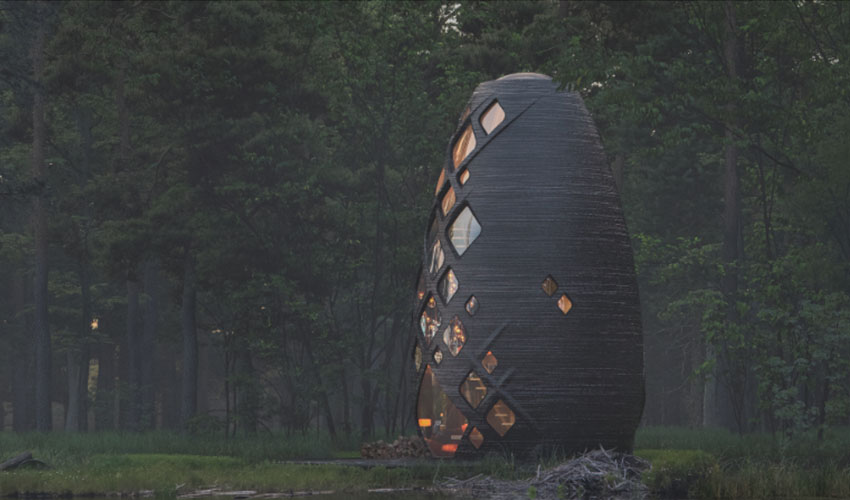 NewsTERA, the futuristic and sustainable home developed by AI SpaceFactoryToday, we come back on the TERA project, revealed back in May by AI SpaceFactory. If you didn’t know, TERA is a futuristic eco-habitat, showcasing a sustainable way of building on Earth. It was created with space driven technology developed…