Materials
ExOne and ORNL team up to 3D print ceramic-metallic pieces
Using a powder bonding machine from ExOne, a team of researchers at the Oak Ridge National Laboratory (ORNL), the largest US Department of Energy science and energy laboratory, has developed a method for designing ceramic-metallic parts. The patent-pending process would…
- 3 min read
- Materials
- Six more stories
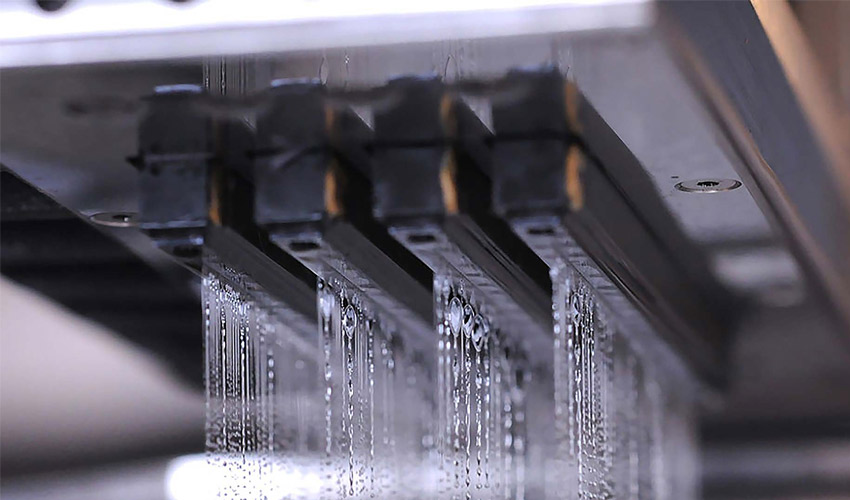
Using a powder bonding machine from ExOne, a team of researchers at the Oak Ridge National Laboratory (ORNL), the largest US Department of Energy science and energy laboratory, has developed a method for designing ceramic-metallic parts. The patent-pending process would allow boron carbide to be absorbed into aluminum alloys – boron carbide being one of the hardest materials on the market after diamond and cubic boron nitride.
In 2019, the manufacturer ExOne obtained an R&D license to develop this manufacturing process. Two years later, this license is being extended to commercial use, which could offer new prospects to certain additive manufacturing users. The company is a specialist in the powder bonding process, whether with metal powder, sand or ceramics. In fact, it has been one of the leaders in this process for several years now. ExOne is continuing its developments and this time has taken an interest in the ORNL with a method that would allow materials to be infiltrated into a part during its treatment.
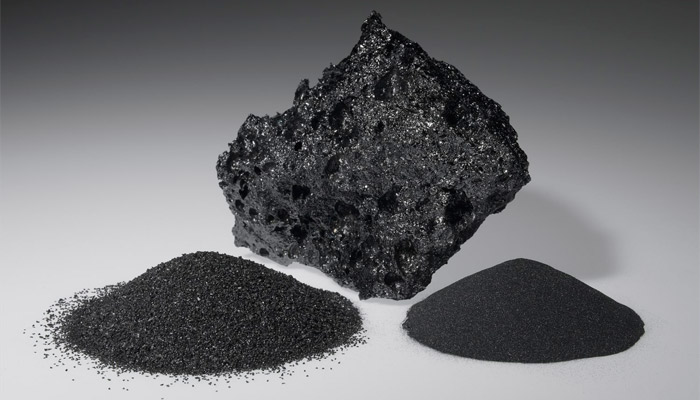
Carbide is one of the hardest materials on the market
David C. Anderson led the ORNL research team in this innovative project. He explains that they succeeded in developing a process to design parts made of boron carbide (B4C), a ceramic known for its ability to absorb neutrons and its strong and lightweight properties. These parts were then infiltrated with aluminum. The final boron carbide then becomes a kind of cermet, i.e. a composite material composed of a metal matrix (here aluminum) and a ceramic reinforcement.
More from the desk
Six other notes from the rest of the bench.
 ApplicationsNASA’s 3D Printed Circuits Reach New Heights in Space ExplorationIn recent years, the field of additive manufacturing, also known as 3D printing, has been rapidly gaining popularity across various industries. Its ability to offer customization, innovative design, and improved performance has led to its widespread adoption in diverse fields. Am
 MaterialsResearchers mimic wood’s ultrastructure with 3D printingAt Chalmers University of Technology in Sweden, a team of researchers announced they succeeded in 3D printing parts using a wood-based ink, perfectly imitating the ultrastructure of the natural material. This is good news for the industry, which wants to…
 News#3DExpress: Aectual Announces its Own 3D Printed WoodIt’s time to take a look back at some of the news that has marked the additive manufacturing sector this week! We start this 3DExpress with a new development from Aectual: the company is now offering 3D-printed objects made from…
 NewsWhat Are the Major Post-Processing Challenges in 2021?Post-processing solutions manufacturer PostProcess Technologies has released the third edition of its Annual Additive Post-Printing Survey: Trends Report 2021. This year’s report confirms what was already announced last year, namely the desire to shorten this time-consuming
 Applications3DPRINTUK 3D Prints Car Parts For Team Bath Racing3D printing is now indispensable to the automotive industry. Most major companies, such as Nissan and Audi, have already turned to the technology to streamline their production, thanks in part to the time savings and cost reductions that additive manufacturing…
 NewsWhat are the best 3D startups of 2019?Throughout the year the 3Dnatives team has followed some of the most disruptive companies in the field of 3D printing. In our #3DStartup series, once a month, we interview startups that have come out of the mold thanks to their…