Materials
Researchers mimic wood’s ultrastructure with 3D printing
At Chalmers University of Technology in Sweden, a team of researchers announced they succeeded in 3D printing parts using a wood-based ink, perfectly imitating the ultrastructure of the natural material. This is good news for the industry, which wants to…
- 3 min read
- Materials
- Six more stories

At Chalmers University of Technology in Sweden, a team of researchers announced they succeeded in 3D printing parts using a wood-based ink, perfectly imitating the ultrastructure of the natural material. This is good news for the industry, which wants to be more environmentally friendly and is therefore developing a lot of hybrid additive manufacturing materials. This development could make it possible to produce greener products, directly derived from trees.
This is not the first time that we have presented a project that combines 3D printing and plant materials, let alone wood. Canadian scientists had 3D printed electronic circuits from nanocellulose, a material directly extracted from wood pulp. It’s true that this material is interesting in terms of porosity, strength and torsional resistance. The problem often lies in its transformation because, unlike plastic, it cannot be easily melted down. It is therefore generally necessary to saw or plane it, which generally leads to the destruction of its ultrastructure, thus losing its unique properties. However, thanks to additive manufacturing, Swedish researchers seem to have found a solution to preserve its interesting properties.
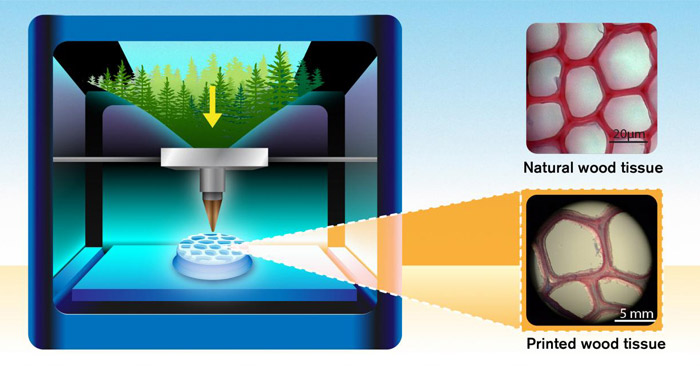
Researchers imitate the natural cellular architecture of wood | Photo Credits: Yen Strandqvist/Chalmers University of Technology
Imitating the ultrastructure of wood to preserve its properties
The team reportedly converted wood pulp into a gel containing nanocellulose to which it added hemicellulose that acts as a sticking agent. This gel served as the basis for them to design a 3D printable ink. It is not so much the development of the material itself that is interesting, but rather the interpretation and digitization of the genetic code of the wood: researchers can thus guide the 3D printer to manage the orientation and shape of cellulose nanofibres, understand the properties of the wood and reproduce its ultrastructure very precisely. This allows them to reproduce parts with the same characteristics as the plant material.
More from the desk
Six other notes from the rest of the bench.
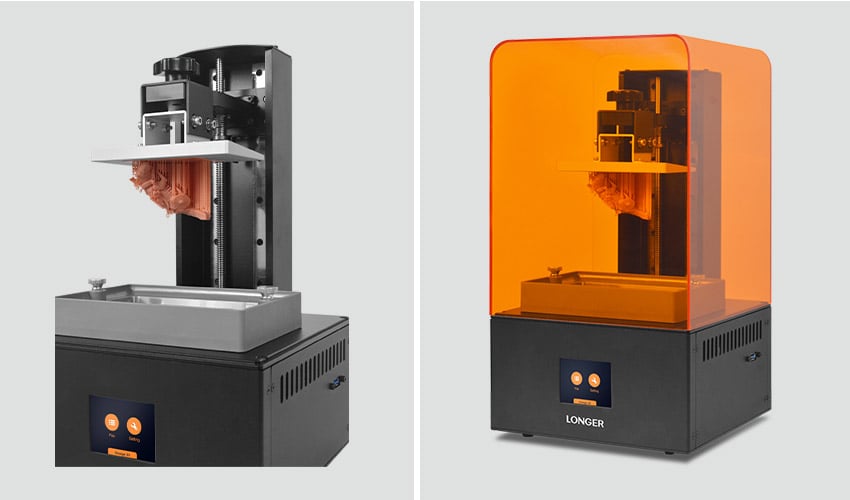 NewsLONGER launches Orange 4K, an ultra-precise LCD 3D printerOriginally from Shenzhen, China, Longer launched its 3D printing business back in 2014. The company manufactures three distinct types of machines: desktop FDM 3D printers (known to manufacturers under the Alfawise brand), low-cost resin 3D printers and a range of…
 NewsMASK Architects Designs Self-Sustainable 3D Printed Steel StructuresMASK Architects has revealed a new concept of 3D printed steel modular structures, named “The Madre Natura”, which will be placed near the Nivola Museum, in Sardinia. In order to erect these small modular houses, the studio should rely on…
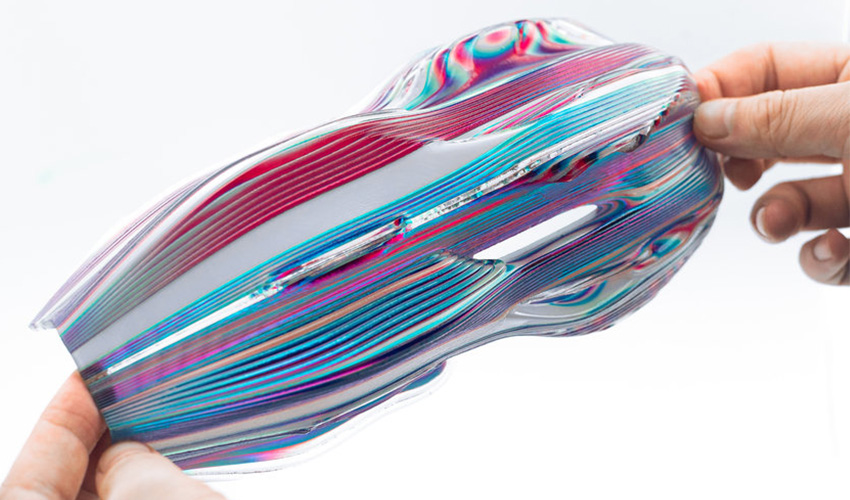 MaterialsCreating illusory materials with multi-material 3D printingInnovation is second nature to the additive manufacturing sector, and one recent project that illustrates exactly this is Illusory Material. Conceived by industrial designer Jiani Zeng and computational designer Honghao Deng during their time at MIT, the aim of this…
 NewsSIEMENS announces plans for a new online platform to bring additive manufacturing to a global scale3D printing is quickly becoming the go to technology for many companies and manufacturers around that world. That’s why it’s no surprise to hear that the Germany based company, Siemens has made an announcement at Hannover Messe 2017 of their plans…
 NewsSiemens manufactures the first 3D printed part for a nuclear power plant For the first time ever, the German specialists in high technology, Siemens, has manufactured a 3D printed part for a nuclear power plant. A major challenge and accomplishment when taking into account the stringent safety and security requirements that…
 NewsThe right bra for every woman thanks to 3D technology3D printing technologies can also have an impact on lingerie: Dutch designer Lidewij Vera Arí van Twillert used Artec 3D scanning solutions and 3D printing to design made-to-measure bras, fully adapted to each woman’s morphology. She started from the observation…