Applications
Dental 3D Printing: how are 3D technologies revolutionising this sector?
Additive manufacturing has reached a significant number of sectors and industries, subsequently offering important advantages in terms of productivity, costs, customisation and lead times. In the field of dentistry the technology creates solutions adapted to the needs of each pat
- 3 min read
- Applications
- Six more stories
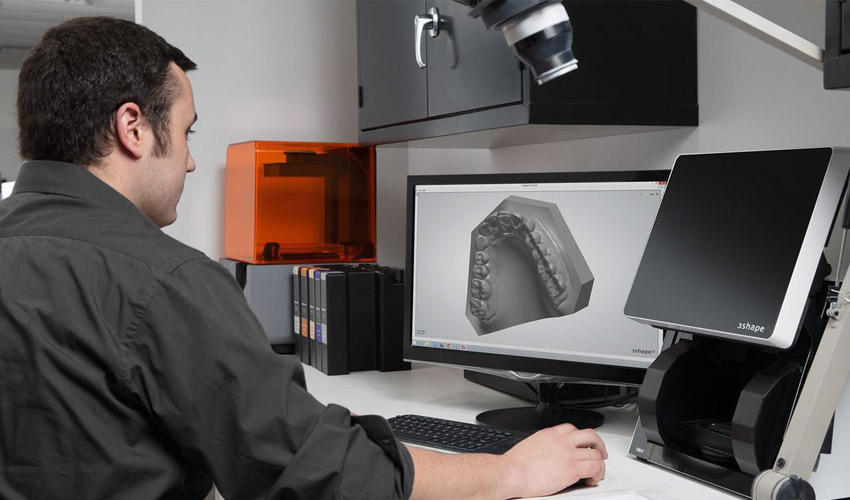
Additive manufacturing has reached a significant number of sectors and industries, subsequently offering important advantages in terms of productivity, costs, customisation and lead times. In the field of dentistry the technology creates solutions adapted to the needs of each patient. It is also a flourishing industry, not too long ago the consulting firm QY Research announced that dental 3D printing was expected to reach $930 million by the end of 2025. In other words, the market is expected to grow at an annual rate of 17%, which can be explained by the constant development of 3D technologies and their materials. Indeed, dental 3D printing includes different processes such as stereolithography or direct metal sintering and therefore a variety of materials: resins, plastics, metals, etc. The application of 3D printing in dental is wide, it is possible to make surgical guides, crowns, trays and dentures and each solution is adapted to each patient with high precision.
It is therefore important to determine which 3D technologies are preferred in this sector and best suited for each application. Also, how are dental professionals reacting to the rise of 3D printing? And how are they preparing and training themselves?
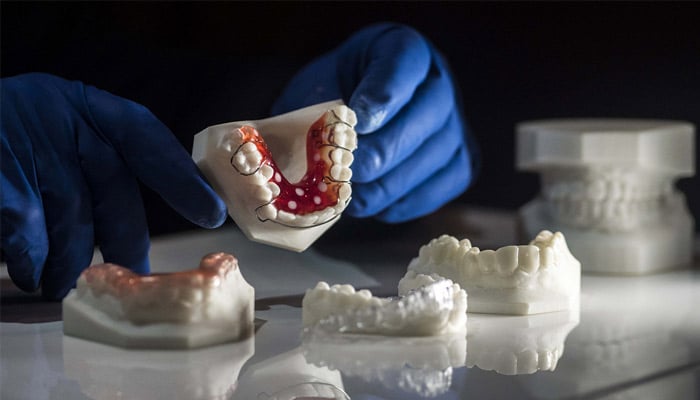
Firstly, the dental sector can be divided into two families of actors: dental practices and dental prosthesis laboratories. Traditionally, they have worked together in the production of custom medical devices (gutters, crowns, bridges, etc.). In fact, the dentist takes an impression of the patient’s teeth and sends to it to the laboratory, which then manufactures the device usually from plaster. This procedure will take a few days, not to mention the round trips between the dentist and the laboratory. As for the patient, he/she will have to make an appointment again without any guarantee that the device will be adapted to his/her needs. The arrival of 3D technologies is disrupting this procedure and completely dematerialising work processes.
More from the desk
Six other notes from the rest of the bench.
 NewsAether and Procter & Gamble partner up to develop cutting edge 3D printing and AI technologiesAether, the San Francisco-based startup offers AI-enhanced 3D bioprinting. As a matter of fact, it has just received a two-year joint agreement with Procter & Gamble (P&G), a multinational consumer goods giant. The two companies have announced they will work…
 GuidesNagami, exploring the design of the future with new technologiesNagami is a design studio based in Ávila, Spain that has become known worldwide in recent months for the presentation of Zaha Hadid Architects chairs at the Milan Design Fair or the Voxel Chair v1.0 in the Georges Pompidou Museum in…
 NewsA wedding in the sign of 3D printingHave you ever imagined a 3D printed wedding? That’s the idea of Erin Winick, this young bride who works for the MIT Technology Review. She turned to 3D technologies to significantly reduce the cost of her wedding and thus create the most accessories possible,…
 NewsStudent creates CUDA; a 3D printed jetpackThere is no better way to enjoy the summer than under water, this is what Archie O’Brien, a 21 year old student at the University of Loughborough in the United Kingdom, thought. He has developed a 3D printed jetpack with…
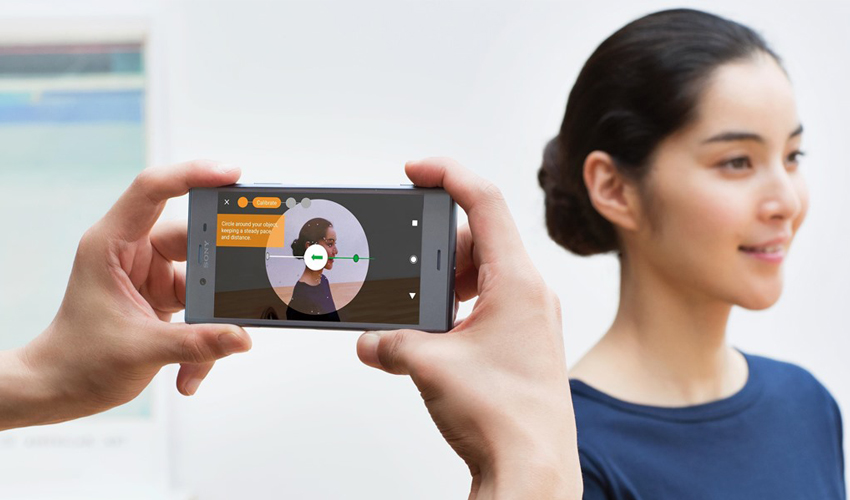 Printers3D scan directly into your Sony with the Xperia XZ1 and XZ1 CompactWhat if your phone could become your new 3D scanner? This is what the Japanese manufacturer Sony wants to offer with their new phones, the Xperia XZ1 and the XZ1 Compact. These two new phones will have the ability to…
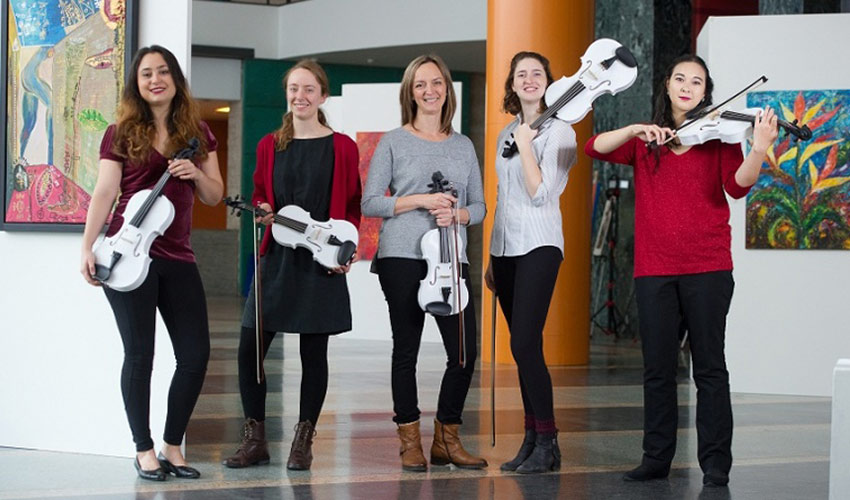 News3D printed instruments in the Ottawa Symphony OrchestraThis is news that should interest all musicians and music enthusiasts quit a lot. The Ottawa Symphony Orchestra now incorporates 3D printed string instruments. A project that aims to show how we can create new sounds and instruments thanks to new…