Materials
DefeXtiles: using under-extrusion to create a new type of textile
At MIT, researchers and engineers often imagine creative projects and develop innovative products related to the world of 3D technologies. Recently, Jack Forman, one of the graduate students, developed a new type of textile by exploiting one of the common…
- 3 min read
- Materials
- Six more stories
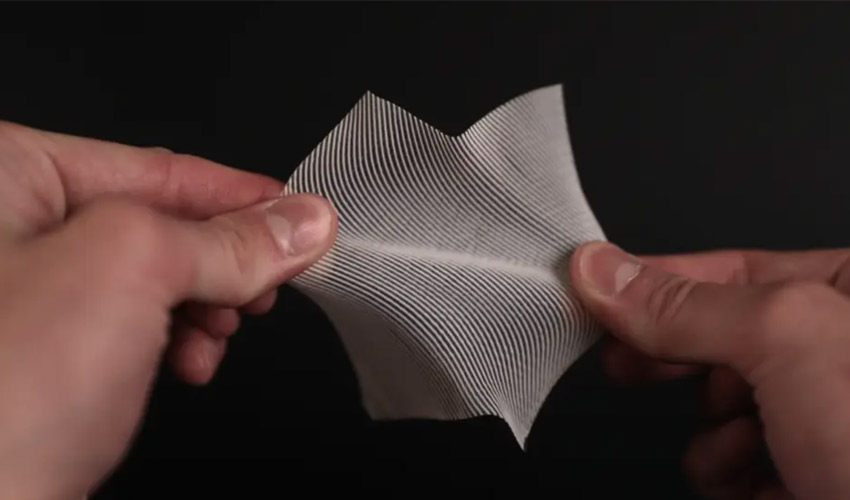
At MIT, researchers and engineers often imagine creative projects and develop innovative products related to the world of 3D technologies. Recently, Jack Forman, one of the graduate students, developed a new type of textile by exploiting one of the common mistakes in 3D printing, under-extrusion. By controlling this defect, he designed DefeXtiles, a kind of tulle-like textile that he can model into complex shapes and geometries. He has thus designed an interactive lampshade, skirts, pieces of lace, a badminton shuttlecock, etc.
Under-extrusion is a common phenomenon in FDM 3D printing that occurs when there is not enough extruded filament. Voids are created between the different layers because they cannot be bonded properly. In the case of this young maker, under-extrusion is not a problem – it can be controlled and finally transformed into force. All he needed was a $250 desktop FDM 3D printer and standard materials. Forman says, “Unlike previous work, the fact that no custom software or hardware is needed — just a relatively cheap $250 printer, the most common type of printer used — really makes this technique accessible to millions of people.”
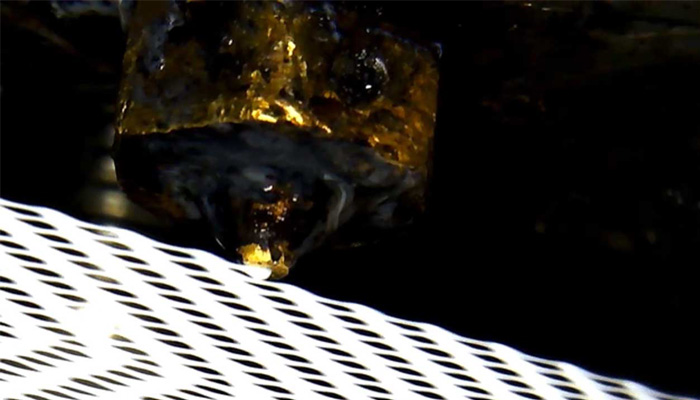
Image credits: MIT Media Lab
DefeXtiles, a material like no other
By mastering all its printing parameters, Forman developed an under-extrusion process called “glob-stretch”. How does it work? During the extrusion of the material, drops are formed in places, linked together by fine threads in contact with the layer below. He made all these drops align on a single column to create this tulle effect. Indeed, we can see very well this warp as if the piece had followed a weft, as if woven. Note that this piece is very flexible and stretchy. Jack adds, “Not only are these textiles thinner and faster to print than other approaches, but the complexity of demonstrated forms is also improved. With this approach we can print 3D dimensional shell forms with a normal 3D printer and no special slicer software“.
More from the desk
Six other notes from the rest of the bench.
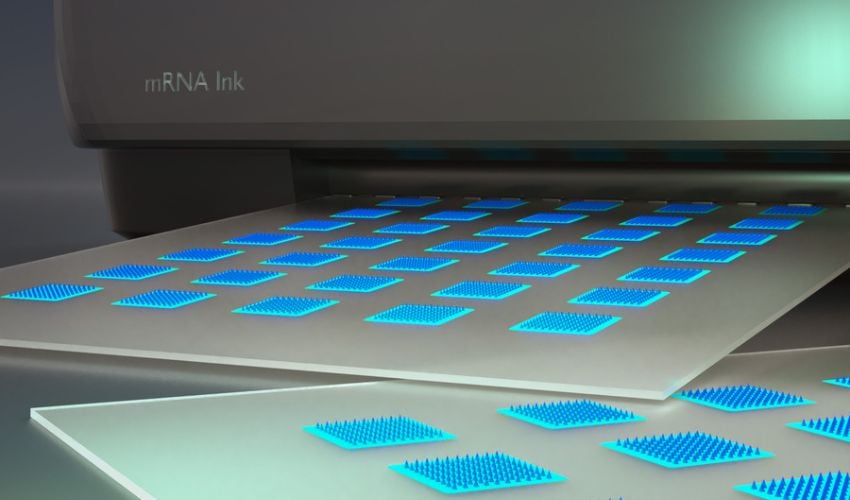 Applications3D Printed Thermostable Vaccine PatchesAre 3D printed vaccines the future? Researchers at MIT have developed a portable 3D printer capable of printing ready-to-use vaccine patches that are thermostable, meaning they can be stored for months at room temperature. Eventually, the machine will be able…
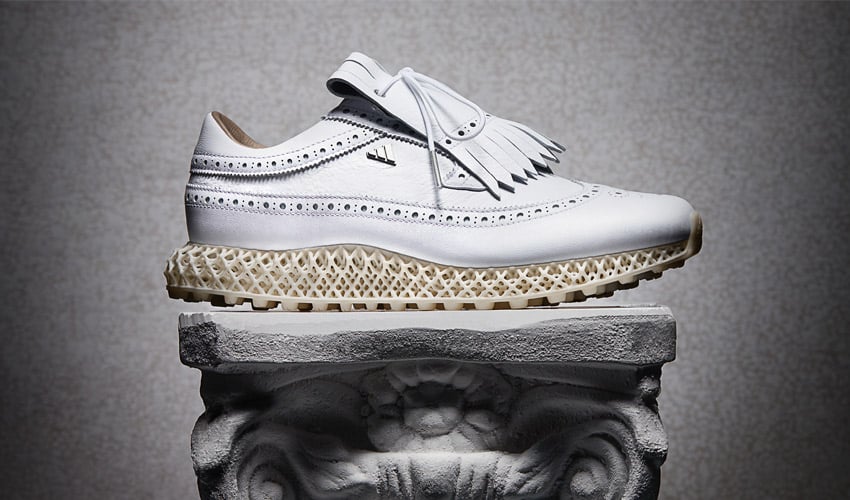 NewsAdidas and Its 3D Printed Golf ShoeAdidas has created a sensation on the green with the latest addition to its golf collection! The iconic three-striped brand has presented its first golf shoe equipped with a 3D-printed midsole. With this new pair, christened the Adidas MC87 4D,…
 NewsEndeer launches SHAPE, a sizeless bra designed with 3D technologiesFrench Startup “Endeer” recently launched their crowdfunding campaign for SHAPE, a few months after winning the second edition of Startup Pitches at AddFab in Paris. SHAPE is a 3D printed underwire bra that is tailored to each woman’s body. The co-founders,&hell
 GuidesWhy Should You Use Metal 3D Printing for Aerospace? Experts Give Their Advice!One of the first, and most fervent, adopters of additive manufacturing was undoubtedly the aerospace industry. The sector was drawn to the technologies as a way to help with lightweighting parts (optimizing their weight vis-a-vis their strength). Now, the use…
 Guides3D Printing Greenery: Top Projects that Promote Sustainability3D printing has revolutionized numerous industries in recent years – from architecture and product design to medical technology. One particularly exciting development is the combination of this technology with the field of “greenery”, i.e. the integration of plants into mod
 Applications3D Printing at the Heart of the “Ferrari” MovieReleased on December 14 in Italy, Michael Mann’s “Ferrari” takes place in the heart of Modena, a city renowned for its automotive past. Based on Brock Yates’ 1991 biography “Enzo Ferrari: Man and Machine”, the film delves into the life…