Applications
3D Printed Thermostable Vaccine Patches
Are 3D printed vaccines the future? Researchers at MIT have developed a portable 3D printer capable of printing ready-to-use vaccine patches that are thermostable, meaning they can be stored for months at room temperature. Eventually, the machine will be able…
- 3 min read
- Applications
- Six more stories
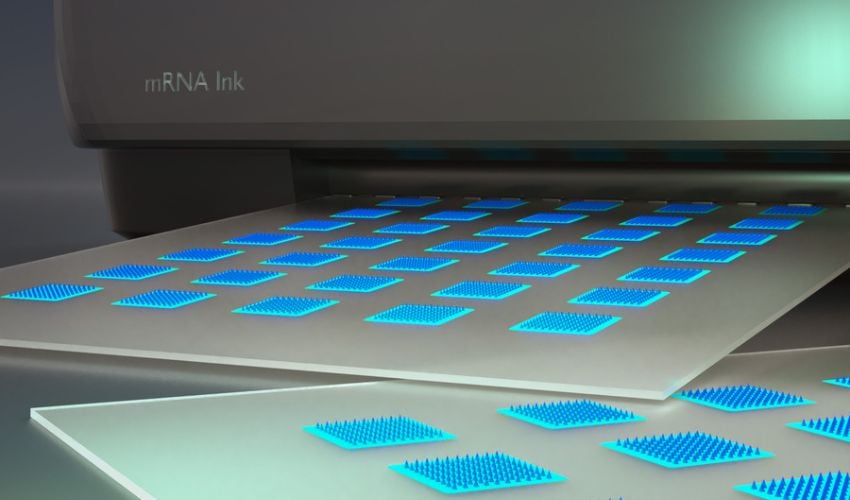
Are 3D printed vaccines the future? Researchers at MIT have developed a portable 3D printer capable of printing ready-to-use vaccine patches that are thermostable, meaning they can be stored for months at room temperature. Eventually, the machine will be able to print hundreds of vaccines per day.
This is not the first time a vaccine has been 3D printed, and with the same patch structure housing microneedles. The novelty here lies in the fact that it is possible to store vaccines at room temperature. This last point responds to a major problem concerning the transport and conservation of vaccines. A large part of traditional vaccines, including RNA vaccines, must be stored at low temperature, which complicates their transportation and storage in areas that are difficult to access, such as deserts, war zones, etc.
The project objective was to respond to the problem of Ebola-type epidemics by transporting printers to the region concerned in order to rapidly vaccinate the population. With the emergence of the Covid-19 pandemic and issues regarding access to vaccination and vaccine stability, the team reoriented the project to produce RNA (mRNA) vaccines to fight against the disease. Messenger ribonucleic acid (mRNA) is a molecule found in all cells of the body. Within each cell, the information encoded in the mRNA is read and converted into protein. In the case of Covid-19 vaccines, the mRNA is converted into the S (Spike) protein, which is also present on the envelope of the virus responsible for Covid-19, thus triggering an immune response when infected with the disease.
More from the desk
Six other notes from the rest of the bench.
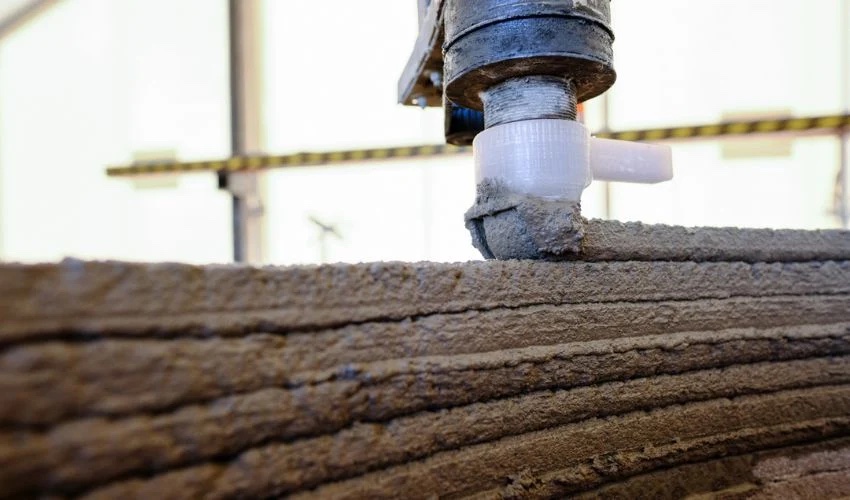 NewsA New 3D Printing Material for Construction Could Be Capable of Capturing CO₂Oregon State University and Sandia National Laboratory have received a three-year, $540,000 grant from the U.S. Department of Energy to explore whether it would be possible to capture carbon dioxide from industrial emissions before trapping its mineralized form in 3D…
 NewsStratasys Talks RAPID + TCT, the importance of AM and MoreThere are over 400 exhibitors at RAPID + TCT 2024 so suffice to say that there is plenty to see for everyone at the event. But what do these companies think of the event? How do they see the future…
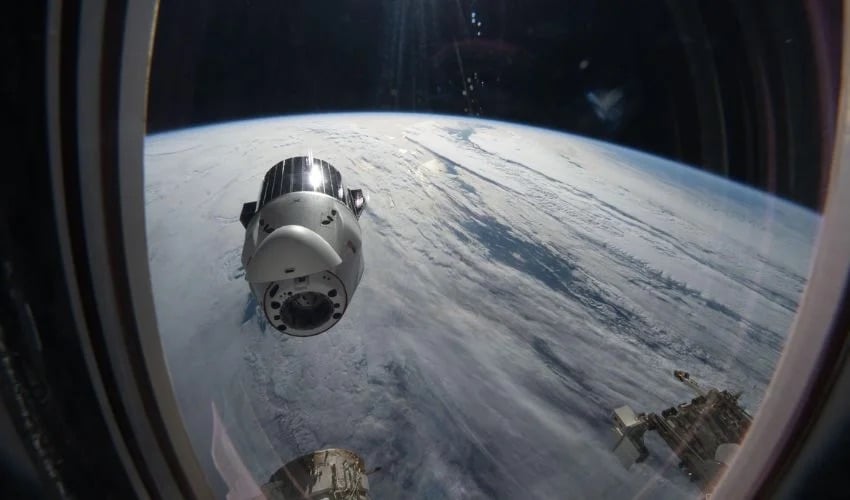 ApplicationsFirst-Ever Kidney and Liver Tissue Bioprinted in Space Aboard the ISSThe American company Auxilium Biotechnologies has successfully 3D-printed kidney and liver tissue in space for the first time. The experiment was conducted aboard the International Space Station (ISS) using its AMP-1 orbital bioprinter. The samples returned to Earth on June&helli
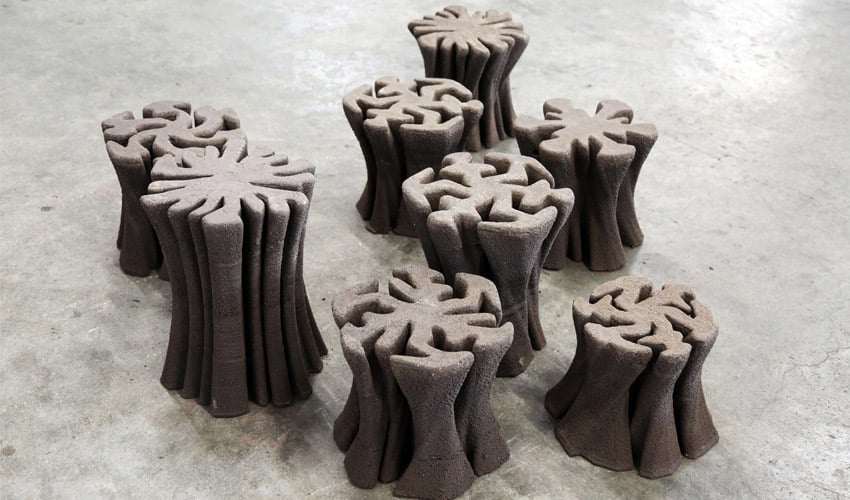 NewsWith Tidal Stool, 3D Printed Stools Are Bringing Together Humans and Marine SpeciesIn Hong Kong, a team of researchers from the University of Hong Kong’s faculty of architecture in the Fabrication and Material Technologies Lab has designed with 3D printed stools that could be used by both humans and animals. No, you’re…
 SoftwareCan Blender Be Used for 3D printing?Created in 1995, Blender is a complete 3D modeling software, very popular in the world of animation and video thanks to the many features it offers. The particularity of Blender is that it is 100% free, open source – which…
 MaterialsCreating illusory materials with multi-material 3D printingInnovation is second nature to the additive manufacturing sector, and one recent project that illustrates exactly this is Illusory Material. Conceived by industrial designer Jiani Zeng and computational designer Honghao Deng during their time at MIT, the aim of this…