Applications
3D Printing at the Heart of the “Ferrari” Movie
Released on December 14 in Italy, Michael Mann’s “Ferrari” takes place in the heart of Modena, a city renowned for its automotive past. Based on Brock Yates’ 1991 biography “Enzo Ferrari: Man and Machine”, the film delves into the life…
- 3 min read
- Applications
- Six more stories

Released on December 14 in Italy, Michael Mann’s “Ferrari” takes place in the heart of Modena, a city renowned for its automotive past. Based on Brock Yates’ 1991 biography “Enzo Ferrari: Man and Machine”, the film delves into the life of Enzo Ferrari, the legendary founder of the luxury sports car brand and stars Adam Driver, Penélope Cruz, Shailene Woodley and Patrick Dempsey along other Hollywood A-listers. What sets this film project apart, however, is the contribution of CRP Technology, an Italian company specializing in 3D printing. Indeed, 3D printing technology played a crucial role in the making of Ferrari, giving an innovative dimension to this production.
Located in “Motor Valley,” near Ferrari’s headquarters, CRP Technology worked closely with Michael Mann’s production team. Thanks to a 3D printing technique, selective laser sintering or SLS, and the use of Windform composite materials, the company contributed greatly to creating functional parts for the film. What’s more, the company’s expertise in additive manufacturing enabled rapid creation and delivery of these parts.
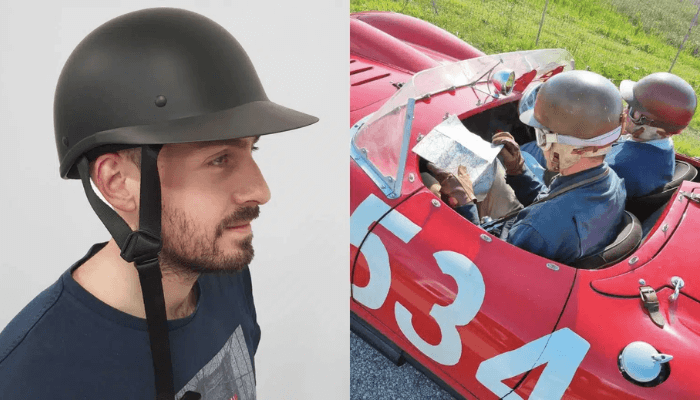
A 3D-printed visor for a Windform GT helmet (left), then tested by an actor from the film (right) (photo credits: CRP Technology)
“Ferrari” on Screen: The Contribution of 3D Printing
The manufacturer, renowned for its advances in additive manufacturing, produced and delivered various accessories such as driver’s helmet parts (visor) and stand elements. The meticulous design of these items was achieved using CRP Technology’s SLS process, ensuring optimum precision and authenticity for the time period. Selected materials include glass-fiber-filled Windform GT, carbon-fiber-filled Windform XT 2.0, and rubber-like thermoplastic elastomer Windform RL, chosen for their mechanical properties and adaptability.
More from the desk
Six other notes from the rest of the bench.
 NewsCan Additive Manufacturing Help Cargo Ships Become More Eco-Friendly?Today’s cargo ships are powered by large, complex engines that represent a strategic challenge for the maritime industry, which has been seeking to become more sustainable for several years. The industry is looking to optimize the parts of these engines,…
 ApplicationsWith the E-2 Liquid Rocket Engine, Metal Additive Manufacturing Is Improving Critical Rocket Engine PerformanceThere is no doubt that satellites play a critical role in our lives. They not only provide information about Earth’s clouds, oceans, land and air (thus allowing scientists to predict weather and climate), but they are also critical for daily…
 News3D Printing Accelerates Social Housing Construction in Ireland by 35%Some of construction 3D printing’s greatest benefits include that the technology can often build structures faster and cheaper than traditional building methods. That said, it is logical to adopt the technology for social housing. In Grange Close, Ireland, the company&helli
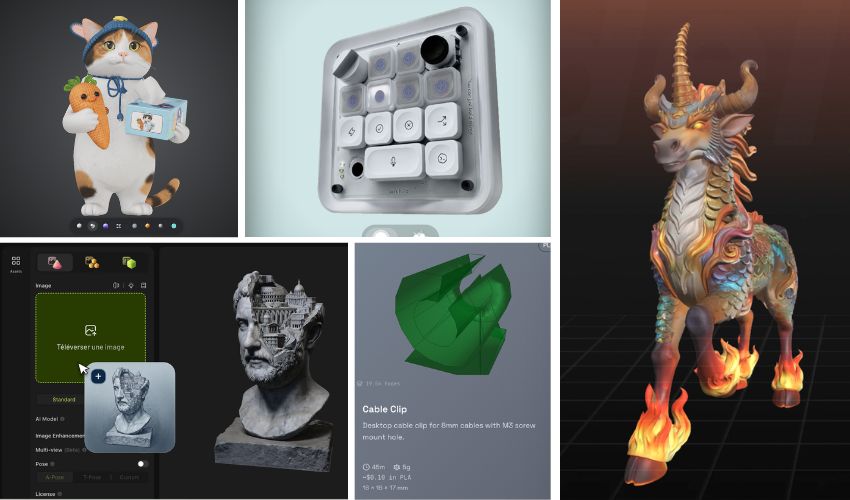 SoftwareThe Top AI 3D Model Generators for 3D PrintingOne of the most intimidating aspects of 3D printing can be the software element. If you can’t find a pre-designed 3D model that suits your needs, you might have to create your own, and making your own 3D design is…
 ApplicationsL’Oréal Doubles Down on HP’s Digital Manufacturing Network for Flexible Production ExpansionBack in 2017, L’Oréal revealed that 100 percent of its new product packaging involved 3D printing. Since then, L’Oréal has been able to integrate even more additive manufacturing processes throughout product production for its varied product lines. Recently, HP announ
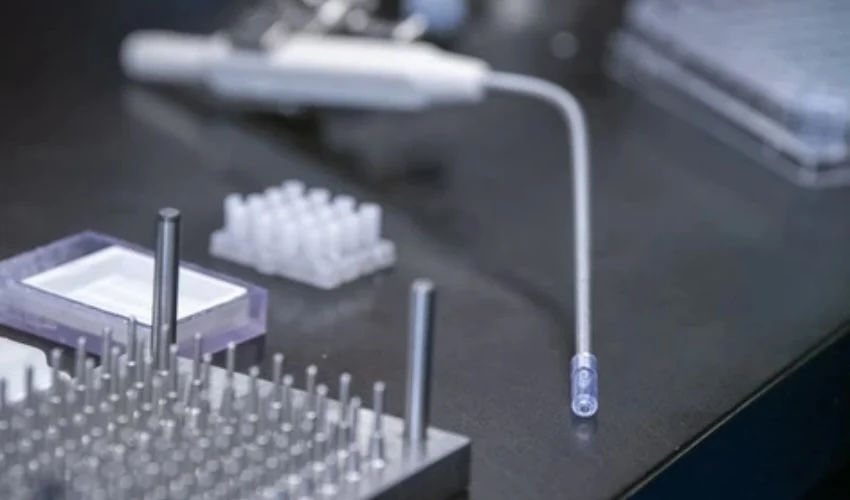 ApplicationsLow-Cost 3D-Printed Device Opens New Avenues for Glioblastoma ResearchAdditive manufacturing continues to establish itself as a transformative tool in medical practice. Its ability to produce customized, reproducible, and low-cost devices has allowed fields such as neurosurgery to advance toward solutions that were previously unimaginable. One of t