News
Understanding and Choosing the Best File Format for 3D Printing: The Complete Guide
In the world of 3D printing, choosing the right file format is a crucial step in guaranteeing the quality and efficiency of your prints. But a multitude of formats available, it can be difficult to know which one is best…
- 3 min read
- News
- Six more stories

In the world of 3D printing, choosing the right file format is a crucial step in guaranteeing the quality and efficiency of your prints. But a multitude of formats available, it can be difficult to know which one is best suited to your project.
In this article, we’ll explore the file formats most commonly used in 3D printing: STL, OBJ, AMF, 3MF, and STEP, detailing their advantages and disadvantages to help you make an informed choice. Let’s dive in!
STL: Indispensable, but With Limits
The STL format, an acronym for “stereolithography”, is probably the best known in the world of 3D printing. Dating back to 1987, this format has become the standard thanks to its simplicity and universal compatibility. STL works by dividing the surfaces of a model into triangles, a process known as tessellation. This makes the format extremely practical for most CAD software and slicers.
More from the desk
Six other notes from the rest of the bench.
 ApplicationsXB-1 Supersonic, aircraft with 21 components 3D printed by VELO3DThe US-based aerospace manufacturer, Boom Supersonic, rolls out the XB-1 aircraft model. The airplane features 21 titanium 3D printed components produced by the metal AM solution provider VELOD3D. Earlier this year, VELO3D raised $28 million for the product portfolio expansion, b
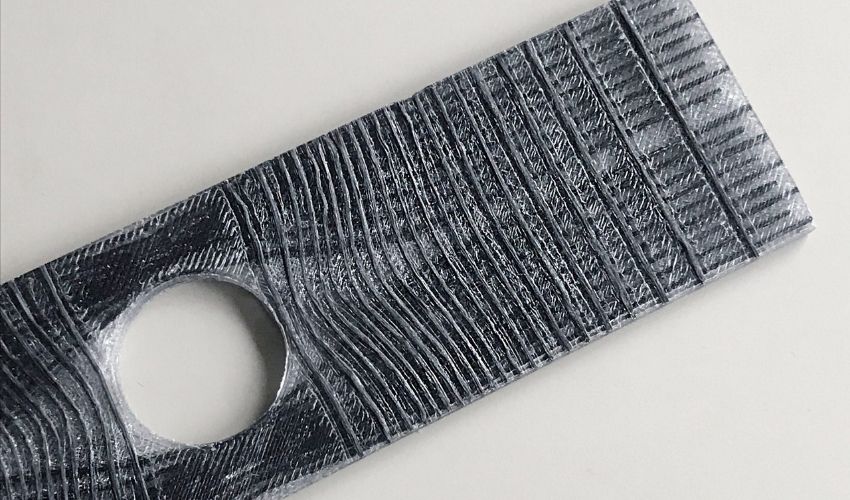 MaterialsWhy Choose Composite 3D Printing? Experts Give Their Advice!Today, there are many materials compatible with additive manufacturing, from thermoplastics to metals, ceramics and photosensitive resins. They offer a wide range of properties to meet the requirements of multiple sectors such as aerospace, automotive, or medical. Looking at the&
 ApplicationsSilk proteins allow the bioprinting of artificial tissuesA team of scientists from the Guwahati Indian Institute of Technology (IIT) is advancing bioprinting in India. Apparently, they created a bioink from silk proteins that could be used for 3D printing tissues, implants and organs at unbeatable costs. These…
 ApplicationsGeneral Motors Uses 3D Printing for New Concept Chevrolet CorvetteAdditive manufacturing is widely used in the automotive industry, from the exterior and interior design of a vehicle to improvements in production processes. This is because complex components can often be produced more easily with additive technologies than with conventional&hel
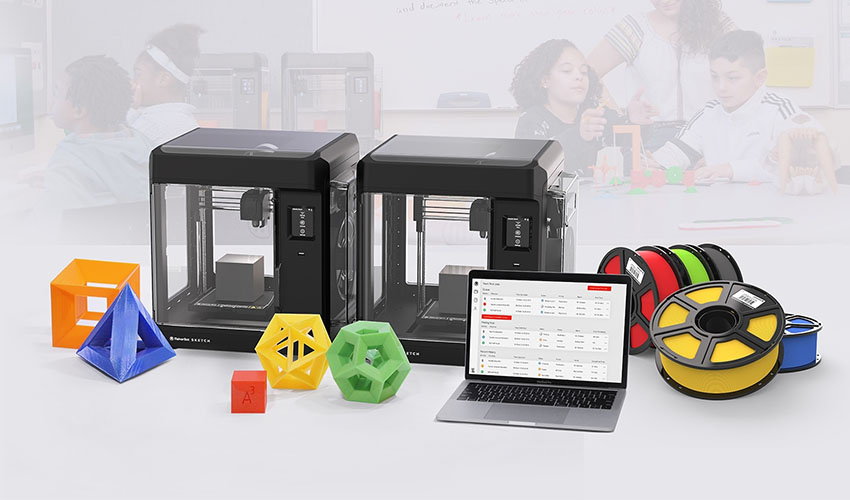 PrintersMakerBot launches SKETCH Classroom for students and teachersOver the last few months, the education system, and more particularly the school system has become aware of the huge potential and need to educate their students on 3D printing. This demand has been heard by MakerBot, one of the…
 Applications#3DExpress: The First Metal 3D Printed Valve Manifold Assembly Installed on an Aircraft CarrierIn this week’s #3DExpress, we start off with yet more news from the U.S. Navy. At Newport News Shipbuilding, a 3D printed metal valve manifold assembly has been installed in an aircraft carrier for the very first time. Next, see…