Applications
Silk proteins allow the bioprinting of artificial tissues
A team of scientists from the Guwahati Indian Institute of Technology (IIT) is advancing bioprinting in India. Apparently, they created a bioink from silk proteins that could be used for 3D printing tissues, implants and organs at unbeatable costs. These…
- 3 min read
- Applications
- Six more stories

A team of scientists from the Guwahati Indian Institute of Technology (IIT) is advancing bioprinting in India. Apparently, they created a bioink from silk proteins that could be used for 3D printing tissues, implants and organs at unbeatable costs. These proteins imitate the biological architecture of bone cartilage and living tissue.
Bioprinting is often considered as the future of tailor-made medicine because it allows the creation of personalized cellular structures, made using the patient’s own cells. Although still in the beginning stages, bioprinting could eventually produce tailor-made organs, responding to the challenge of transplantation: we know that organ donors are far below the demands. We are not yet at the stage where we can 3D print kidneys or a heart, but the progress is encouraging.
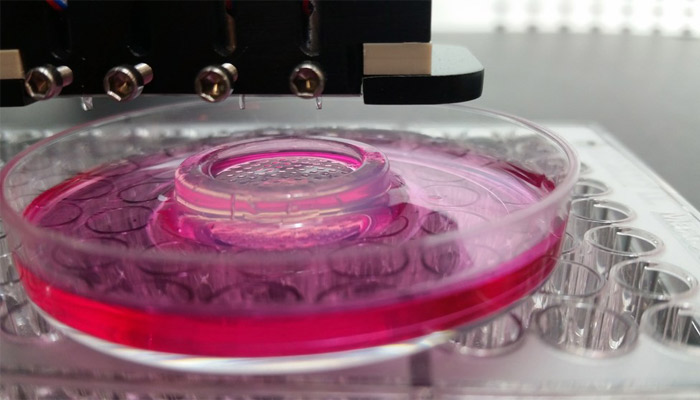
Bioprinting enables the creation of all kinds of cellular structures | Credits: Ozbolat Lab / Penn State University
The research carried out by this team of scientists in India is unusual as it is based on silk proteins, and more particularly Muga silk. It is made by a silkworm found only in the Assam region of India – so it is a rare resource in the world but abundant for these scientists. This partly explains why they used this material rather than collagen, which is traditionally used in bioprinting processes. One of the researchers claims that 10 grams of collagen cost more than 10,000 rupees ($140) while 10 grams of silk are worth 2.
More from the desk
Six other notes from the rest of the bench.
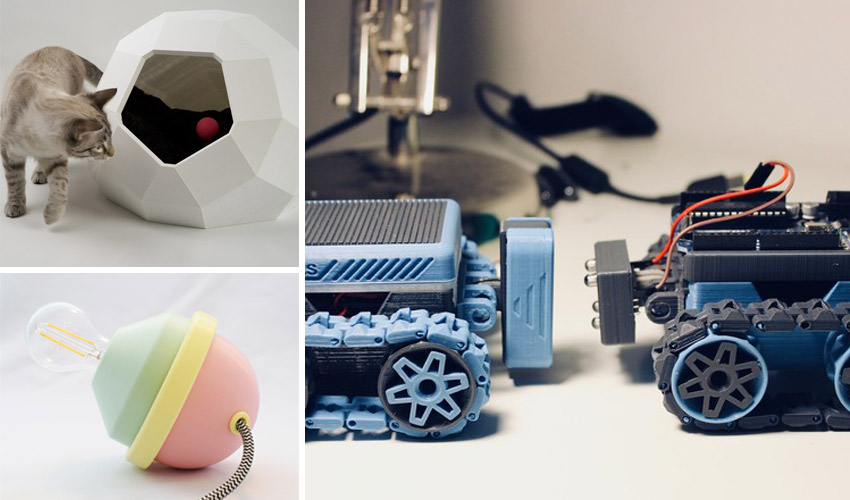 NewsThe TOP 10 3D Printing Files (STL) Of The Year!Every year, 3Dnatives reveals the best 3D models you can find and easily download! This January, we compiled a list of the ten best 3D printing files you can easily get your hands on. This ranking has been put together…
 ApplicationsBreakthrough in Esophageal Cancer treatment thanks to 3D printed stentsResearchers from the University of South Australia have developed 3D printed esophageal stents that could revolutionise the delivery of chemotherapy drugs for patients with esophageal cancer. 3D printing has become of increasing importance in the medical field as it allows&hellip
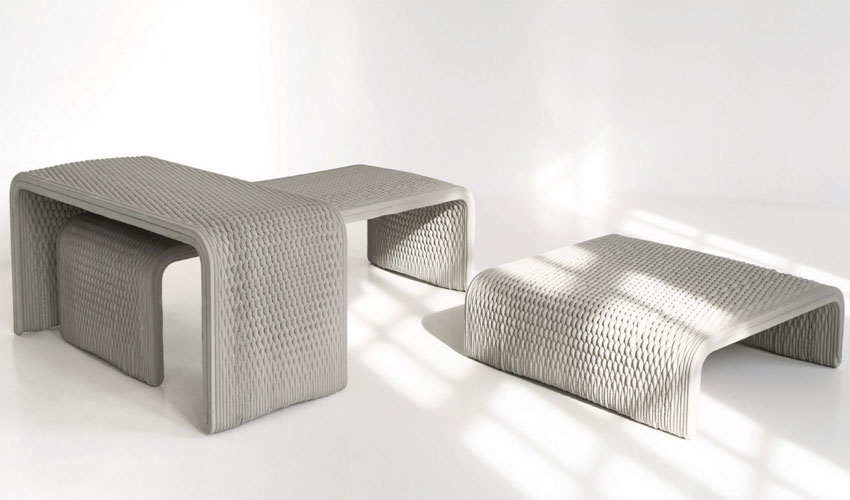 NewsXtreeE prints concrete 3D printed benches with complex patternsThe French Startup XtreeE – 3D Concrete Printing Specialist – is presenting one of his latest works in collaboration with Studio 7.5, a German design firm. Together, they created three 3D printed concrete benches, all with the same woven pattern. The…
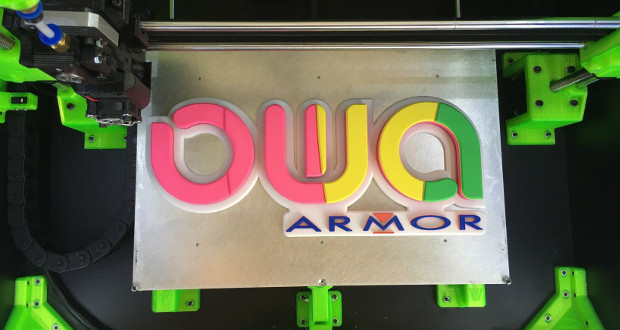 MaterialsStartup of the month: OWA 3D, leading the way to a circular economy in 3D printingWith the recent arrivals of tech giants such as HP, General Electric (GE), or Michelin, 2017 has begun as a year filled with promises and challenges for 3D printing. With the flexibility of the market and the advantages offered by…
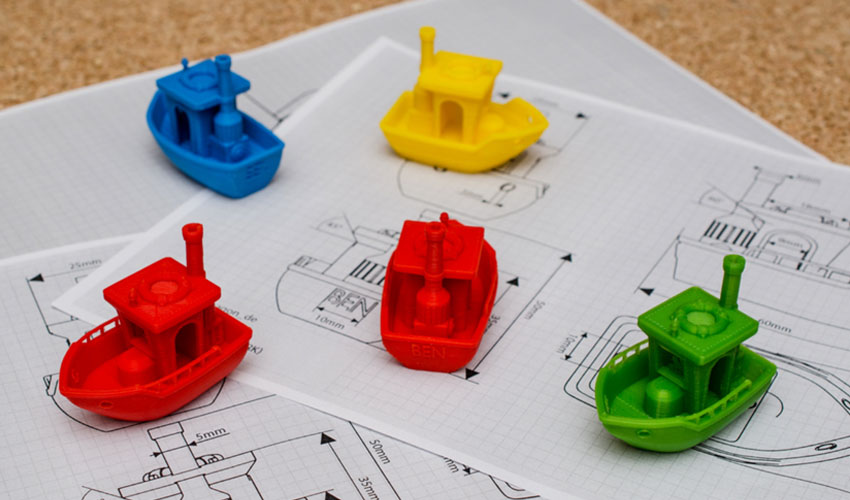 GuidesVandragon’s beautiful 3D printed boatsTino, also known as vandragon_de, has quickly gained popularity for his 3D printable boats. Starting his boating journey thanks to his son’s love for boats, he has quickly changed the 3D printing boat game. As we at 3Dnatives are always…
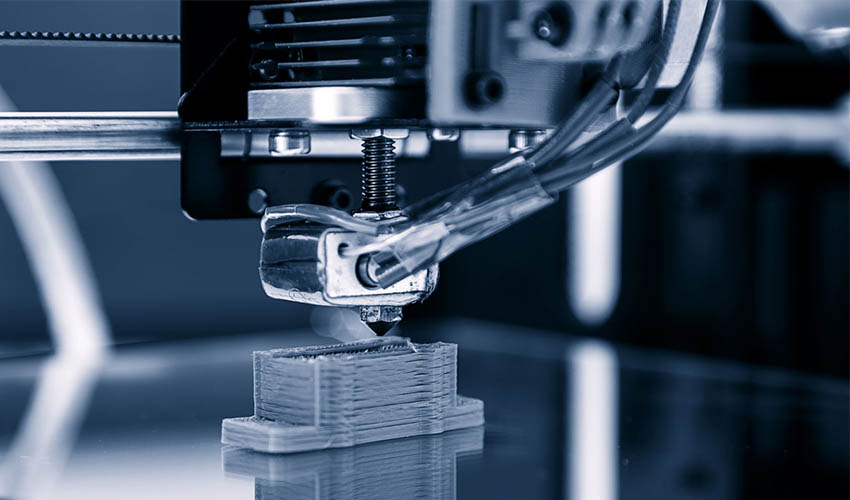 MaterialsMetallum3D: providing wider access to metal 3D printing services and materialsRecently, the Centre for Innovative Technology (CIT) announced that CIT GAP Funds has invested in the company Metallum3D based in Charlottesville, Virginia. The startup is an online metal 3D printing platform that provides accessible and affordable metal 3D printing materials&hel