Materials
All You Need to Know About Multi-Material 3D Printing
Multi-material 3D printing is, as the name implies, 3D printing several materials in one continuous printing process. It is not the same as multi-color printing, where one material is printed in several color variations. Although the visual result of multi-material…
- 3 min read
- Materials
- Six more stories
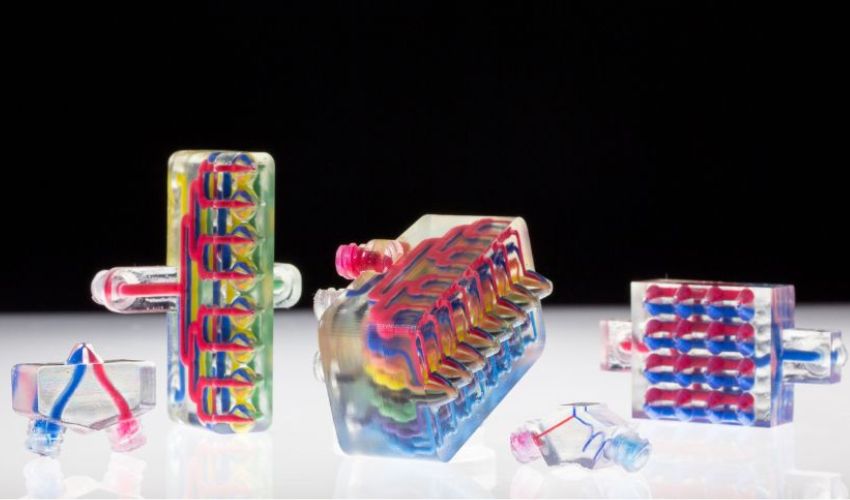
Multi-material 3D printing is, as the name implies, 3D printing several materials in one continuous printing process. It is not the same as multi-color printing, where one material is printed in several color variations. Although the visual result of multi-material printing can be that it contains several colors, the basic aim of printing with multiple materials is to achieve a combination of their properties. Different materials have different characteristics, for example they could be conductive, hard, soft, transparent, chemically resistant, etc. and are therefore particularly suitable for specific applications. In some cases, however, it is necessary to combine the characteristics of different materials in one object in order to fully exploit its application, hence the existence of solutions for multi-material 3D printing.
Indeed, multi-material 3D printing is particularly useful when you want to combine two complementary material properties in one workpiece so that it is, for example, partially rigid and flexible. Multi-material 3D printing also makes it possible to print support structures in a different material that can be easily removed during post-processing. Examples of this include PVA and HIPS. Furthermore, in terms of post-processing, multi-material 3D printing can greatly reduce this, as end parts made of several materials can be produced in one go, making the assembly of individual, separately printed parts unnecessary (thus saving time).
Efficient multi-material 3D printing depends on the technology and hardware used. Although there is a lot of experimentation and constant progress in the field of multi-material 3D printing, not every process is suitable for printing multiple materials at the same time. Currently, multi-material 3D printing is possible with SLA, for example by using several vats with different materials, but also with material jetting (which by design is particularly suited for printing with multiple materials at once). In the latter, printheads are equipped with several nozzles that jet different materials using inkjet technology.
More from the desk
Six other notes from the rest of the bench.
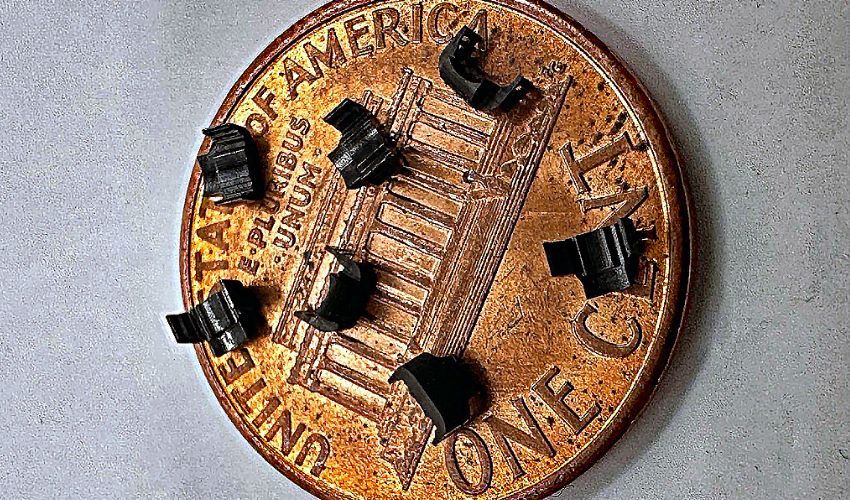 ApplicationsNano Dimension Advances Neural Research with Micro 3D PrintingManufacturing medical devices poses significant challenges due to their small size, precise dimensions, and intricate functionalities. Nano Dimension, a prominent manufacturer of 3D printers for electronics, recently undertook a biomedical project in collaboration with three prom
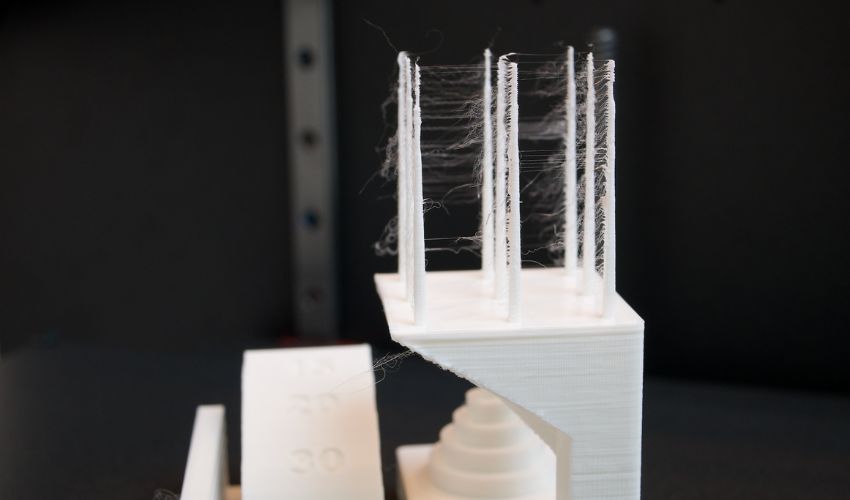 NewsStringing in 3D Printing: What Is It and How Do You Fix It?When it comes to 3D printing, as with any manufacturing process, it goes without saying that users will not always be completely satisfied with the results. It can often happen that, due to different circumstances, the 3D printed part does…
 NewsCreating More Optimized Bicycle Saddles Thanks to Industry 4.0 TechnologiesIn the world of sports, cycling and 3D printing have been proven time and again to be a winning duo. This is especially the case in areas in which technology can play a key role in improving performance. One such…
 SoftwareCHITUBOX Reinvents Itself: A Faster, Smarter and More Connected SlicerCHITUBOX slicing software has just announced major updates for all its users, which should make 3D printing prep easier, streamline workflows and help ensure more reliable models. First, its Basic and Pro versions have been merged into a single application.…
 SoftwareAMFG on its end-to-end workflow management solution for autonomous AMAs companies start to adopt 3D printing at a larger scale, the need to adopt a tool to manage the additive manufacturing workflow is becoming greater. Any industry needs software to manage operations if it aims to be efficient and…
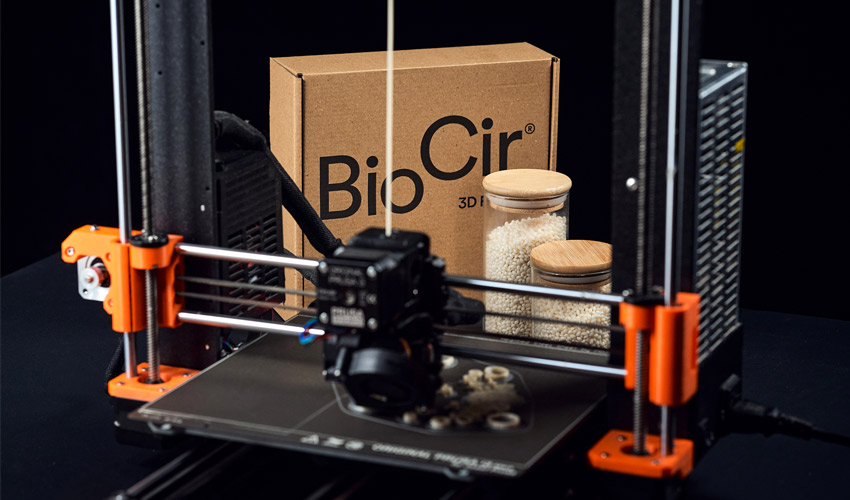 Guides#3DStartup: Balena and its Compostable, Biodegradable 3D Printing Materials for the Fashion IndustryThe fashion industry is one of the most polluting for our planet, consuming a lot of plastics which are unfortunately all too often thrown away too quickly and in the wrong way. Faced with this building ecological crisis, one young…