Materials
A Complete Guide to Aluminum 3D Printing
Aluminum is one of the most popular metals in the field of industrial production and, more specifically, in additive manufacturing. It is a strong, lightweight metal alloy that offers an ideal combination of mechanical and thermal properties. Companies involved in…
- 3 min read
- Materials
- Six more stories
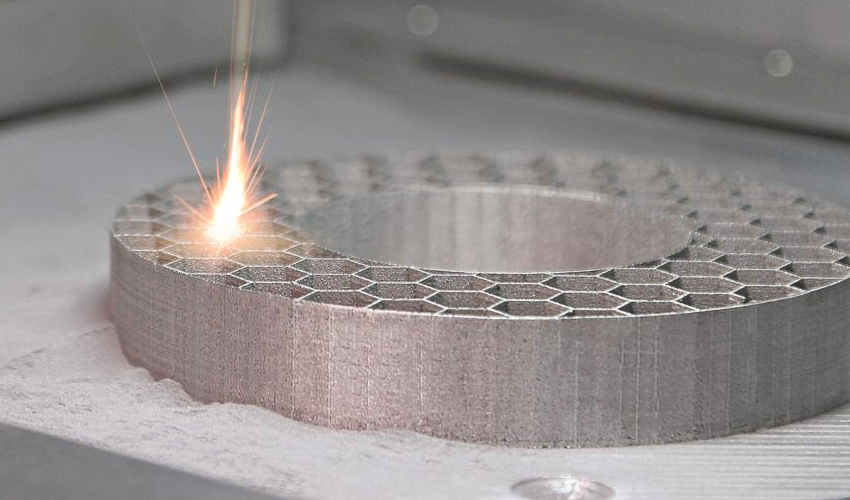
Aluminum is one of the most popular metals in the field of industrial production and, more specifically, in additive manufacturing. It is a strong, lightweight metal alloy that offers an ideal combination of mechanical and thermal properties. Companies involved in materials development, especially for additive manufacturing, offer a wide variety of aluminum alloys intended for metal 3D printing. These materials are truly versatile and offer a multitude of benefits depending on the properties required for each application. To better understand the properties of this metal and the benefits it brings to 3D printed parts, we took a closer look in this complete guide.
Material Characteristics
Aluminum (Al), with atomic number 13, is a chemical element present everywhere in the earth’s crust. It is a non-ferromagnetic metal, i.e. it cannot be magnetized by a magnetic field. Many of the aluminum alloys available for additive manufacturing consist of a combination of metallic and metalloid elements, including aluminum, silicon, magnesium or copper. Some of the most popular aluminum alloys are:
- AlSi7Mg – Aluminum with silicon (7%) and magnesium alloys
- AlSi10Mg – Aluminum with silicon (10%) and magnesium alloys
- AlSi12 – Aluminum with silicon alloy (12%)
- AlSi9Cu3 – Aluminum with silicon alloys (9%) and copper (3%)

Photo Credits: GE
The raw material from which aluminum is extracted is the mineral known as bauxite. To obtain aluminum, bauxite is first transformed into alumina by the Bayer process, and then the aluminum is extracted by a process called electrolysis. In addition to being a light metal with a low melting point, aluminum is a very good electrical and thermal conductor. The industrial use of aluminum has made it one of the most important materials, both in terms of quantity and variety of uses. Let us now see how this metal is used in the field of additive manufacturing.
More from the desk
Six other notes from the rest of the bench.
 ApplicationsA Complete Guide to Zero Gravity 3D PrintingSince the early days of space exploration, curiosity about the universe has been a driving force behind innovation and technological progress. Institutions like NASA and private enterprises such as SpaceX and Relativity Space have advanced missions that push the boundaries&hellip
 MaterialsA 3D Printed Lamp Made From Orange PeelsWhat if the lamp on your bedside table was made from orange peels? This is the concept behind the Ohmie lamp project from the Italian agency Krill Design. They used the skin of oranges to 3D print this household object.…
 MaterialsNASA uses 3D printing to create rocket engine alloysIn another huge step towards fully 3D-printed rocket engines, NASA has successfully tested an igniter prototype made from two metal alloys. Engineers at NASA have been hard at work to produce this component using a new method of laser printing. As…
 ApplicationsFirst-Ever Kidney and Liver Tissue Bioprinted in Space Aboard the ISSThe American company Auxilium Biotechnologies has successfully 3D-printed kidney and liver tissue in space for the first time. The experiment was conducted aboard the International Space Station (ISS) using its AMP-1 orbital bioprinter. The samples returned to Earth on June&helli
 ApplicationsADDITIV Medical World Puts a Focus on Different Applications for 3D Printing in HealthcareADDITIV Medical World is nearly here! The half-day event will be dedicated to exploring the intersection of medical 3D printing and healthcare in a series of panel discussions and workshops. Taking place on June 6th, 2023, it will be an…
 NewsWEBINAR: Proven on the Production Floor: Why the Raplas PR 700 Works in a Real Manufacturing EnvironmentFor manufacturers considering an investment in industrial 3D printing, the transition from laboratory testing to high-stakes manufacturing can be a significant hurdle. While prototypes may perform well in controlled environments, scaling production often brings new challenges, su