Applications
A Complete Guide to Zero Gravity 3D Printing
Since the early days of space exploration, curiosity about the universe has been a driving force behind innovation and technological progress. Institutions like NASA and private enterprises such as SpaceX and Relativity Space have advanced missions that push the boundaries&hellip
- 3 min read
- Applications
- Six more stories
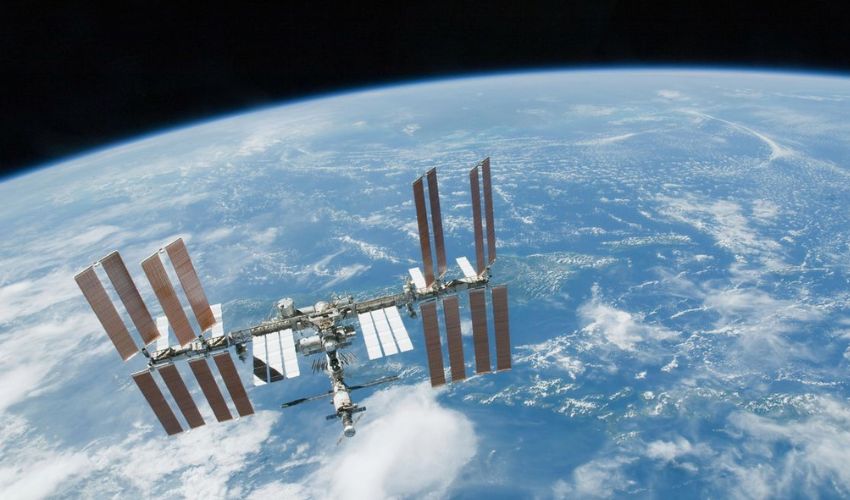
Since the early days of space exploration, curiosity about the universe has been a driving force behind innovation and technological progress. Institutions like NASA and private enterprises such as SpaceX and Relativity Space have advanced missions that push the boundaries of our understanding of space. At the forefront of this pursuit lies zero gravity 3D printing, a technology that has the potential to significantly improve terrestrial manufacturing and is expected to redefine operations in the realm of space.
Zero gravity, or microgravity, 3D printing refers to the process of additive manufacturing in the unique environment of space where the effects of gravity are minimal. This approach, which was only theoretical before the first 3D printer was sent to space in 2014, allows for the production of tools, parts, and even entire structures directly in orbit, reducing the need for costly and logistically complex resupply missions from Earth. Unlike traditional 3D printing, which relies on gravity to hold materials in place, zero gravity 3D printing must adapt to the unique challenges of a weightless environment.
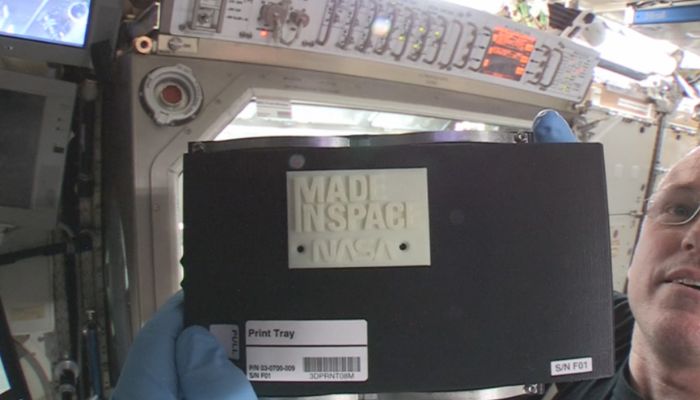
The first-ever part 3D printed in space (photo credits: NASA)
As 3D printing in space continues to advance, this method is increasingly being seen as a compelling solution for long-duration space missions where carrying spare parts and tools for every potential need is impractical. But how does it work? What challenges are we still facing when it comes to zero-gravity 3D printing? We took a closer look.
More from the desk
Six other notes from the rest of the bench.
 Applications3D Bioprinting to Directly Repair Human Body OrgansEvery year, millions of people around the world suffer tissue damage due to disease, trauma or injury. During surgical procedures, medical professionals primarily use stitches to promote tissue healing. However, a failure during surgery can lead to complications and may…
 NewsHow 3D Printing Will Change Manufacturing3D printing is a special type of digital fabrication called additive manufacturing. The difference between additive manufacturing and traditional techniques is that objects are created layer-by-layer, so there is minimal loss of material. This creates a potential for a more&helli
 NewsTop 5 Videos: Delve Into Faster 3D Printing With 3D ExplainedSunday is finally here! And to help you start your week off on the right foot, we are once again sharing the top 5 3D printing videos that we found. To kick it off, learn from our very own Elliot…
 PrintersORNL Targets Faster, Safer Inspection for 3D Printing in Nuclear ApplicationsFor years, the United States’ Oak Ridge National Laboratory (ORNL) has been one of the most active players in additive manufacturing for nuclear energy. In 2020, the lab made headlines for designing the first prototype of a 3D-printed nuclear reactor.…
 NewsNot a New Printer, A New Material: Nano Dimension’s ATARU ExplainedAt Formnext 2025, one trend is unmistakable: additive manufacturing is shifting firmly toward real production. Nano Dimension is at the center of that shift, showing how materials, not just machines, are driving the next leap forward. Known for its intelligent…
 PrintersChinese Tech Conglomerate Xiaomi Debuts New 3D PrinterIn the ever-expanding realm of innovation, Xiaomi, a massive Chinese designer and manufacturer of consumer electronics, software, home appliances, and household hardware, has taken its first step into the world of additive manufacturing with the introduction of its debut product,