Materials
A 3D Printed Lamp Made From Orange Peels
What if the lamp on your bedside table was made from orange peels? This is the concept behind the Ohmie lamp project from the Italian agency Krill Design. They used the skin of oranges to 3D print this household object.…
- 3 min read
- Materials
- Six more stories
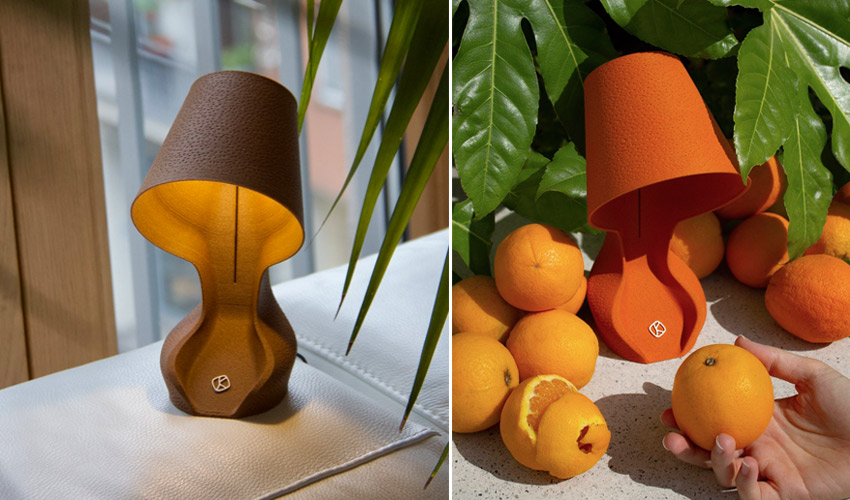
What if the lamp on your bedside table was made from orange peels? This is the concept behind the Ohmie lamp project from the Italian agency Krill Design. They used the skin of oranges to 3D print this household object. Ready in just two hours, the lamp is available to purchase from €59 through the company’s Kickstarter campaign. This project is the latest example of closed-loop production and clearly demonstrates the pivotal role that additive manufacturing can play. This application of 3D printing shows an alternative to the pollution produced by traditional manufacturing methods which are harmful to our planet.
If you have been closely following 3D printing news, you may recall the Feel the Peel machine — a juice bar capable of turning orange peels into cups using 3D printing. In the case of the Italian agency Krill Design, the idea is similar: recover natural waste and find a manufacturing method that is more respectful of the environment. So, they designed a natural, compostable biopolymer from Sicilian orange peels, a material the agency has been working on for some time now, which was also used in another project with Autogrill.

Ohmie lamp (Photo Credit: Krill Design)
The Manufacturing Process of the Ohmie Lamp
One of the reasons that led Krill Design to choose orange peels as a manufacturing material is simply their abundance, but also the properties in their organic chemistry. Domiziana Illengo, the agency’s marketing manager, explains, “The link between the basic biopolymer from the fermentation of plant starches and the added material from organic crops is that they need sugars to bind together. Oranges are particularly high in carbohydrates, which chemically is basically the same as sugar. And so that helps us to develop a robust material.” The skins are first dried, then ground into powder, and then processed into granules.
More from the desk
Six other notes from the rest of the bench.
 PrintersOKM3D and Raise3D to conquer EuropeWith offices in France and Germany, OKM3D has become the largest distributor of Raise3D products and solutions in Europe. It now operates for Raise3D in 7 countries, including France, Germany, Austria, Poland, etc. Offering a portfolio of innovative brands and…
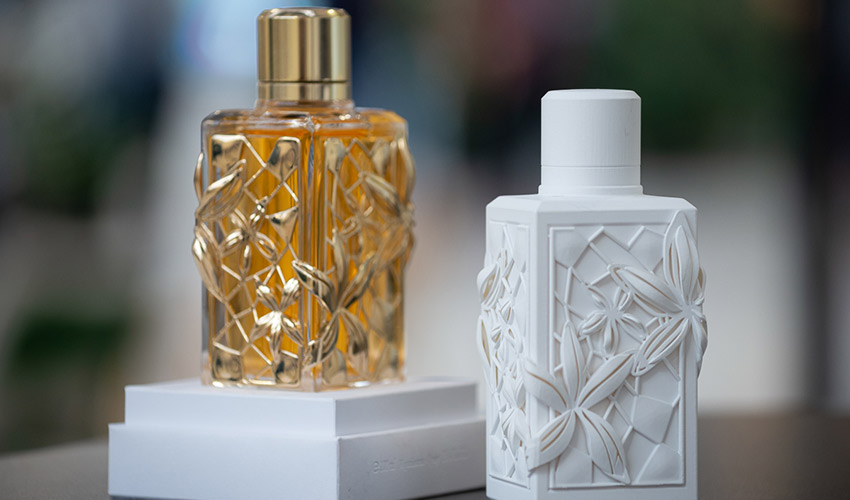 NewsThe Role of 3D Printing in the Luxury Goods SectorThe global luxury goods market is experiencing a rapid post-pandemic recovery and could reach €380 billion by 2025, according to a report published by the Italian luxury goods manufacturers’ foundation, Fondazione Altagamma, and strategic consulting firm Bain & Company.
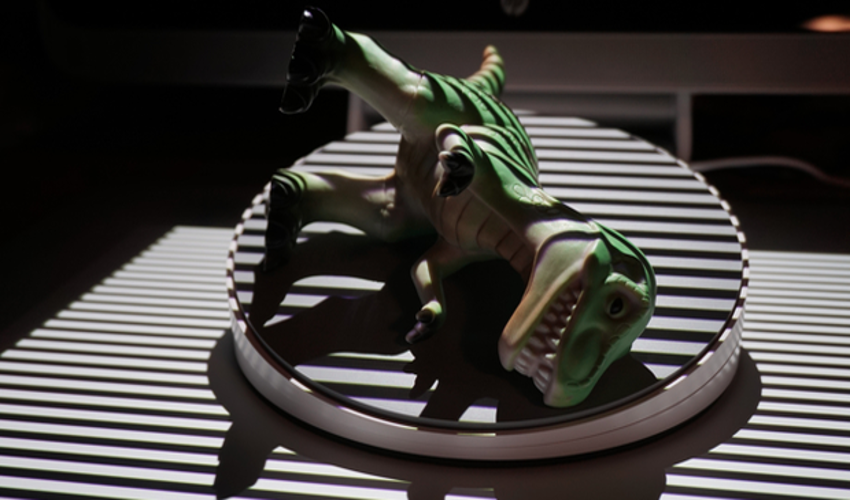 Printers3D scanning through structured light projectionThe advances in 3D printing and 3D scanning are progressing at a high pace, but the technologies behind them are still unclear for some. Following our series on the main techniques used in 3D printing, we will now present you with…
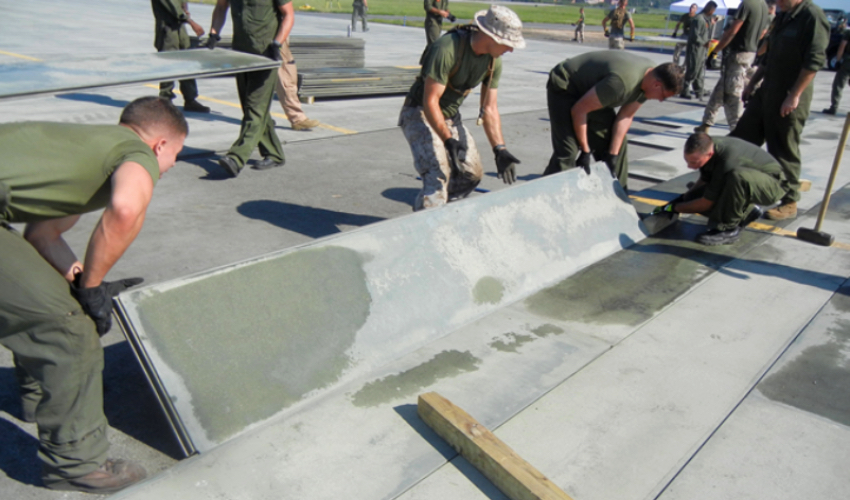 NewsUS Air Force sponsors the development of a 3D printed runway matITAMCO (Indiana Technology and Manufacturing Companies) has been working with a Purdue University professor, Pablo Zavattieri, to develop a unique 3D printed runway mat for Expeditionary Airfields for US Air Force. Last year the team was competing in Phase 1 of SBIR…
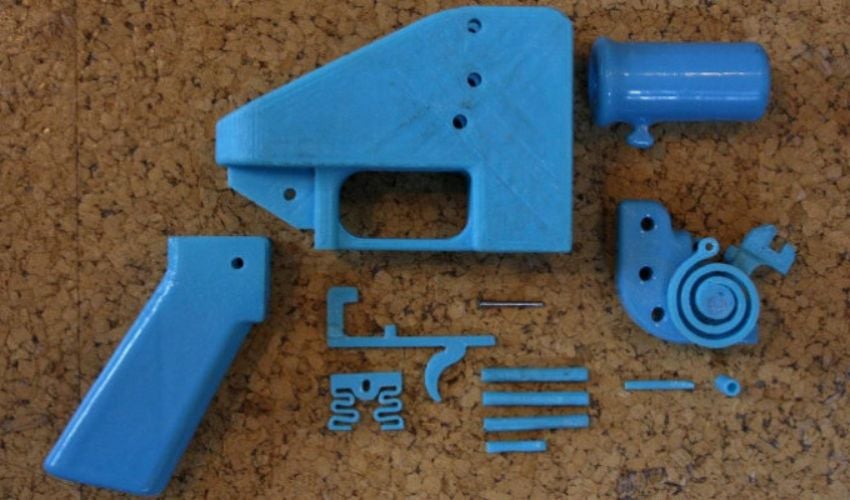 NewsThe Fingerprint of 3D-Printed Guns: A Forensic Approach to Tracking Illegal WeaponsAlthough 3D printing offers makers an incredible way to fully unleash their creativity, there’s a growing number of cases where it’s being used for criminal purposes. 3D-printed firearms remain a controversial topic, especially as their use continues to rise, as…
 NewsThe Longest 3D-Printed Bridge for Cyclists Has Been Inaugurated in the NetherlandsAlas! After several months of work, the Dutch city of Nijmegen is now home to one of the longest 3D-printed bridges for cyclists. Inaugurated on September 8, the bridge measures 29 meters long and was manufactured in the 3D printing…