Guides
#3DStartup: Xolo and Volumetric 3D Printing
Last December, we presented xube, a compact 3D printer capable of printing parts in just a few seconds thanks to a volumetric printing process. Behind this innovation, is the young company Xolo. Based in Germany, it intends to change the…
- 3 min read
- Guides
- Six more stories
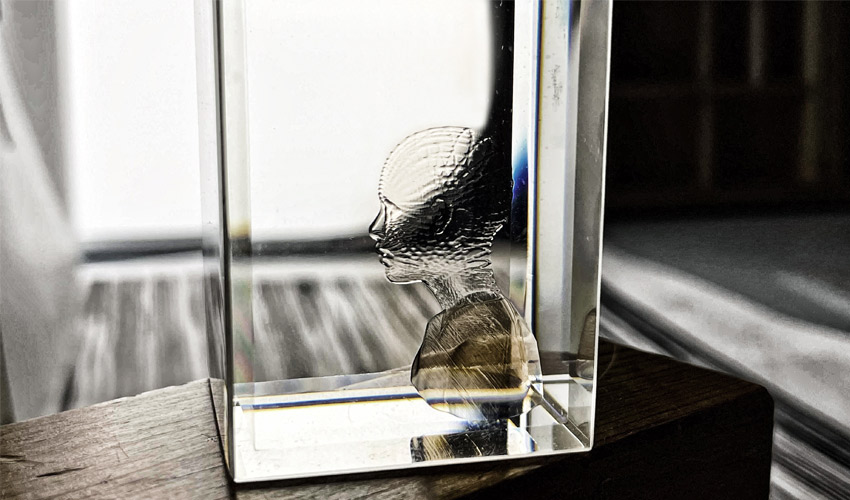
Last December, we presented xube, a compact 3D printer capable of printing parts in just a few seconds thanks to a volumetric printing process. Behind this innovation, is the young company Xolo. Based in Germany, it intends to change the rules of photopolymerization, by no longer relying on the classic approach of layer-by-layer printing. Xolo uses xolography, a technique that uses different initiators and two types of wavelengths to harden the resin. The result? A much faster manufacturing process, a smoother surface and more material possibilities. We met with one of xolo’s founders, Dirk Radzinski, to learn more about this technology and the benefits it offers.
Can you introduce yourself and your connection with 3D printing? How did the idea of creating xolo come up?
I am one of the co-founders of the company which is roughly 1 1/2 years old. Neither of the 3 founders have been working in the 3D printing industry before. Stefan hecht is a professor in chemistry Aachen university and director of the Leibniz institute for interactive materials. He is an expert in photoswitches. Martin Regehly is a physics professor in Brandenburg and former founder and CEO of a scientific camera company (greateyes). I am a serial entrepreneur having founded and sold companies in deep tech/deep science. The 3 of us are friends and before we had the idea for xolo we had the idea to do something together. But it took many years until we stumbled upon a nature paper in the summer of 2017 from the Lippert group. They described a new volumetric display. The very simple idea was to not have an image displayed but instead cure a photopolymer with a comparable set-up. The missing link were the molecules which can make that happen. We built them from scratch and developed a new class of photoswitch-initiator molecules.

The co-founders of the startup (photo credits: xolo)
Tell us more about xolography: how does it work?
xolography is a dual color volumetric 3d printing process. As in stereolithography it uses light to cure a photoresin. However, if you project light into a vat with transparent resin which contains initiators like in stereolithography, curing would occur along the whole lightpath. That is why SLA/DLP printers add absorbers to their resins. In xolography we developed a new type of initiator. This initiator does not start curing if it has been hit by light with a single wavelength. It needs two different wavelengths to start the polymerization process. Wherever blue and red light intersect and meet the initiator at about the same time, curing occurs.
More from the desk
Six other notes from the rest of the bench.
 NewsCandy Play, Polaroid’s New 3D Pen That Makes CandyBecause of their ease of use, functionality and material compatibility, 3D pens are becoming increasingly popular in the additive manufacturing market. Based on the FDM process, 3D pens are for some an alternative to desktop 3D printers, although the finishes…
 MaterialsThe Different Types of Resins Available for 3D PrintingAs we have seen on numerous occasions, choosing the right material is a fundamental step in additive manufacturing. This is especially important in resin 3D printing, a process in which photosensitive materials are cured layer by layer until the final,…
 NewsA 3D printed and recycled wood cabinWhat if we reuse wood waste to make small houses and other constructions? That’s the idea behind Ashen Cabin, a cabin imagined by the HANNAH design studio: using emerlad-ash-borer-infested wood (a species of beetle insect), the American company used 3D printing…
 News#3DOpinion | Is There Hope for the Additive Manufacturing Market in 2025?To a certain extent, doom and gloom characterized the additive manufacturing industry over the course of 2024. Between firings, bankruptcies, failed mergers and more, no one was feeling particularly optimistic about the 3D printing market. But could that be changing…
 NewsTOP 5 VIDEOS: 3D printed Moon models, micro robots and much more!This week we found the top 5 videos about 3D printing and the way additive manufacturing is shaping our society. The technology has infiltrated many sectors, from medical to automotive! Check out our selection of the week to keep up with the innovations! This week we…
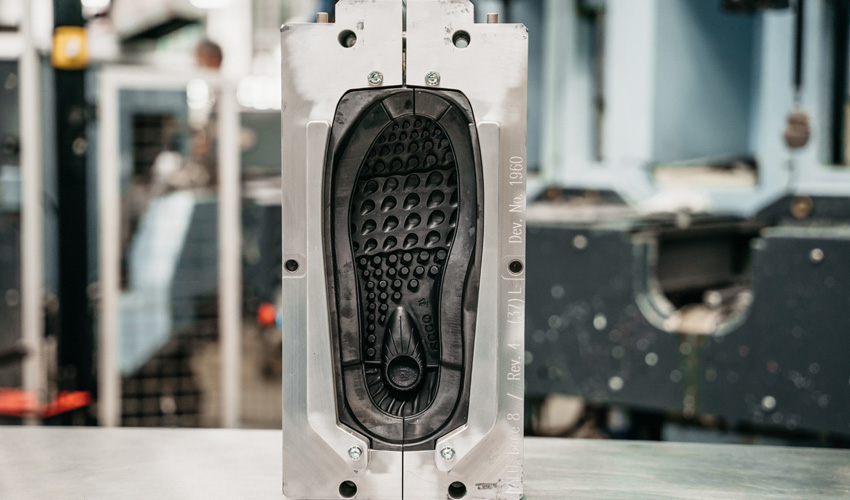 NewsECCO and Stratasys: Technological Innovation in the Footwear IndustryWhile several well-known shoe brands like Adidas and Nike have been known to use 3D technologies to produce shoes, they are not the only ones. In 2018, we told you about ECCO, a Danish shoe manufacturer that uses both 3D…