News
A 3D printed and recycled wood cabin
What if we reuse wood waste to make small houses and other constructions? That’s the idea behind Ashen Cabin, a cabin imagined by the HANNAH design studio: using emerlad-ash-borer-infested wood (a species of beetle insect), the American company used 3D printing…
- 3 min read
- News
- Six more stories
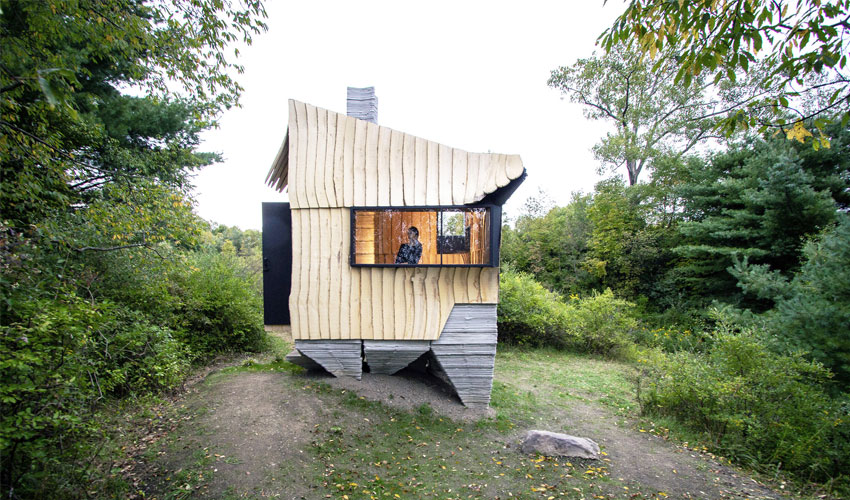
What if we reuse wood waste to make small houses and other constructions? That’s the idea behind Ashen Cabin, a cabin imagined by the HANNAH design studio: using emerlad-ash-borer-infested wood (a species of beetle insect), the American company used 3D printing technology and robotics to erect a cabin in the middle of the forest. Add to this several 3D printed elements, including the chimney.
As 3D printing develops in the construction market, offering alternative solutions for erecting the walls of our future homes, it seems that it goes hand in hand with a deeper respect for the environment. Initiatives are multiplying to use local resources and materials, to reduce our carbon footprint and to promote a circular economy. One example is the Gaïa house, whose walls have 3D printed using waste from rice cultivation. Ashen Cabin is joining this movement by combining 3D scanning, 3D printing and decomposition of infested ash trees. In the United States, the latter are very numerous: the larvae of the emerald ash borer come to settle under the bark of the tree to consume its phloem. They then create various galleries that prevent water and nutrients from circulating properly in the tree, causing the ash tree to weaken or even die.
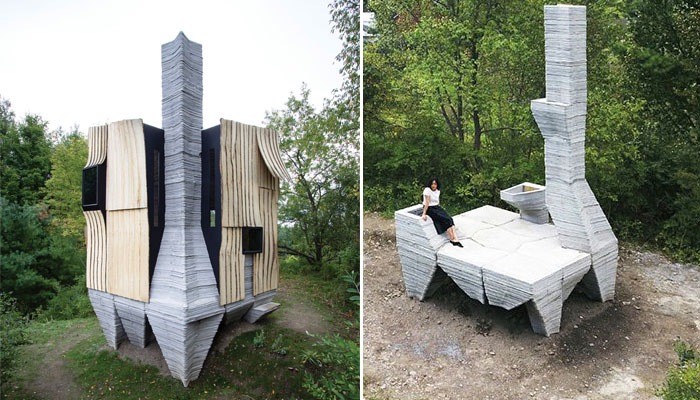
Ashen Cabin is a 3D printed and recycled wood cabin | Credits: Andy Chen / HANNAH
The HANNAH studio has therefore decided to reuse this infested wood which is often burned to accelerate its decomposition. Sasa zivkovic, co-founder of the studio explains: “Infested ash trees often decompose or are burned to produce energy. Unfortunately, both scenarios release CO2 into the atmosphere, and the benefit of using compromised ash trees for construction is that they bind carbon to the earth and offset the exploitation of more commonly used wood species“. In concrete terms, from a 3D scanner, the studio was able to retrieve data from several pieces of ash trees, allowing a 6-axis robot to cut the logs according to a very precise pattern. The whole wood forms the facade of the small house.
More from the desk
Six other notes from the rest of the bench.
 NewsCaracol Shows How It Is Breaking Boundaries in 3D Printing With Large-Format Robotic SolutionsRAPID + TCT 2024 might have wrapped up, but that does not mean that the content from the show will slow down. Out of the 400+ exhibitors attending the event, we had the opportunity to sit down with five of…
 ApplicationsYou can now get up in the air with the 3D printed jet suitThe idea of man flying is a dream that has been pursued for centuries. A dream that seemed like science fiction or belonging to Iron Man, but is now possible with Richard Browning’s development of: the 3D printed jet suit…
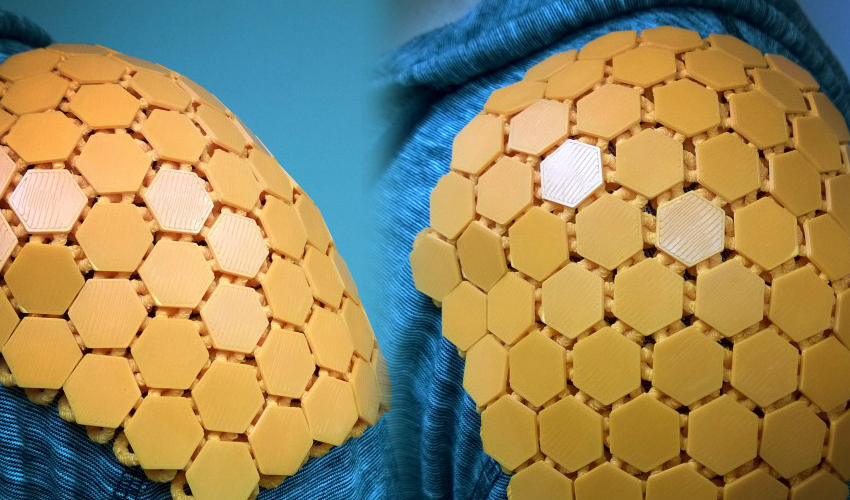 Materials2 creatures inspiring next-gen 3D printed body armorAnimals around us have been a source of inspiration in our books, films, other media for centuries. This trend continues today, showing no signs of stopping. Now, cutting edge technology is being used in conjunction with 3D printing and other…
 Printers3Dnatives Lab: Testing the XiP 3D Printer From Nexa3DNexa3D was born from a meeting between Avi Reichental, former CEO of 3D Systems, and the inventors of the “Lubricant Sublayer Photo-curing” (LSPc) technology. Interested in the developments of the latter, Reichental decided to create Nexa3D in 2015. And three…
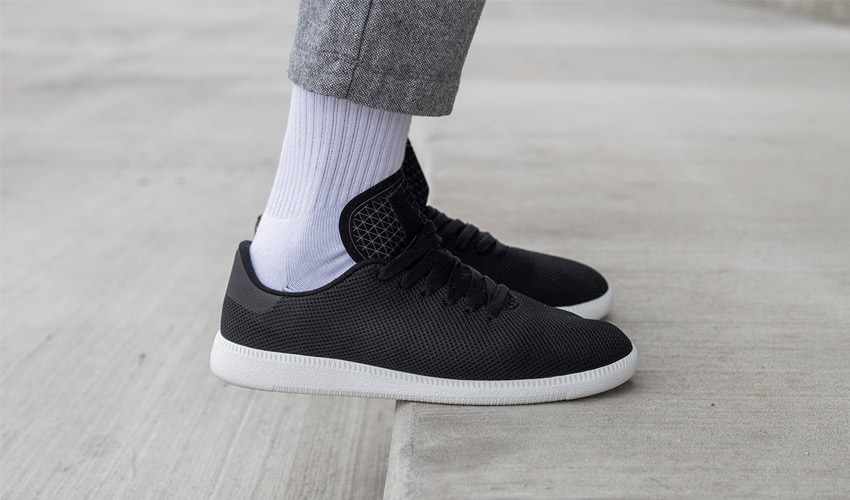 NewsPhoenix, the 3D printed trainers from plastic wasteA few days ago, the Oliver Cabell brand presented its first pair of 3D printed trainers made from recycled plastic bottles. Baptized Phoenix, these shoes were designed to address the growing problem of plastic waste. It is the upper part…
 MaterialsCan UCLA engineers make environmentally friendly concrete?Last week, it was reported that a group of UCLA engineers received a $1.5 million grant to make environmentally friendly concrete – by environmentally friendly they mean that it will incorporate carbon dioxide, a greenhouse gas, as part of a…