News
ECCO and Stratasys: Technological Innovation in the Footwear Industry
While several well-known shoe brands like Adidas and Nike have been known to use 3D technologies to produce shoes, they are not the only ones. In 2018, we told you about ECCO, a Danish shoe manufacturer that uses both 3D…
- 3 min read
- News
- Six more stories
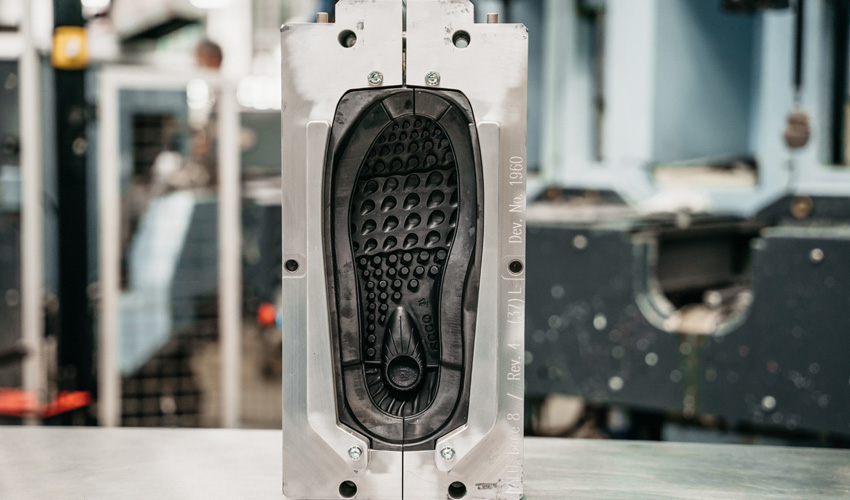
While several well-known shoe brands like Adidas and Nike have been known to use 3D technologies to produce shoes, they are not the only ones. In 2018, we told you about ECCO, a Danish shoe manufacturer that uses both 3D scanning and 3D printing to deliver customized products. And to continue its growth, the company recently announced a major partnership. Ecco will be partnering with the American giant Stratasys, and the company hopes that thanks to this it will be able to accelerate the development of its future products and shoes.
It’s no coincidence that the Danish company turned to additive manufacturing and the Origin One 3D printer, which is based on Stratasys’ proprietary P³ (programmable light curing) technology. “Our innovative approach to footwear development and desire to put customer experience as a priority made additive manufacturing a logical next step in the evolution of our development process,” commented Jakob Møller Hansen, Vice President of Research and Development at ECCO. He further noted, “In our search to find the right partner, we tested a variety of 3D printers for surface quality, print speed, and accuracy. Among the printers we tested, the Stratasys Origin One was the 3D printer that best met our stringent requirements.”
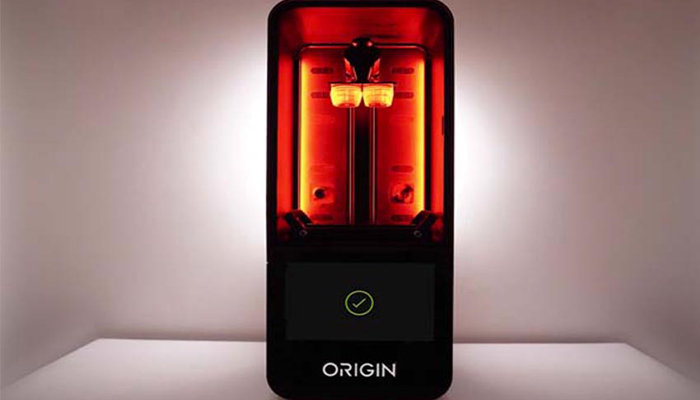
The Origin One 3D printer (photo credits: Origin)
ECCO and Stratasys use of innovative technologies for footwear
Using the Direct Injection Process (DIP) and 3D printing, ECCO aims to simplify the development process and increase automation. While DIP offers the opportunity to improve the method of attaching the upper part of the shoe to the midsole, additive manufacturing allows for the rapid production of molds from photopolymers at a lower cost than aluminum CNC machining. By 3D printing the DIP molds, a single pair of mold inserts can be printed overnight, which is understandably significantly more cost-efficient. Additionally, designers and developers are able to test functional shoes earlier in the development process.
More from the desk
Six other notes from the rest of the bench.
 NewsTop 5 Videos of the Week: 3D Print Ribcage, Bridges, & more!This week’s Top 5 Videos of the week contains videos from a very wide variety of sectors. From the medical sector, to engineering and architecture, to food, we have covered all the bases this week. A new Top 5 videos…
 ApplicationsWake Forest researchers create lab model of the human bodyUsing bioprinting techniques, researchers at the Wake Forest Institute for Regenerative Medicine have developed a miniature lab model of the human body. This model contains miniaturized human organs such as the heart, lungs and liver, and will be used to…
 Guides#Working3D: Six Questions for a Pre-Sales EngineerIn the additive manufacturing market, the jobs and profiles are varied: CAD designers, 3D printing technicians, sales representatives, after-sales managers, etc. The 3D printing value chain includes many different links and each one requires specific skills and knowledge. That
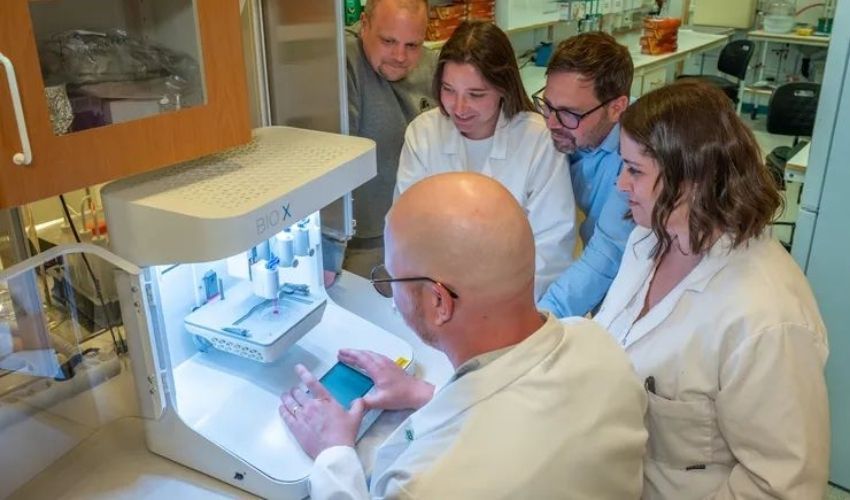 Applications3D Printable “Skin in a Syringe” for Healing BurnsSkin is the body’s first line of defense against the outside world, and when it suffers severe burns, repairing it can be a matter of life and death. Current treatments often involve transplanting a thin layer of the epidermis, the…
 GuidesSteakholder Foods Talks 3D Printed Meat AlternativesOver the past few years, there has been a growing interest in additive manufacturing in the food industry. The evolution of 3D printing has brought about a radical transformation in food production methods, offering the added bonus of being able…
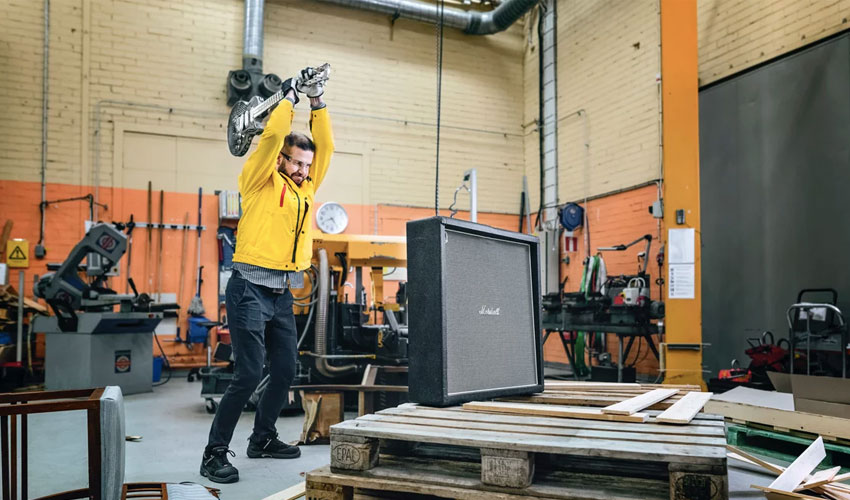 NewsUnsmashable 3D printed guitar imagined by SandvikSandvik, an expert in metal additive manufacturing, has developed an original 3D printed guitar: it is apparently unbreakable. No matter how much force the musician uses to smash it against the ground, it should not break. Guitar smashing, which began…