Applications
3DEndoFab: 3D Printing Biological Tissues Inside the Human Body
Imagine if one day we could print biological tissue directly inside the human body. It sounds crazy, but perhaps it is not as futuristic as it seems. Dr. Andrea Toulouse of the Institute of Applied Optics at the University of…
- 3 min read
- Applications
- Six more stories
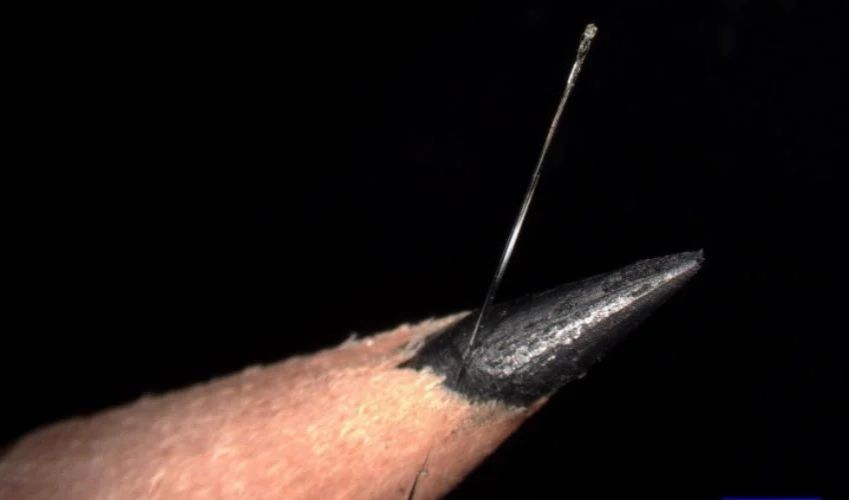
Imagine if one day we could print biological tissue directly inside the human body. It sounds crazy, but perhaps it is not as futuristic as it seems. Dr. Andrea Toulouse of the Institute of Applied Optics at the University of Stuttgart has just received €1.8 million in funding from the Carl Zeiss Foundation as part of the CZS Nexus program to accelerate her research on this issue. She will set up a research group, called 3DEndoFab, to design a micro 3D printer that could directly create tissue inside the body. It’s easy to imagine all the constraints that this micro-machine may represent, but this topic will undoubtedly have a considerable impact on the medical sector.
Printing skin, cartilage, tissue, or other cellular structures is now possible, and applications are rapidly multiplying. However, there are currently no solutions that allow printing directly inside the body, thereby eliminating all the challenges associated with implanting the printed structure. This is often the problem. This is what Dr. Andrea Toulouse hopes to solve. She is using the principle of endoscopy to design a very fine 3D printer that could be inserted into our bodies and create tissue directly on site so that it can perform its full function.
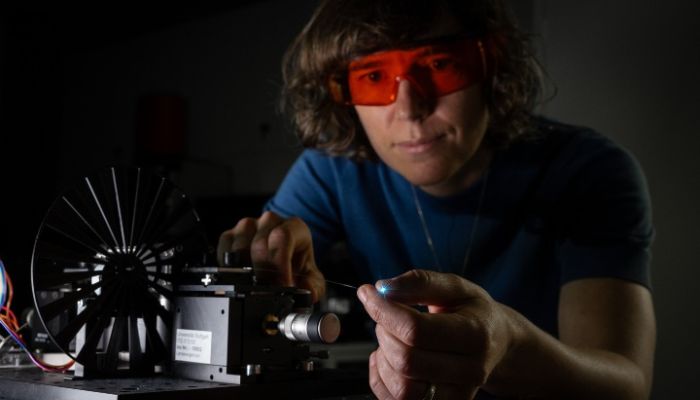
Andrea Toulouse and her team are conducting research into high-resolution 3D printing using light-based processes (photo credit: University of Stuttgart / Uli Regenscheit)
The project is called “3D Endoscopic Microfabrication” or 3DEndoFab. Andrea Toulouse explains: “Our group aims to develop a 3D-printed micro-optic, no larger than a grain of salt, that can be positioned on the tip of a glass fiber. There, it will shape light in such a way that even complex tissue structures can be printed in 3D with micrometer resolution, i.e., on the scale of human cells,”
More from the desk
Six other notes from the rest of the bench.
 Guides#3DStartup: Parastruct Drives Sustainability in the Construction SectorThe startup Parastruct has attracted attention, especially after winning in the “Waste Management and Recycling” category from Kurier magazine. With innovative solutions that follow the principles of circular production, the company is at the forefront when it comes to pursuing&h
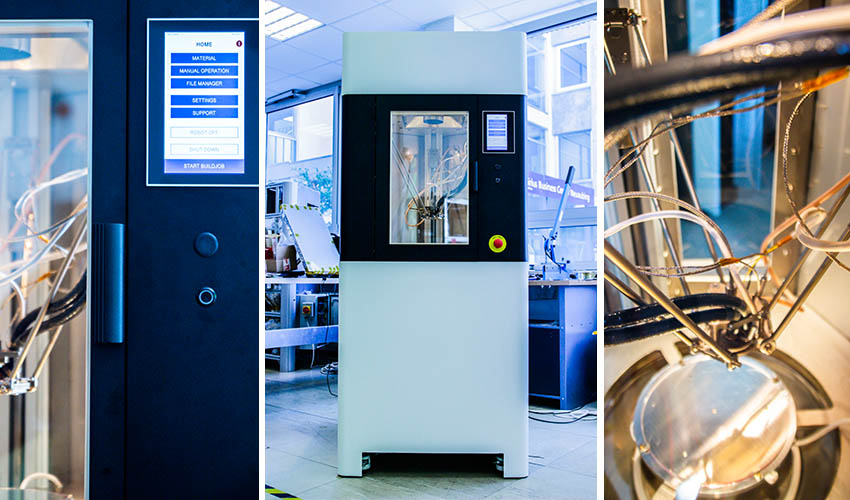 PrintersNew Kumovis R1 3D printer for medical and industrial applicationsKumovis is the German startup focused on delivering 3D printing systems for medical applications. They manufacture solutions for a variety of medical products, you can use their system for prototyping or to create personalised human implants. Recently, the company unveiled&hellip
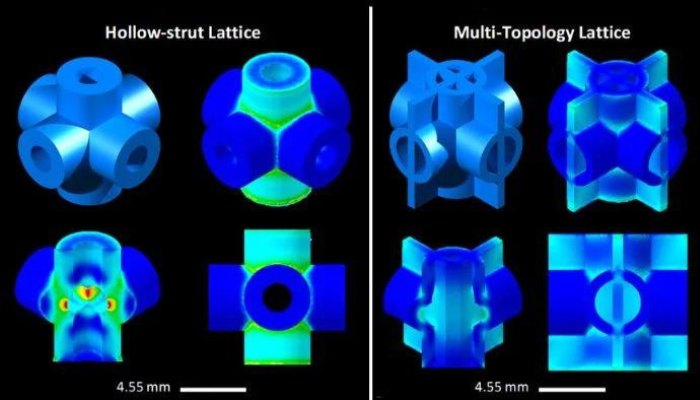 MaterialsNew 3D Printed Metamaterial Could Revolutionize Aircraft and Rocket Parts ProductionRepeatedly, researchers draw inspiration from nature to drive innovation. Recently, we highlighted the development of a novel 3D printing technique by researchers inspired by chameleons. Similarly, the Fraunhofer Institute is exploring insect-inspired wood binders for 3D printing
 NewsAir purifying bicycle wheel made with 3D printingPeople switching from cars to bicycles is already an important step towards cleaner air, especially in big cities, where the pollution is reaching alarming levels. But what if we could take it a step further? What if your bicycle could actually…
 SoftwareOpenSCAD, the Free and Open-Source 3D ModelerOpenSCAD is a free, open-source CAD software aimed at making solid 3D models. This CAD software is suitable for experienced users who are comfortable with programming. One of the critical features of OpenSCAD is that it is a script-only 3D…
 ApplicationsFleet Space Has Developed Fully 3D Printed SatellitesFrom building projects on the moon to 3D printed rocket parts, lately there have been many projects mixing additive manufacturing and space. And with good reason. For space companies, the technology is opening up a whole new world of possibilities.…