Materials
New 3D Printed Metamaterial Could Revolutionize Aircraft and Rocket Parts Production
Repeatedly, researchers draw inspiration from nature to drive innovation. Recently, we highlighted the development of a novel 3D printing technique by researchers inspired by chameleons. Similarly, the Fraunhofer Institute is exploring insect-inspired wood binders for 3D printing
- 3 min read
- Materials
- Six more stories
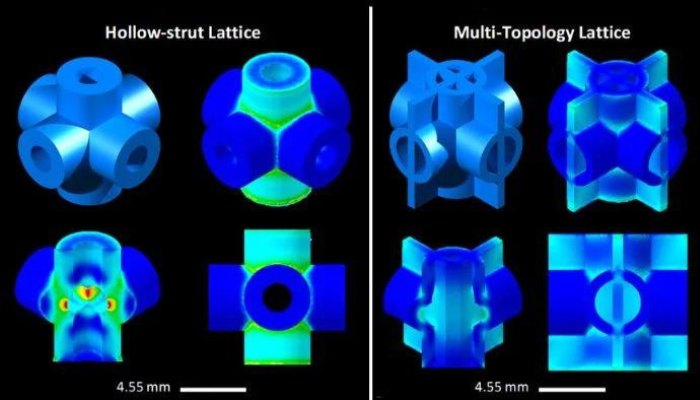
Repeatedly, researchers draw inspiration from nature to drive innovation. Recently, we highlighted the development of a novel 3D printing technique by researchers inspired by chameleons. Similarly, the Fraunhofer Institute is exploring insect-inspired wood binders for 3D printing. In the most recent breakthrough, scientists at RMIT University have engineered a metamaterial using 3D printing, featuring a lattice structure of hollow struts reminiscent of the resilience found in organ pipe corals (Tubipora musica) or the hollow stems of the Victoria water lily. This new material could impact aircraft or rocket parts production, for example.
The 3D printed metamaterial was produced at the RMIT Advanced Manufacturing Precinct using the Laser Powder Bed Fusion (LPBF) 3D printing process from a titanium alloy, which in itself is not a novelty. The material’s novelty and nomenclature stem from its artificial composition, possessing distinct properties absent in natural counterparts. Resembling a 3D printed titanium lattice cube, this metamaterial boasts a remarkable strength-to-weight ratio unprecedented in natural materials, seamlessly merging lightweight attributes with exceptional strength. The developed metamaterial’s lattice structure is notable: it is 50% stronger than the next most durable material, the cast magnesium alloy WE54. WE54 shares a similar density and is often used in the aerospace industry.
Stress concentrations in red and yellow on the grid (left), while (right) the new grid structure distributes the stress more evenly.
With this design, the lattice structure effectively distributes stress, reducing vulnerabilities by half and deflecting potential cracks along its framework. This result yields a significantly more resilient structure, poised for application in aerospace manufacturing for aircraft or rocket components and in medical devices like bone implants. The material’s biocompatibility, corrosion and heat resistance further underscore its potential versatility.
The Path to a More Stable Material
According to RMIT professor Ma Qian, in the past, decades of attempts to replicate the hollow “cellular structures” in metals have failed due to problems with manufacturability and the concentration of stress on the inner areas of the hollow struts, which has led to premature failures. Detailing this process, Qian explained: “Ideally, the stress in all complex cellular materials should be evenly spread. However, for most topologies, it is common for less than half of the material to mainly bear the compressive load, while the volume of material is structurally insignificant.”
More from the desk
Six other notes from the rest of the bench.
 NewsPEAK unveils their first 3D printed basketball shoesPEAK is a Chinese company who, since 1989, has manufactured sporting goods and boasts several professional sportsmen among their customers. At a recent press conference this month, the company has announced their latest innovation for the famous basketball player Dwight…
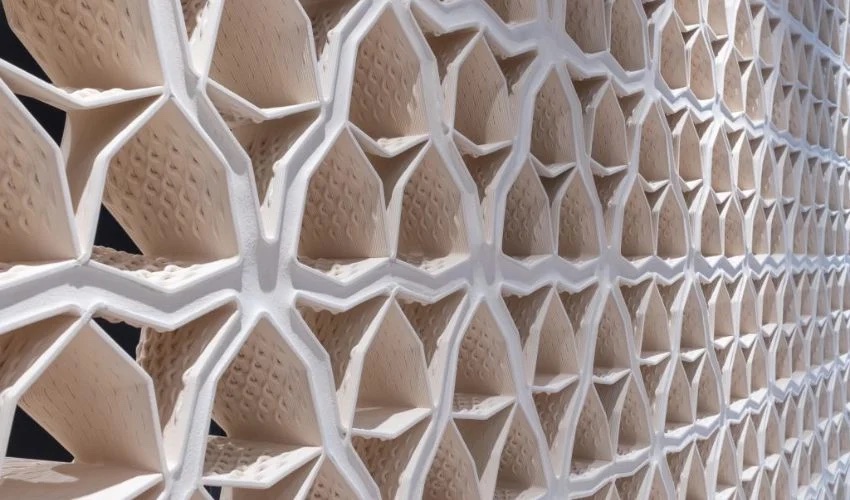 NewsHive, a 3D Printed Clay WallAdditive manufacturing has made its debut in the construction industry a while ago. Today, it is possible to build all types of structures with the help of 3D printing technologies. Ever since then, it seems that one innovation follows the…
 PrintersThe Top Resin 3D Printers in 2026Stereolithography, better known by the abbreviation SLA, became the first 3D printing technology when it was imagined in 1984 by American Chuck Hull, later founder of 3D Systems. The process, which is based on the photopolymerization of a UV-sensitive resin…
 NewsWhat to see at Formnext 2019!Formnext is undoubtedly the largest fair dedicated to additive manufacturing: for 5 consecutive years, it has brought together thousands of international players and helps strengthen the position of 3D printing technologies in the industry. This year, it opens its doors…
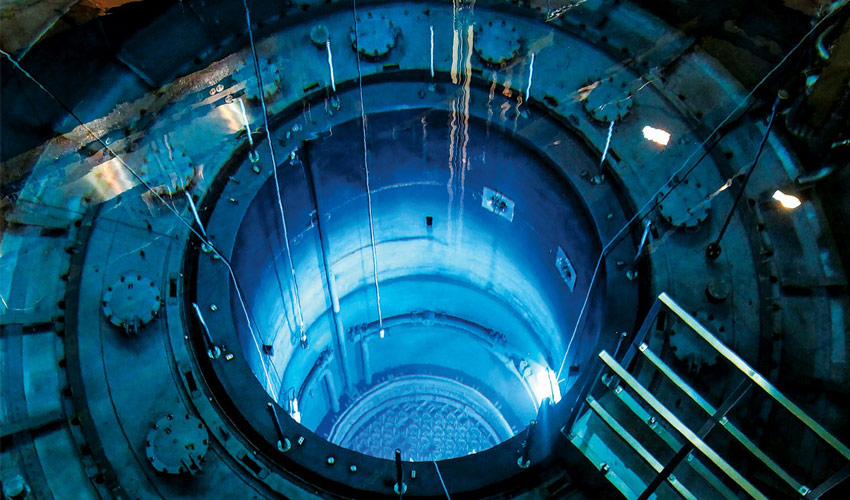 NewsUsing metal additive manufacturing to produce nuclear reactorsBWX Technologies (BWXT) is currently working on the development of metal additive manufacturing technology for nuclear component design in collaboration with the U.S. laboratory in Oak Ridge. The goal is to produce parts from high-temperature alloys and refractory metals for&hell
 NewsThe Tallest 3D Printed Building in the World Unveiled in Saudi ArabiaIt has been a busy year for 3D printed construction projects. From Zero Net Energy buildings to 3D printed schools and holiday parks and more, never before has additive manufacturing seemed to have such a crucial role in the building…