News
6 Standout 3D Printing Innovations from CES 2026
Billed as a global stage for innovation, the Consumer Electronics Show (CES) returned to Las Vegas this year, taking place from January 6-9. The event brings together technology experts, decision-makers, media, and buyers from across the tech ecosystem, with the…
- 3 min read
- News
- Six more stories
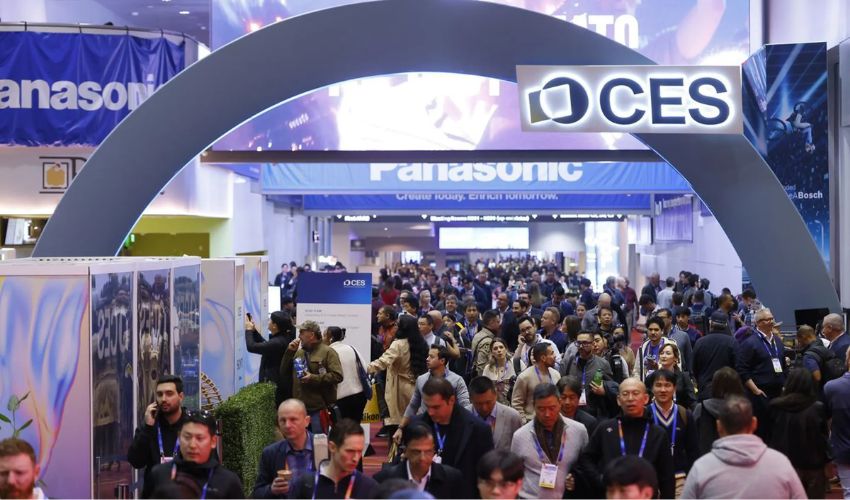
Billed as a global stage for innovation, the Consumer Electronics Show (CES) returned to Las Vegas this year, taking place from January 6-9. The event brings together technology experts, decision-makers, media, and buyers from across the tech ecosystem, with the 2026 edition welcoming more than 148,000 attendees and 4,100 exhibitors. Everything from next-gen computing and sound systems to humanoid robots and even advanced safety technologies was on display, and as expected, 3D printing had a presence on the show floor as well. Here are six additive manufacturing innovations from CES that stood out to us!
A 12-Nozzle 3D Printer from AtomForm
AtomForm announced the release of a 12-nozzle printer: the Palette 300. With a remarkable maximum print speed of 800 mm/s and promises of up to 90% filament saving, this printer is sure to catch attention if it can deliver. The machine has unique OmniElement automatic nozzle switching, which allows for up to 36 colors or 12 materials in one print. According to AtomForm, this leads to a 50% increase in material changing efficiency. The machine features a 350°C hotend, and when actively heated, the chamber reaches 65°C. These heating capabilities reduce warping and ensure strong adhesion. The Palette 300 will be available in early Q2 2026, with pre-orders starting in Q1.
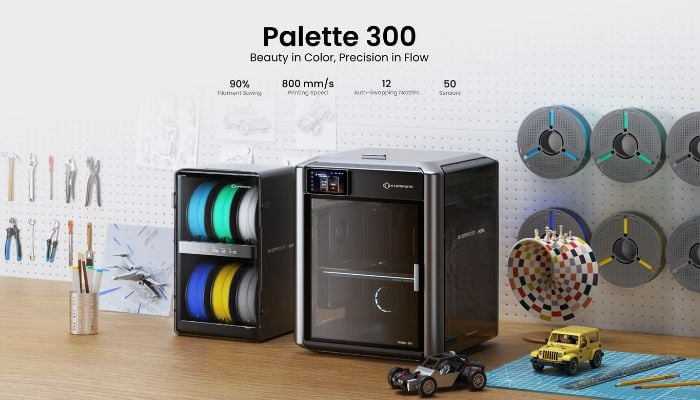
The Palette 300 can print with up to 36 colors. (Photo Credit: Atomform)
An LPBF Printer for Less than $40K from Mastrex
Mastrex is a newly launched brand born from the merger of two long-standing American manufacturers, Vulcan USA LLC and Burgmaster. The company made its debut at CES with the MX Series, a lineup of laser powder bed fusion (LPBF) metal 3D printers designed to make industrial metal printing more accessible and scalable. LPBF has largely been the domain of expensive, highly specialized systems. Mastrex is offering an alternative with its tiered portfolio, which starts with compact machines for precision parts, and expands to large-format platforms built for volume production. Entry into the ecosystem starts with the MX100, with a starting price of $39,000, lowering the barrier to metal additive manufacturing. Instead of treating each printer as a standalone purchase, Mastrex positions the MX Series as a growth path, allowing customers to stay within a unified platform as their needs evolve.
More from the desk
Six other notes from the rest of the bench.
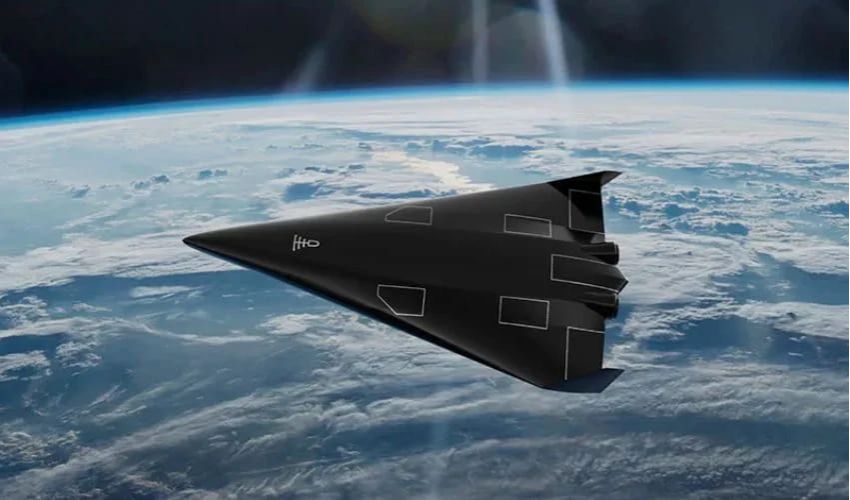 ApplicationsPOLARIS Spaceplanes Tests a 3D Printed Aerospike Rocket EngineGerman aerospace start-up POLARIS Spaceplanes, based in Bremen, has achieved a key milestone by successfully testing a 3D printed Aerospike rocket engine. This achievement highlights the growing importance of 3D printing technology in the aerospace sector. During the tests, the&h
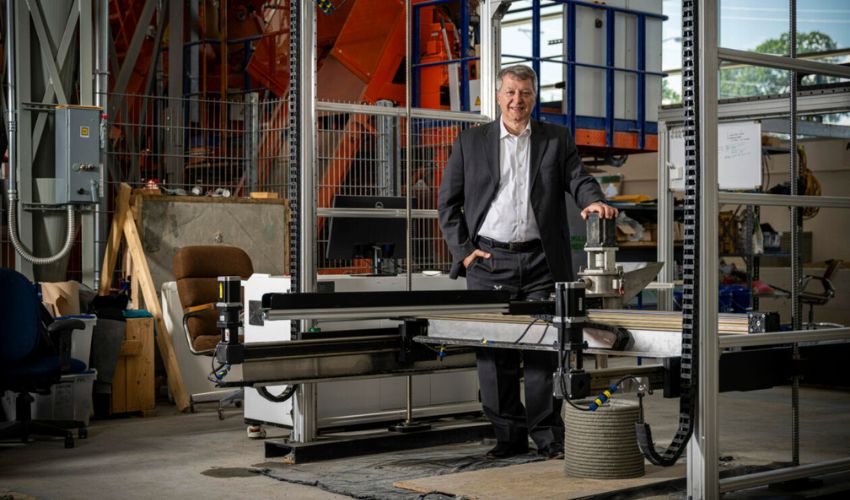 NewsUSACE Funds Research Into AI-Assisted, 3D Printed ConcreteAs much as additive manufacturing has benefitted the general public, the defense sector has also made great gains with 3D printing. So much so that additive manufacturing in the military is expected to be worth $1.7 billion in just a…
 PrintersLab 3Dnatives: MicroDelta Rework 3D Printer TestAs part of our series of 3D printer test articles, the 3Dnatives Lab is committed to testing cheap 3D printers in addition to more expensive, prosumer printers. This time, we are testing the MicroDelta Rework 3D printer kit which retails…
 ApplicationsResearchers Successfully 3D Print Muscle TissuesThe additive manufacturing industry has experienced strong growth in recent years and opened up new opportunities in numerous professional fields. In addition to the automotive sector or aerospace, 3D printing is finding more and more applications especially in the medical&hellip
 NewsGanit Goldstein on her vision of 3D printing for fashionGanit Goldstein is a 3D designer working on how to merge additive manufacturing technologies with fashion to bring new possibilities to the industry. Her aim is to work with new technologies to provide custom-made items that fit the wearer perfectly.…
 NewsMaggy, the 3D printed device that promotes social distancingOver the past few months we have seen how the additive manufacturing industry has mobilized to fight the health crisis caused by Covid-19. However, once the worst stage of the pandemic is over, it is time to ensure that this…