News
Maggy, the 3D printed device that promotes social distancing
Over the past few months we have seen how the additive manufacturing industry has mobilized to fight the health crisis caused by Covid-19. However, once the worst stage of the pandemic is over, it is time to ensure that this…
- 3 min read
- News
- Six more stories
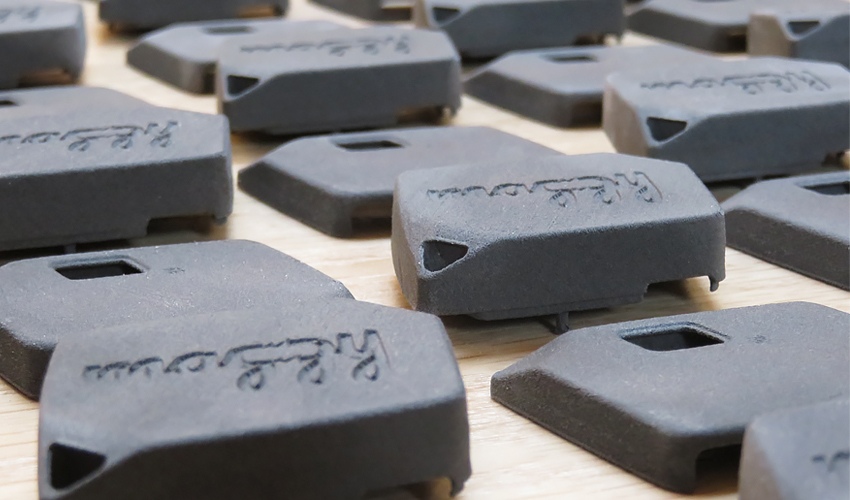
Over the past few months we have seen how the additive manufacturing industry has mobilized to fight the health crisis caused by Covid-19. However, once the worst stage of the pandemic is over, it is time to ensure that this situation does not happen again. To this end, many companies have developed all kinds of devices to encourage safety and physical distance between people: from necklaces that remind you not to touch your face to a proximity dress that expands when someone is too close to you. The latest invention is Maggy, a portable device created with a desktop 3D printer, which helps to keep a safe distance between people. Maggy emits vibrations and sounds when a person approaches too close to the device user.
Soon after the initial launch of the product, thousands and thousands of orders – over 45,000 – were received. Why was this particular device so successful? Maggy has the latest generation of bluetooth chips that allow precision of around 10-15 centimeters. It also integrates a rechargeable battery that can last up to 5 consecutive days. Basically, Maggy is based on the actual handheld device and a mobile application. In addition, this wearable device has the advantage of being secure since no registration is necessary, and no user data is being collected. Many multinational companies have already expressed some interest in the device.
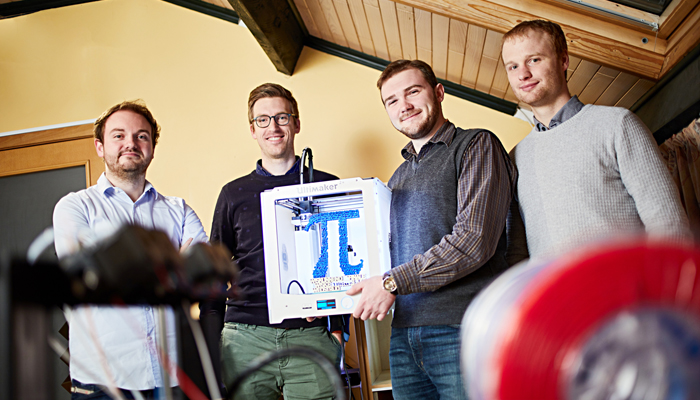
The PrintPlace team.
The process of creating Maggy
Maggy’s requirements in terms of both accuracy and appearance were high. The team of creators wanted to offer a high-quality device at an affordable price and in the shortest possible time. So, they realized that SLS technology was the best solution. Despite being a rather expensive production method, this technology offers numerous advantages, such as freedom of design, complex internal geometries, detailed and quality finishes. Once the team was set on the technology, they started looking for a partner to help them organize pre-production runs within their budget. This is where Maggy’s collaboration with the Belgian startup PrintPlace begins.
More from the desk
Six other notes from the rest of the bench.
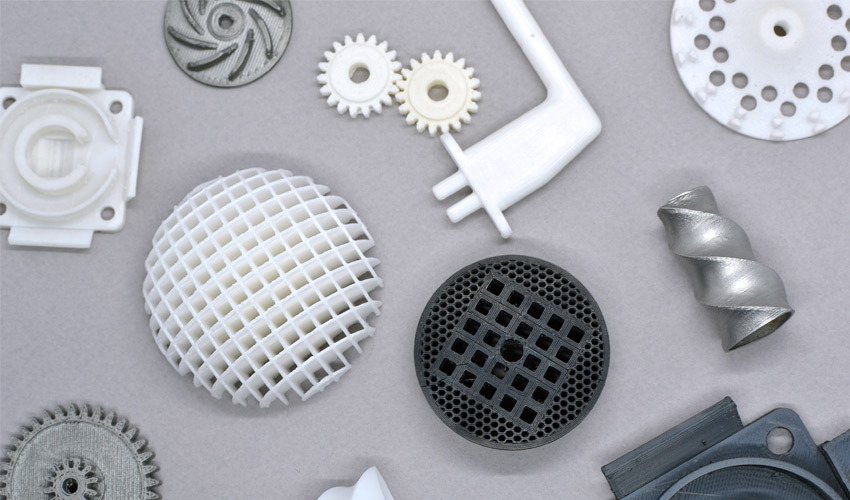 GuidesNanoe on Democratizing Ceramic and Metal Desktop Additive ManufacturingAn expert in developing raw materials for the ceramics industry since 2008, French company Nanoe entered the additive manufacturing market in 2018 with its first line of ceramic filaments. Compatible with FDM machines, they enable the design of durable parts…
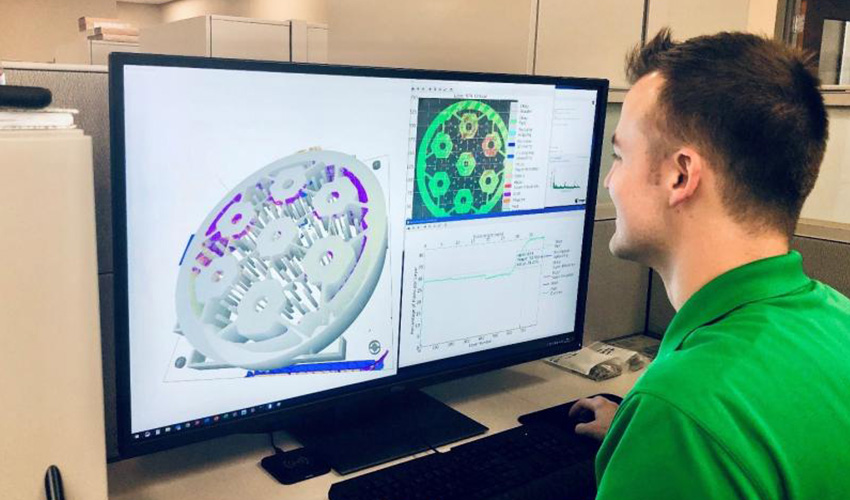 NewsORNL develops AI software to assess 3D printing quality in real-timeThe automation of various stages of the 3D printing workflow will accelerate industrial 3D printing. When parts are made at scale, repeatability becomes essential, however 3D printing systems cannot always provide this. Therefore, part of this automation concerns assessing the&he
 ApplicationsNew 3D Printed Helmet Suspension System for Military and Law EnforcementWhen most people think of making helmets safer, 3D printing technology is probably not the first thing that comes to mind. However, over the years we have seen numerous examples where additive manufacturing has contributed to better-fitting, more comfortable helmets,…
 PrintersThe Da Vinci Color AiO to be presented at FormnextThere is not a big event related to additive manufacturing in which the Asian company XYZprinting does not present any of its novelties. This year in the third edition of Formnext, which will start tomorrow and continue until this Friday,…
 NewsWhat Is the Perspective of AM Executive Leaders About the Future of the Technology?We are just over three weeks away from the start of RAPID + TCT 2024 in Los Angeles, California. Everything is almost ready for the biggest additive manufacturing and industrial 3D printing event in North America, which will take place…
 ApplicationsBioprinting inside the body for a more effective treatment of stomach ulcersBioprinting technologies have been advancing quite rapidly in recent years. In the medical sector, this method allows cells and biomaterials to be combined and deposited layer by layer, aiming to create biomedical models with the same properties as living tissues.…