News
USACE Funds Research Into AI-Assisted, 3D Printed Concrete
As much as additive manufacturing has benefitted the general public, the defense sector has also made great gains with 3D printing. So much so that additive manufacturing in the military is expected to be worth $1.7 billion in just a…
- 3 min read
- News
- Six more stories
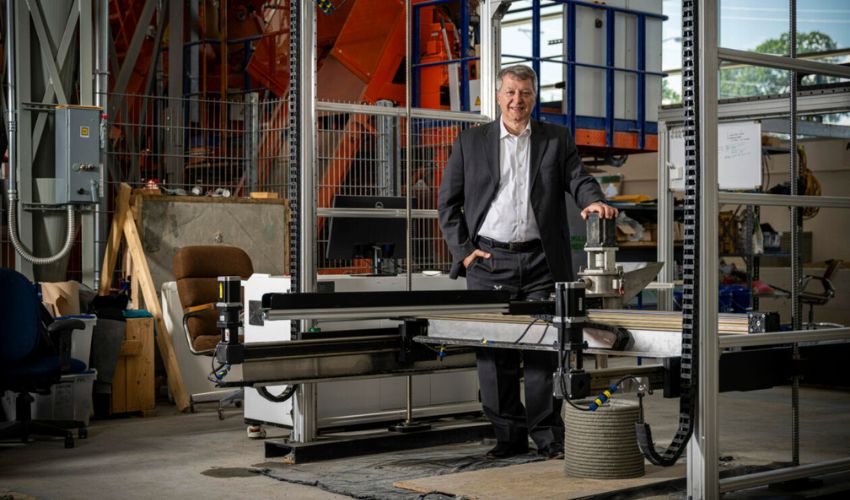
As much as additive manufacturing has benefitted the general public, the defense sector has also made great gains with 3D printing. So much so that additive manufacturing in the military is expected to be worth $1.7 billion in just a few more years. While some innovations have been able to adapt to rapidly evolving situations such as the war in Ukraine, there is also a large interest in concrete additive manufacturing. This interest is due to its potential to be able to provide rapid deployment and construction solutions for the housing of troops, supply storage or even humanitarian aid stations both domestically and abroad. The U.S. military in particular has shown great interest.
For example, the US Army Corps of Engineers has recently awarded $1.4 million to a research team from the Missouri University of Science and Technology (Missouri S&T). They will utilize artificial intelligence to identify local materials suitable for mixing into concrete before being 3D printed into the desired buildings and structures. As one of the latest projects within this sector, the driving force behind the team’s research is the introduction of AI as a means to easily locate the most beneficial and locally available resources to create the concrete mixture for 3D printing. This change in the fundamental stage of construction planning may be able to eliminate the logistical time constraints when waiting for the delivery of traditional construction materials. Coupled with the time-saving and less labor-intensive process afforded by 3D printing concrete structures, building projects may be completed in a matter of days or weeks, instead of months.
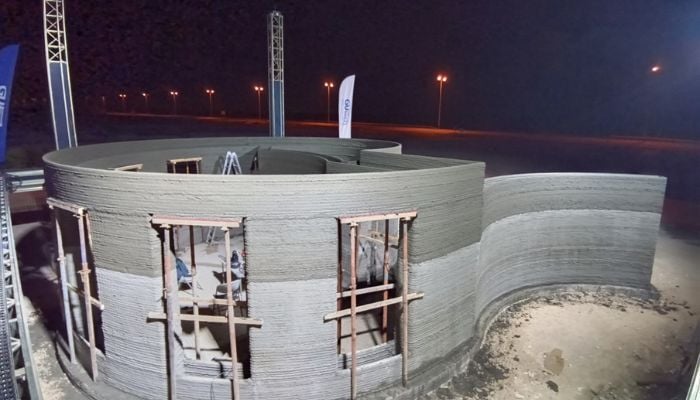
3D printed construction projects are gaining traction around the world due to their low cost and fast build times. This cafe in Oman was printed in just 22 hours. (photo credits: COBOD)
Doctor Kamal Khayat, the leader of the Missouri S&T research team elaborates, “By harnessing the power of AI, our research team aims to streamline the process of material selection, ensuring optimal performance and cost-effectiveness. The AI program will evaluate a wide range of locally available materials in various areas and identify the most appropriate combinations for 3D printing concrete. This will enhance the efficiency of the construction process, improve troop safety, pave the way for more sustainable practices and help expedite humanitarian assistance missions.”
More from the desk
Six other notes from the rest of the bench.
 NewsDiscover the Different Sounds Produced by 3D Printed InstrumentsEvery year on June 21st, we celebrate the Fête de la Musique, otherwise known as World Music Day. And what better way to do it this year than to discover videos of some of the latest applications mixing 3D printing…
 NewsEuropol Concerned About Growing Number of 3D Printed WeaponsIn recent years, an increasing amount of 3D printed weapons has been seized in Europe, which is raising concerns for the European Police Office (Europol). For that reason, a conference was recently held to bring together a number of professionals…
 News3D Printing Job Market Trends in 2020While many industries were heavily impacted by the health crisis during 2020, the field of additive manufacturing continued to grow. Companies are more confident in the technology and continue to invest in order to continue their development. But that’s not…
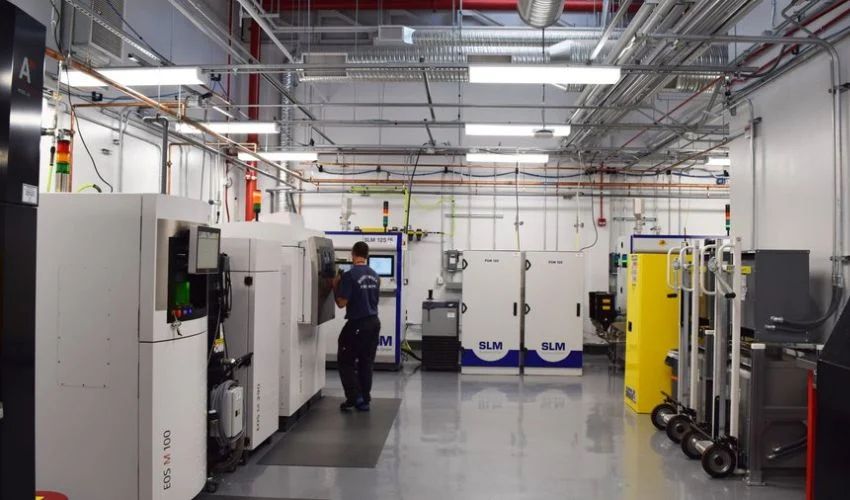 ApplicationsHoneywell Receives £14+ Million to Accelerate Development of Aerospace Additive ManufacturingThis is good news for additive manufacturing in aerospace! The Honeywell group, leading a consortium comprising 3T Additive Manufacturing, BeyondMath, Qdot Technology, and the Oxford Thermofluids Institute, has just announced that it has received £14.1 million in funding from the
 News#3DStartup: Inkbit, 3D printer powered by machine-vision and AIA startup straight out of MIT, Inkbit, is working towards overcoming traditional constraints to 3D printing by giving its machines ‘eyes’ and a ‘brain’. The industrial 3D printer developed by Inkbit is a multi-material machine capable of printing extremely flexible…
 SoftwareProdways Integrates Oqton AI Software into Machines for Better End-to-End ControlOne of Europe’s leading manufacturers of 3D printers and digital manufacturing solutions, Prodways, has announced a partnership with Oqton, a software company that specializes in AI-powered solutions for the manufacturing industry, including additive manufacturing, and weld