Applications
Notre Dame Researchers Develop Method for 3D Printing Blood Capillary Networks
Researchers at the University of Notre Dame have successfully 3D printed blood capillary networks using a surprising technique. Before exploring their method, it’s worth understanding why 3D printing blood capillary networks matters in the first place. In the United States&
- 3 min read
- Applications
- Six more stories
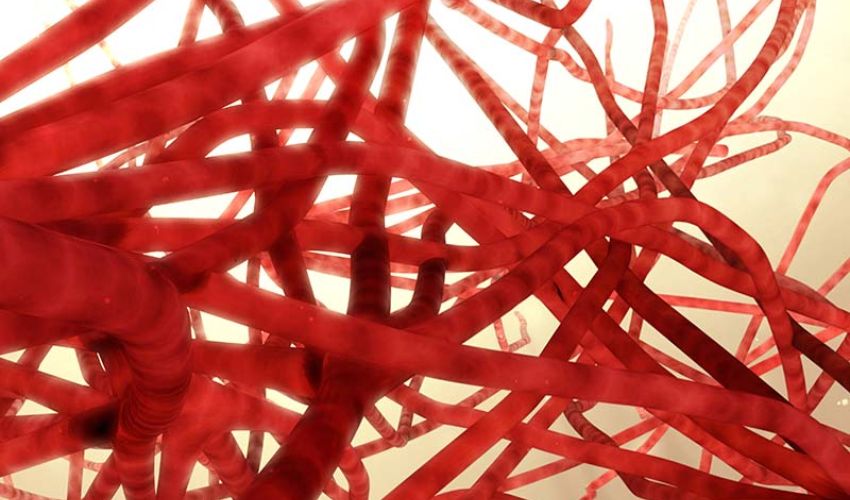
Researchers at the University of Notre Dame have successfully 3D printed blood capillary networks using a surprising technique. Before exploring their method, it’s worth understanding why 3D printing blood capillary networks matters in the first place. In the United States alone, over 100,000 people are waiting for organ transplants, and donor organs remain in short supply. If we could 3D print organs out of a patient’s own cells, it could not only address the shortage, but potentially eliminate the risk of the body rejecting the organ altogether.
That’s why researchers have been working for decades to 3D print organs. One central challenge, however, is replicating the scale and complexity of the body’s vascular networks, especially capillaries. A blood capillary network is an interlacing web of the body’s smallest blood vessels. These microscopic tubes deliver oxygen and nutrients to cells and remove waste products, making them a necessary component of any bioprinted tissue model.
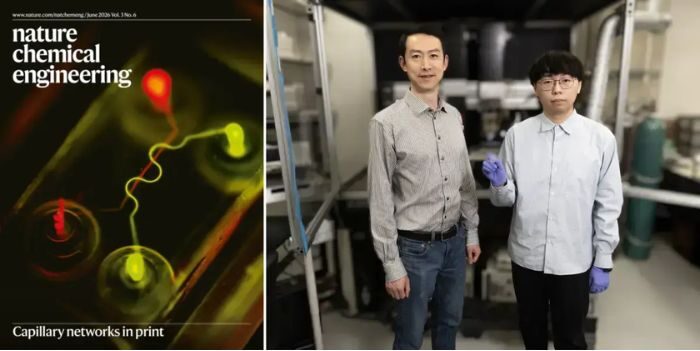
(Left) Capillaries visualized with fluorescent imaging, appeared on the cover of Nature Chemical Engineering. (Right) Yanliang Zhang and Yuxuan Liao, doctoral student and lead author of the study. (Photo by Wes Evard / Notre Dame College of Engineering)
“Printing blood vessels that mimic natural living systems is very difficult since the vessels vary in size,” said Yanliang Zhang, the Advanced Materials and Manufacturing Collegiate Professor in the Department of Aerospace and Mechanical Engineering. “Getting the smallest vessels right, without losing scalability and structural integrity, has remained one of the greatest challenges to current state-of-the-art bioprinting.”
More from the desk
Six other notes from the rest of the bench.
 Guides#3DStartup: LEAM Improves the Layer Density of 3D Printed XXL PartsFrom science to 3D printing to business: this has been LEAM’s journey so far. The spin-off from the Technical University of Munich developed the foundation of the technology now marketed from within the university. With its DEMEX system, LEAM is…
 ApplicationsResearchers Have Successfully 3D Printed Hair FolliclesHair is a tricky subject – always desired on the head where it thins out over the years while fought against and declared superfluous on other parts of the body for aesthetic reasons. In this respect, nature is more intelligent…
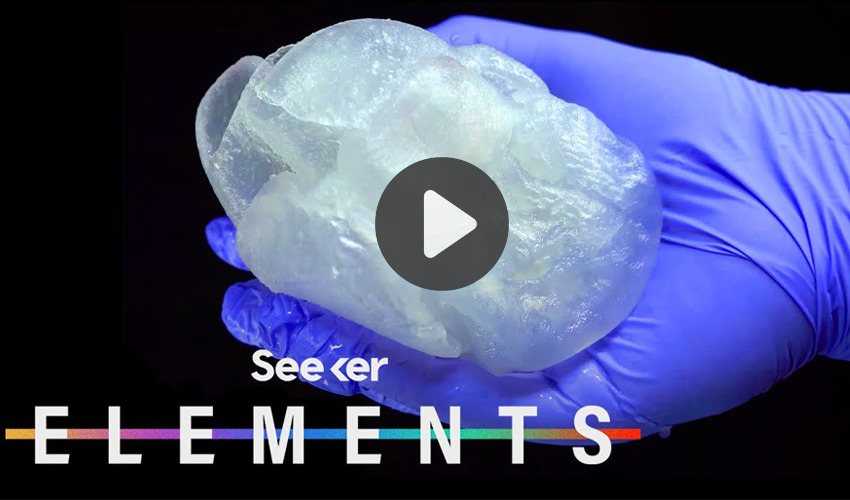 NewsTop 5 Videos: First Full-Size 3D Print of a Human HeartThis week we found the top 5 videos about 3D printing and the way additive manufacturing is changing production. The technology has infiltrated many sectors, from medical to automotive: check our selection of the week to keep up with the innovations! If you enjoy these, you&helli
 ApplicationsThales Alenia Space sends 3D printed pieces into orbitThere has been a recent trend in the construction of parts for satellites and other spacecrafts using 3D printing, and Thales Alenia Space is just another example of this increasing trend. Heading into the future at full speed, the company…
 News3D Printed Facade Becomes Eye-Catching Part of Amsterdam Shopping StreetIn the Netherlands, traditional craftsmanship has met innovative technology in an unexpected place. Rotterdam-based studio RAP has taken on the task of designing a façade for a boutique in Amsterdam. And this is not just any boutique, but a luxury…
 GuidesWhat Were the Most Innovative 3D Startups in 2022?As we at 3Dnatives do every year, now that it is December, we want to take the opportunity to review some of the most outstanding 3D startups in 2022. Over the past 12 months, we have interviewed 3D printer manufacturers,…