News
3D Printed Facade Becomes Eye-Catching Part of Amsterdam Shopping Street
In the Netherlands, traditional craftsmanship has met innovative technology in an unexpected place. Rotterdam-based studio RAP has taken on the task of designing a façade for a boutique in Amsterdam. And this is not just any boutique, but a luxury…
- 3 min read
- News
- Six more stories
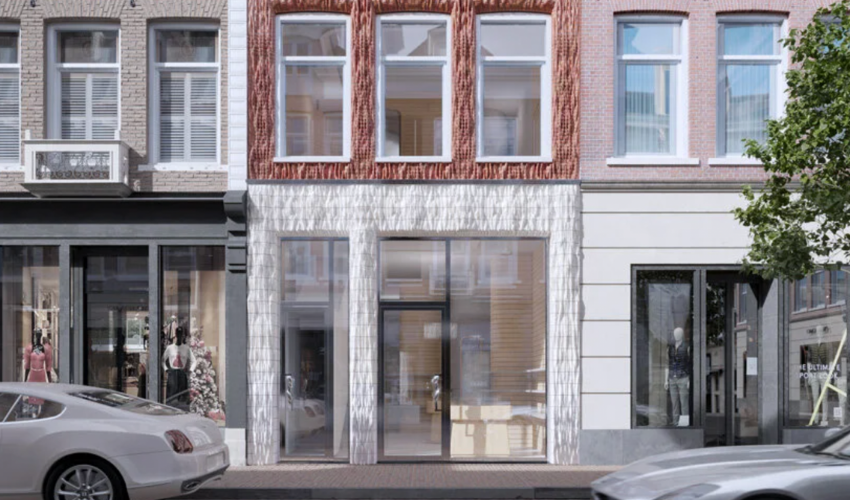
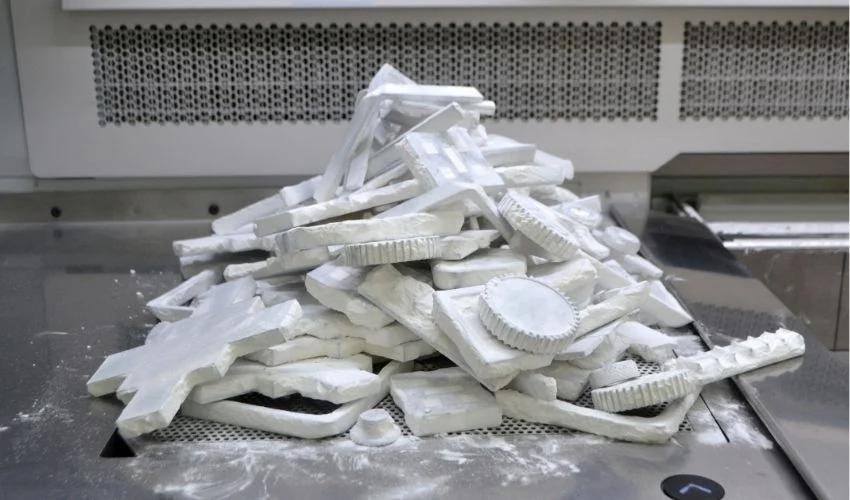
In the Netherlands, traditional craftsmanship has met innovative technology in an unexpected place. Rotterdam-based studio RAP has taken on the task of designing a façade for a boutique in Amsterdam. And this is not just any boutique, but a luxury boutique in the popular shopping street P.C. Hooftstraat. The façade itself, which is currently still under construction, was produced entirely using additive manufacturing. Soon, ceramic tiles and red bricks from the 3D printer will give the facade a new shine. The design not only replicates the original façade, but also fits perfectly into the overall concept of the shopping street.
studio RAP is an architecture firm that focuses particularly on innovative digital manufacturing methods. This made it a clear choice for the Dutch company to consider the usage of additive manufacturing in the creation of this façade. The goal was to be able to design, manage, build and improve architecture in an innovative way. In doing so, the architecture firm hopes to inspire people around the world with the contemporary expression of digital craftsmanship through its state-of-the-art manufactured façade, which is scheduled for completion in the summer of 2022. The use of additive manufacturing thus also makes it possible to reinterpret historical classics in an exciting way. What’s particularly exciting is that the algorithmically designed façade is being made in-house at studio RAP using a large-format 3D printer from manufacturer KUKA.
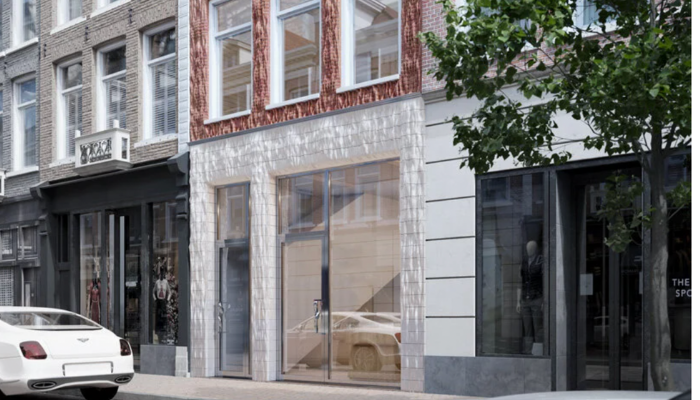
The façade impresses especially with its algorithmically designed design (photo credits: studio RAP)
A Whole New Way to Make Façades
The design of the 3D-printed facade is strongly reminiscent of a knitted look, like that of clothing. No wonder that thus the entire building is particular eye-catching for passers-by, strongly differentiating itself from surrounding houses. For the production, the method of ceramic 3D printing was adopted. What many do not know: Ceramics are widely used as a material in Amsterdam. Accordingly, the use of ceramics refers not least to the nearby Rijksmuseum, which houses a large collection of ceramics from all over the world. It is possible that the façade of the luxury boutique will also soon be part of this collection.
More from the desk
Six other notes from the rest of the bench.
 GuidesHouston Maker Faire 2017: Our interview before the eventAhead of Houston Maker Faire 2017, we spoke to Andrew Lynch, one of the many people behind making this event happen. Houston Maker Faire runs from the 21st to the 22nd of October 2017. To find out more information about…
 SoftwareWhat is a G-Code and What is its Use in 3D Printing?As we know, additive manufacturing goes far beyond simply turning on the machine and pushing a button. There are many steps behind this process, from the design of a part to its final post-processing, and all the steps in-between. One…
 NewsThe 3D Printing Show: AM Innovations Across the Value Chain at Formnext 2024Formnext 2024 started with a bang yesterday with a flurry of announcements and launches from key players in additive manufacturing. And of course, 3Dnatives is on the ground in Frankfurt ready to bring you all the breaking news from the…
 NewsThe Industrial 3D Printing Market is Maintaining its GrowthThe consulting firm CONTEXT publishes a quarterly study on the additive manufacturing market, focusing on machine shipments across all product lines. This time around, the news from the report is positive, showing growth in orders and shipments, particularly in the…
 NewsAdditive Manufacturing Gears Up for Increased Volume Production and Specialized MaterialsRecently, Protolabs released a comprehensive report shedding light on the latest trends within the additive manufacturing market, spanning uses, innovations, and key statistics. According to the report, the printing market is projected to soar to $28.07 billion by 2024 and&hellip
 ApplicationsNASA to Conduct 3D Printing Experiments Aboard the International Space StationThe realm of space exploration marks the early stages of humanity’s journey, with countless planets and galaxies awaiting discovery. Moreover, significant strides have been made in recent decades, driven by the discovery of innovative technologies. Additive manufacturing st