Materials
3D Printed Tungsten Paves Way for More Efficient Fusion Energy
Fusion energy holds promise as a potential solution to humanity’s energy demands. However, unlike nuclear fission, the development of economically viable fusion reactors faces significant challenges. One such obstacle is the intense neutron irradiation that subjects reactor
- 3 min read
- Materials
- Six more stories
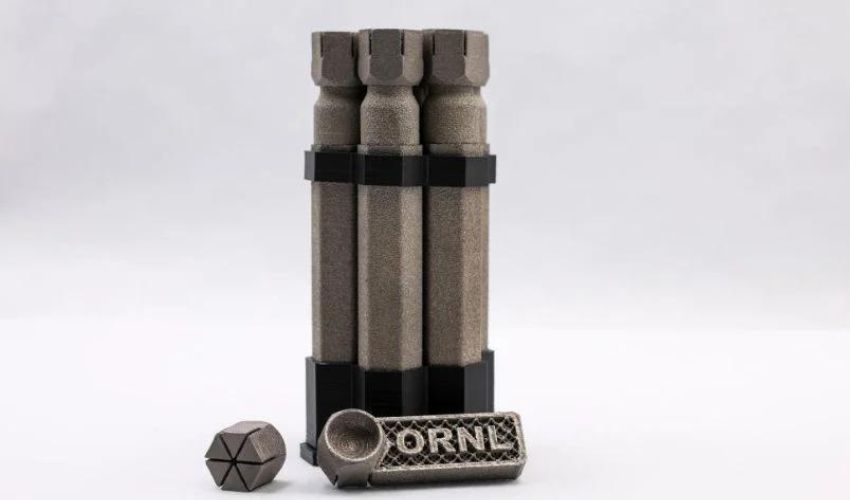
Fusion energy holds promise as a potential solution to humanity’s energy demands. However, unlike nuclear fission, the development of economically viable fusion reactors faces significant challenges. One such obstacle is the intense neutron irradiation that subjects reactor materials to extreme stress, increasing the risk of embrittlement. To address this, researchers at Oak Ridge National Laboratory have turned to 3D printing to create flawless tungsten components capable of withstanding the extreme temperatures and conditions within fusion reactors. Leveraging additive electron beam manufacturing, they have successfully produced complex tungsten parts with intricate geometries, paving the way for advancements in fusion energy technology.
The challenges inherent in fusion technology primarily stem from the rigorous demands placed on the materials utilized, necessitating resilience against extreme temperatures and intense energy levels. Tungsten emerges as a promising candidate due to its remarkably high melting point, rendering it well-suited for fusion reactors where plasma temperatures soar beyond 180 million degrees Fahrenheit. However, despite its favorable properties, tungsten presents a paradox: while highly durable under extreme conditions, it becomes brittle and prone to fracture at room temperature and in its pure state. The slightest impurities can induce alterations in its structure, exacerbating its fragility.
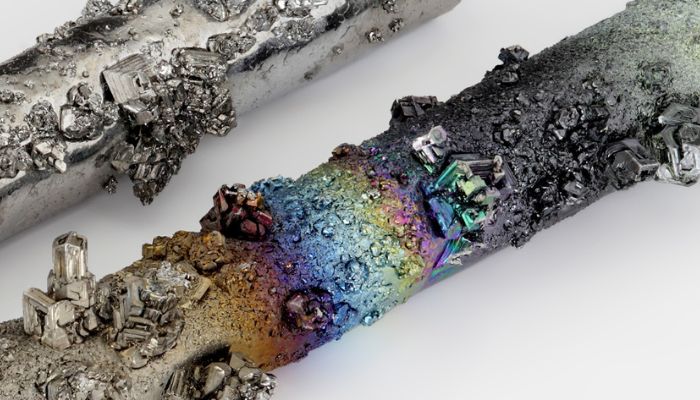
Tungsten is a shiny white heavy metal with a high density and has the highest melting point of all metals at 3422°C. (Photo Credits: Heinrich Pniok via Wikimedia Commons)
The solution to embrittlement is an electron beam 3D printer that applies tungsten layer by layer into precise shapes. To melt the metal powder and bond it into a solid metal object, the technology uses a magnetically directed stream of particles in a high-vacuum housing. The vacuum reduces contamination from foreign material and the formation of residual stresses.
More from the desk
Six other notes from the rest of the bench.
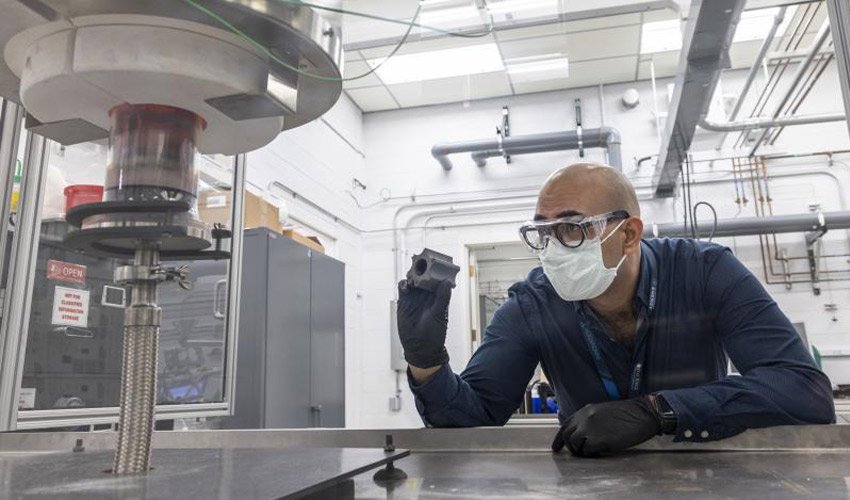 NewsBinder Jetting and Refractory Materials: A Winning Combination for the Nuclear Reactors of Tomorrow?Ultra Safe Nuclear Corporation (USNC) is a U.S. company specializing in nuclear energy. Recently, it signed a partnership with Oak Ridge National Laboratory (ORNL) to use its novel additive manufacturing process to design certain components for nuclear reactors. It will…
 NewsRobotic jellyfish 3D printed to protect coral reefsPreserving our oceans has become a real concern: more and more species are threatened by human pollution. It is urgent to propose solutions to protect this marine ecosystem. 3D printing can be one solution. We can see some progress made with…
 NewsWEBINAR: How Can You Use FDM to Print Ceramics and Metals?When most people think of 3D printing, the process that comes to mind is FDM, or Fused Deposition Modeling. An extrusion-based method, FDM requires just a build plate, an extruder (or multiple) and a filament for users to print their…
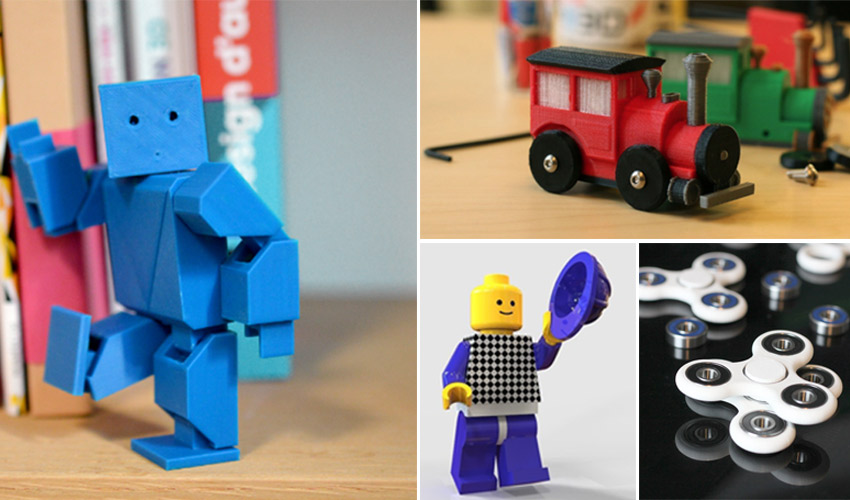 NewsTop 10 toys to make for your 3D printed ChristmasChristmas is fast approaching and it’s time to dig deep to find the right gift ideas. To help you, we have prepared a small selection of the best STL files for 3D printing toys. You will be able to please your loved…
 ApplicationsBentley Combines 3D Printing With Sustainable Rose Gold With “The Black Rose”Bentley is known for designing and building exceptional vehicles using the finest materials. As early as 2022, the company showcased its applications of 3D printing precious metals with a range of 18-karat yellow gold parts for the Batur, which was…
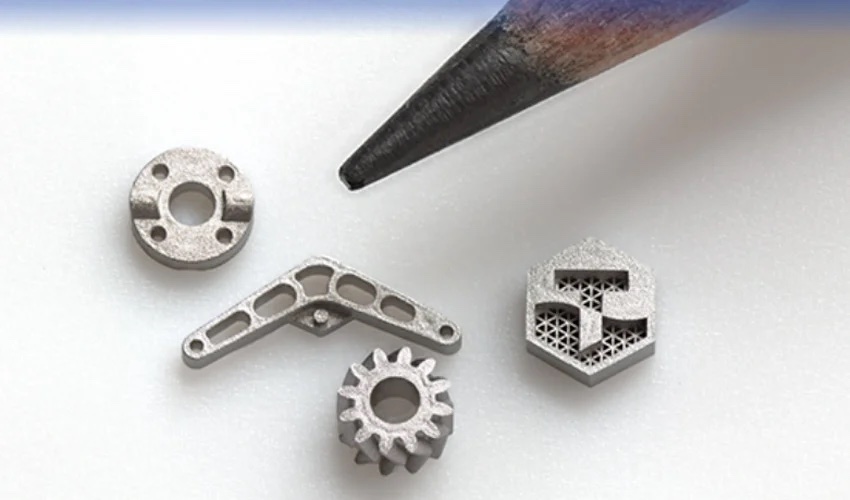 GuidesTrio Labs and its Microscopic Metal 3D Printing TechnologyTrio Labs is an American company that has developed a metal additive manufacturing technology capable of designing parts on a microscopic scale. Called Resin Infused Powder Lithography, it can achieve a resolution of 5 microns, making it possible to design…