Guides
Trio Labs and its Microscopic Metal 3D Printing Technology
Trio Labs is an American company that has developed a metal additive manufacturing technology capable of designing parts on a microscopic scale. Called Resin Infused Powder Lithography, it can achieve a resolution of 5 microns, making it possible to design…
- 3 min read
- Guides
- Six more stories
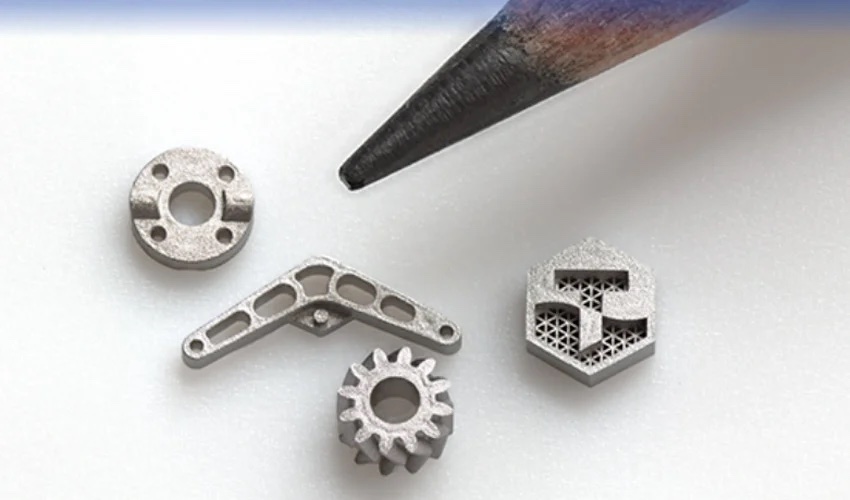
Trio Labs is an American company that has developed a metal additive manufacturing technology capable of designing parts on a microscopic scale. Called Resin Infused Powder Lithography, it can achieve a resolution of 5 microns, making it possible to design highly detailed and precise components. It is mainly used in the healthcare sector, where personalization is key. We caught up with its founder and CEO, Adam Steege, to find out more about how this process works and the prospects it offers.
3DN: Could you introduce yourself and tell us about your connection with 3D printing?

Adam Steege
I started my first company in 2010 to develop advanced laparoscopic surgical instrumentation, and utilized 3D printing, as well as CNC and casting processes to develop those devices. I’ve also worked extensively in medical device development in a consulting capacity over the past 10+ years, and have used those processes as well as stamping and molding to produce devices. I had a lot of the same frustrations with 3D printing that I think most design engineers have had, especially when it comes to metal printing (poor surface finish, poor tolerances) so I started Trio Labs to fix some of those problems.
3DN: What is Trio Labs’ mission?
Trio Labs has developed a technology called Resin Infused Powder Lithography (RIPL). This process provides the precision of CNC machining with the flexibility of 3D printing. We are primarily focused on healthcare applications, since there is a tremendous need for the parts we can make in the minimally invasive surgical space as well as in interventional catheters. More broadly, there is a continuous push towards miniaturization in many verticals, and we will support this type of innovation everywhere we can.
More from the desk
Six other notes from the rest of the bench.
 ApplicationsTop 5 Videos: 3D Printing’s Diverse Dental ApplicationsWelcome to our compilation of this week’s top 5 most compelling 3D printing videos. We kick off this week with a video by 3D Systems, providing us with a detailed look at their latest dental innovations, which were showcased at…
 NewsFollow All the Formnext 2022 News on 3Dnatives!Formnext, the international trade fair for additive manufacturing, is returning to Frankfurt from November 15th to 18th for its seventh year. This time around promises to be even richer in innovations and novelties! While the 2021 event brought together more…
 PrintersInssTek Is Revolutionizing Alloy Research Globally With the MX-Lab DED 3D PrinterDirected energy deposition (DED) is one of the more versatile metal additive manufacturing technologies. Used for everything from large metal parts to repairs, the process is gaining popularity in different sectors. One area where we are particularly seeing a growing…
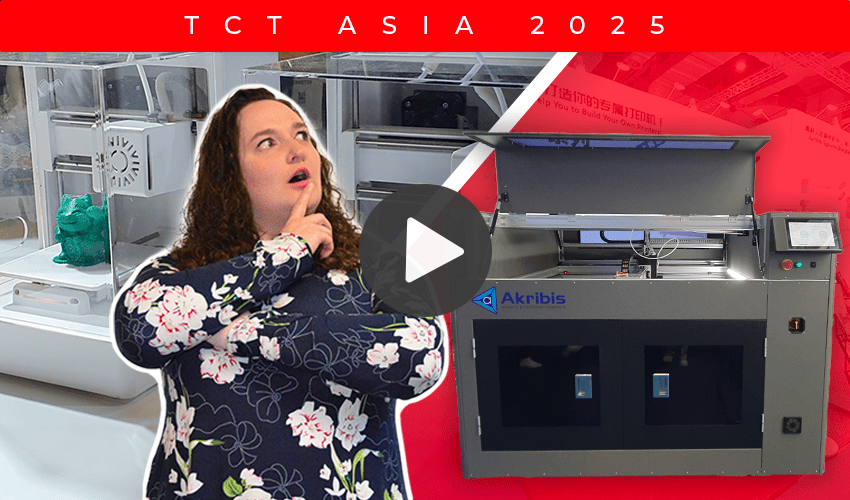 NewsThe 3D Printers That Stood Out at TCT Asia 2025TCT Asia 2025 ended last week! And what a show it was. While there, we saw some incredible applications while also learning about the most important trends in additive manufacturing in China. But that was not all! We also had…
 SoftwareHow to Choose the Best Computer for 3D Modeling and CADCAD, or computer-aided design, is the process of creating, modifying and optimizing designs using specialized software. It is widely used in a number of industries, including architecture, engineering, manufacturing (including additive manufacturing) and entertainment. CAD softwa
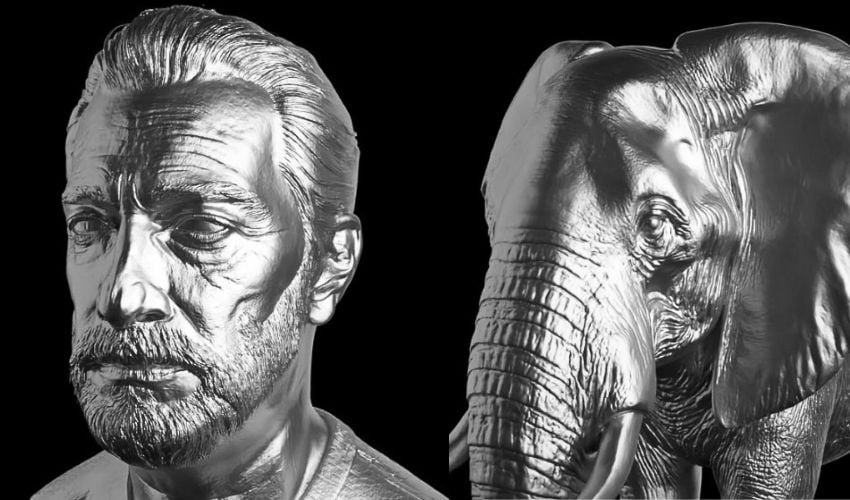 SoftwareFrom 10-Million-Face Meshes to Part Separation: Hyper3D Moves AI Into Print PreparationAI-generated 3D models have come a long way, but creating a model is only the beginning of the 3D printing process. A digital asset still needs to be edited, repaired, prepared for fabrication and, in many cases, divided into multiple…