News
Binder Jetting and Refractory Materials: A Winning Combination for the Nuclear Reactors of Tomorrow?
Ultra Safe Nuclear Corporation (USNC) is a U.S. company specializing in nuclear energy. Recently, it signed a partnership with Oak Ridge National Laboratory (ORNL) to use its novel additive manufacturing process to design certain components for nuclear reactors. It will…
- 3 min read
- News
- Six more stories
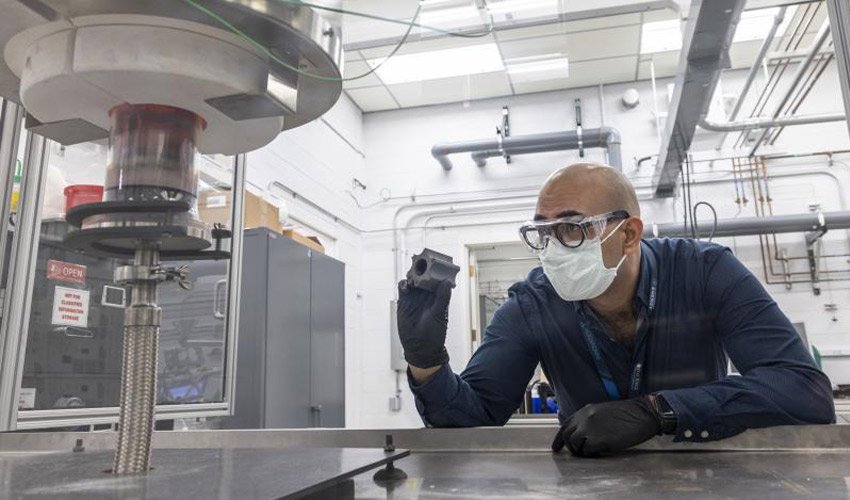
Ultra Safe Nuclear Corporation (USNC) is a U.S. company specializing in nuclear energy. Recently, it signed a partnership with Oak Ridge National Laboratory (ORNL) to use its novel additive manufacturing process to design certain components for nuclear reactors. It will use binder jetting and refractory materials, which are highly resistant to extreme heat and degradation, to create complex shapes quickly and cost-effectively.
USNC has developed a thermal and electrical reactor called the Micro Modular Reactor (MMR). Still in the approval process in the United States and Canada, it is the first reactor to be commercialized that will operate using the principle of nuclear fission. In order to accelerate the development of its products, USNC is turning to additive manufacturing and more specifically to the capabilities offered by ORNL, which is already a major proponent of 3D technologies for the nuclear industry. The laboratory is indeed at the origin of the “Transformational Challenge Reactor Demonstration” (TCR) program, which aims to imagine more efficient energy systems, notably through additive manufacturing.

The Micro Modular Reactor (photo credits: USNC)
The USNC Will Rely on Binder Jetting
The USNC explains that it is used to using silicon carbide to design the core components of its reactors. This is a ceramic known for its resistance to very high heat and radiation, but its machining remains very complex and expensive if you want to design complex geometries. However, by using additive manufacturing, and more specifically a binder jet process combined with chemical vapor infiltration, the USNC should be able to overcome these constraints. In addition, the 3D printing method developed by ORNL would be compatible with refractory materials, which are known to resist extreme temperatures and degradation. Kurt Terrani, executive vice president of the USNC, added, “This is the holy grail of additive, that you can do things faster, that are in geometries that were previously very difficult or impossible with conventional manufacturing methods.” It’s not known, however, which components are planned to be printed.
More from the desk
Six other notes from the rest of the bench.
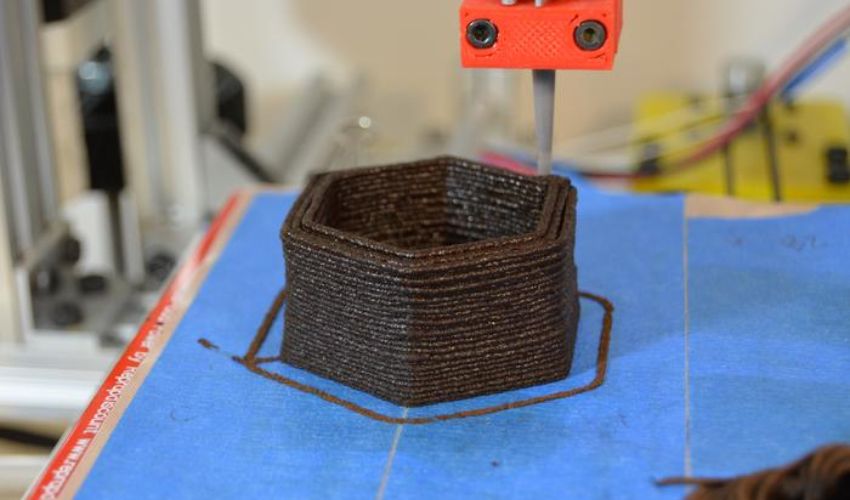 NewsUsing Coffee to Provide Sustainable 3D Printing MaterialsAs additive manufacturing has opened up new creative avenues, there are those who take an interest in setting an early precedent by producing environmentally friendly materials to lead the charge in sustainability. Creating such recycled filament and green materials is…
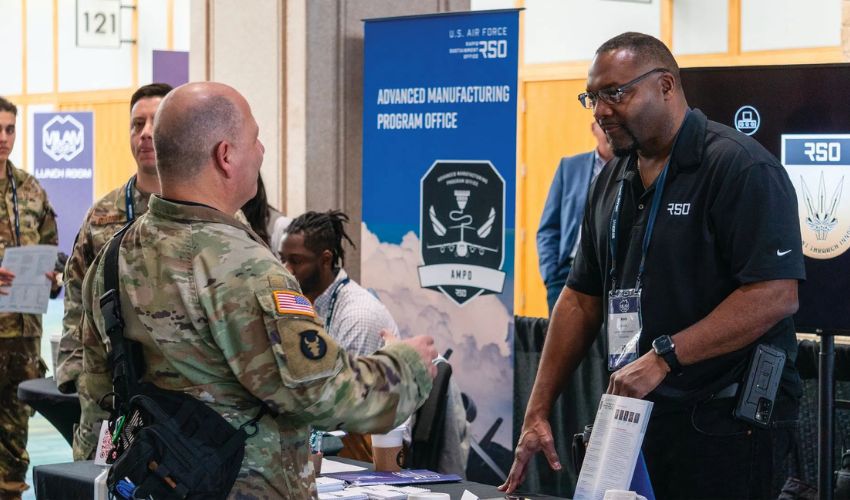 ApplicationsMILAM 2025 Brings Together Stakeholders in Both Additive Manufacturing and DefenseWhen we think about the sectors that are being shaped by additive manufacturing, defense is undoubtedly one that comes to mind. This is especially the case in the United States, where the Department of Defense (DoD) has been leading the…
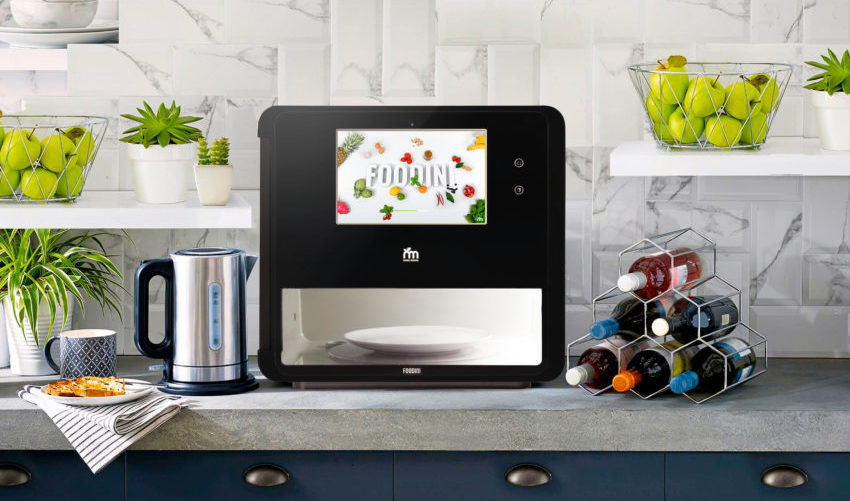 NewsMeet the Foodini, the Michelin-Star Approved Appliance Bringing 3D Printing to the KitchenBrothers, Javier and Sergio Torres, of the Michelin-starred restaurant, Cocina Hermanos Torres, have equipped their kitchen with the Foodini. The Foodini, is a 3D printing kitchen appliance developed by Natural Machines, a Barcelona-based food tech company. The device is the&hell
 ApplicationsPorsche 3D prints engine pistonsAlways trying to be on the edge of innovation, Porsche has embraced the additive manufacturing technologies a while ago. In 2018 the German manufacturer was already 3D printing spare parts for its luxury cars, and earlier this year it started…
 Printers3Dnatives Lab: Testing the Einstar 3D Scanner From SHINING 3DFounded in 2004, SHINING 3D is a Chinese manufacturer of both 3D printers and 3D scanners. With a particular focus on the medical and dental sectors, the brand has grown internationally in recent years and now has offices in China,…
 PrintersMIT Engineers make a 10X Faster FDM 3D Printer!Engineers at the Massachusetts Institute of Technology (MIT) have developed an FDM 3D printer that, with the help of a laser, prints 10 times faster than normal office machines. Though it uses a laser, it is still considered a fused deposition…