News
With Tidal Stool, 3D Printed Stools Are Bringing Together Humans and Marine Species
In Hong Kong, a team of researchers from the University of Hong Kong’s faculty of architecture in the Fabrication and Material Technologies Lab has designed with 3D printed stools that could be used by both humans and animals. No, you’re…
- 3 min read
- News
- Six more stories
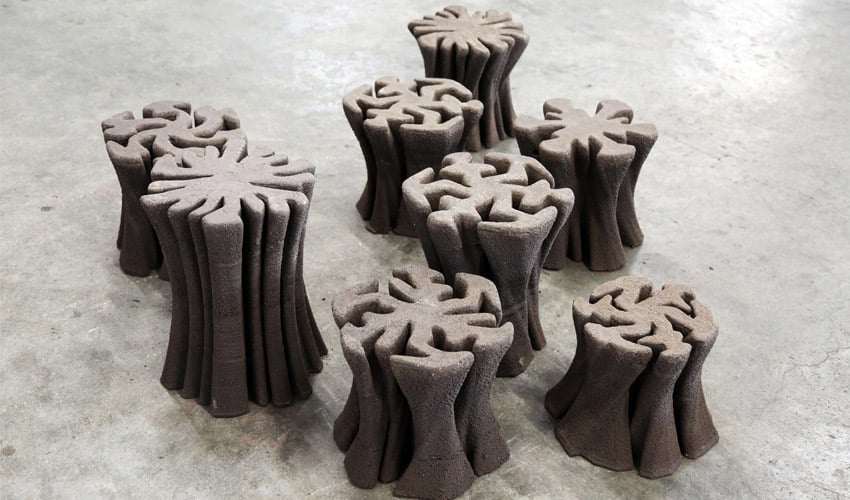
In Hong Kong, a team of researchers from the University of Hong Kong’s faculty of architecture in the Fabrication and Material Technologies Lab has designed with 3D printed stools that could be used by both humans and animals. No, you’re not dreaming: these small concrete installations would act as a refuge for animal species when the tide rises and they need shelter or protection from predators. And for the rest of us, the stools simply offer us, at low tide, a moment to rest without getting sand everywhere. Called “Tidal Stool”, the project aims to show how we can make products that meet our needs and also contribute to local ecosystems.
These stools are located next to the town of Sha Tau Kok, on an area that has lived with the rhythm of the tides for hundreds of years. The animals and the plants which live there must thus adapt to the fluctuations of the sea, but also to the consequences man-made destruction. Notably, a lot of land has been reclaimed to the detriment of the maritime space in the area, destroying the habitats of the animal ecosystem that remained there. The Tidal Stools aim to reconcile the two.
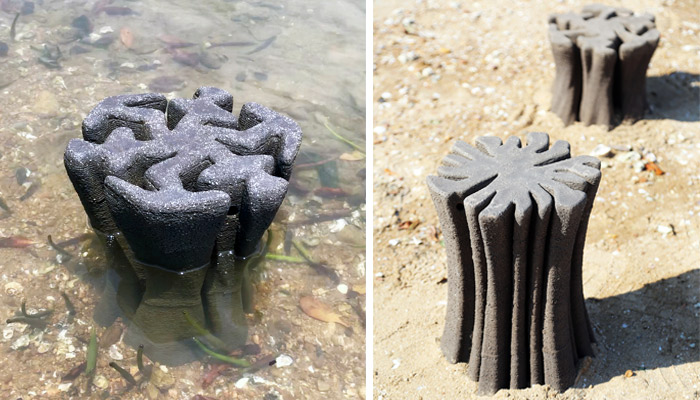
The stools change their purpose depending on the tides (photo credits: Christian J. Lange/Weijen Wang)
The team behind this project explains that they were influenced by three factors in designing these so-called Tidal Stools. First, they went back to the classic ceramic stools that have been a part of Chinese history for thousands of years – they are mainly found in landscape gardens. The second source of inspiration was the mangrove roots, native to the area and which are known for supporting sustainable coastal and marine ecosystems in and of themselves. Finally, the team was strongly inspired by the colors of the rocks of this coastline, this dark brownish aspect that blends perfectly with the rest of the landscape. In addition to all this, the use of 3D printing, without which the production of this original design would not have been possible.
More from the desk
Six other notes from the rest of the bench.
 NewsTOP 5 videos of the week: the SpaceX 3D printed helmet and more!We found the TOP 5 videos of the week related to 3D printing and additive manufacturing here. Share your videos and comment on the article below or on the 3Dnatives’ Facebook or Twitter account. Hope you’ll enjoy and have a…
 NewsWEBINAR: Scaling Innovation – How Continuous Fiber 3D Printing is Shaping the Future of ManufacturingComposite 3D printing is one of the fastest growing AM sectors, offering parts with the strength and characteristics of metal at the weight of plastic. But not all composite AM processes are created equal. That is why in this 3Dnative…
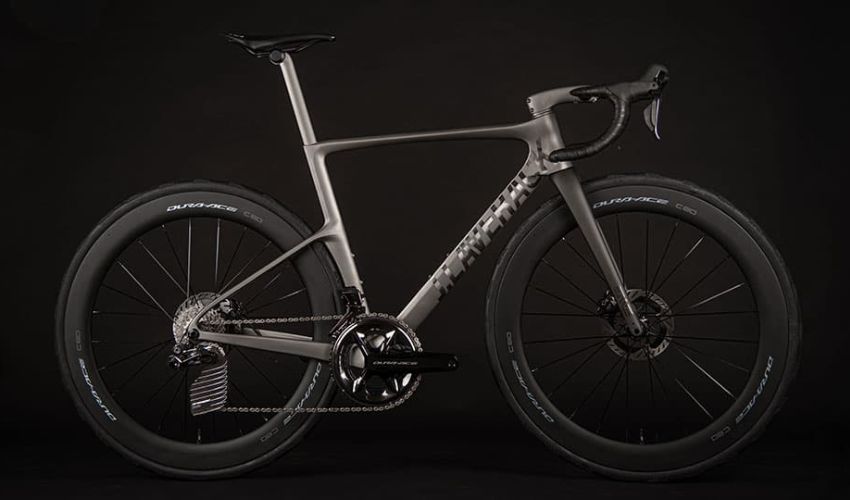 ApplicationsLoughborough Research Helps Launch Fully 3D Printed Titanium BikeA new chapter in performance cycling has opened with the debut of Speedform, a fully 3D printed titanium road bike developed by British manufacturer J.Laverack and supported by aerodynamic expertise from Loughborough University. Unveiled at the Rouleur Live show in…
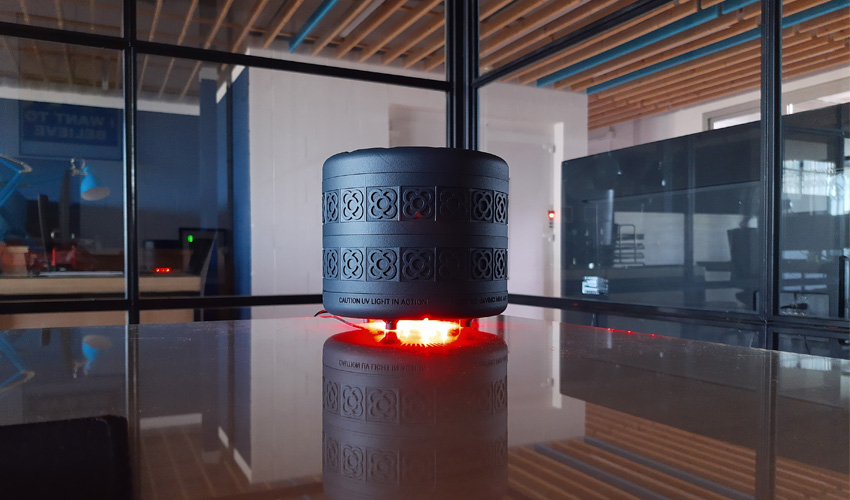 ApplicationsAMS mini, a 3D printed device capable of eliminating airborne virusesThe seriousness of the current health situation has led many companies to seek and develop initiatives to curb the spread of the virus as much as possible. Winsun is a perfect example of this, with the creation of small 3D…
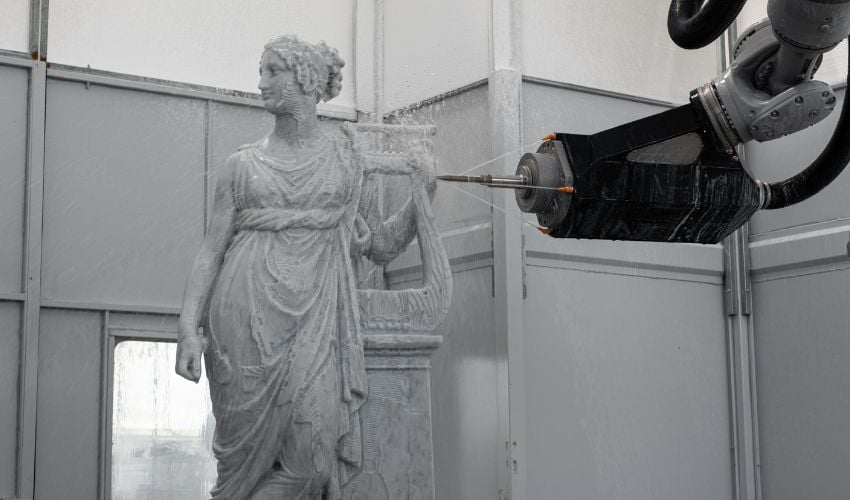 GuidesMeet ROBOTOR, the Robotic Sculptor of Marble Statues3D technologies are now used in a wide variety of fields, among them 3D scanning, 3D modeling and automation are revolutionizing both subtractive and additive production methods. One example is the experience of Giacomo Massari and Filippo Tincolini, founders of…
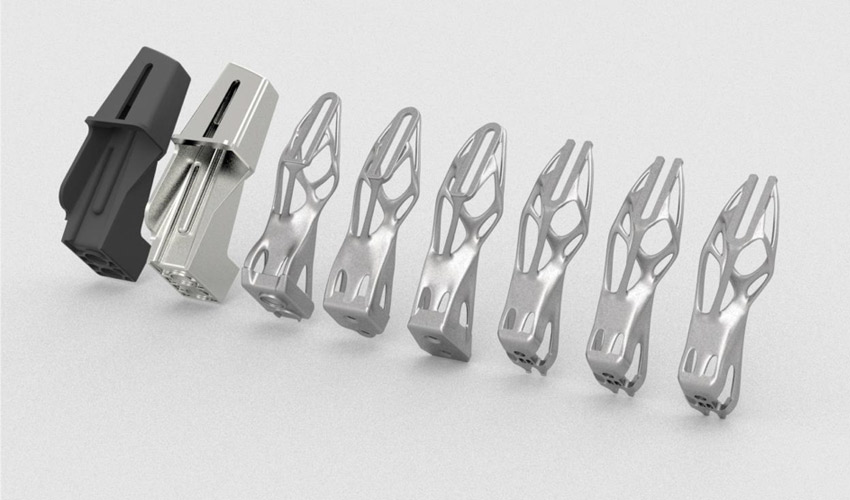 MaterialsTopology Optimization for 3D printingAdditive manufacturing, in contrast to traditional machining techniques, makes it possible to produce parts with complex geometries whose total weight can be optimized using a numerical method called topology optimization. This method also maximizes the mechanical strength of the