News
A New 3D Printing Material for Construction Could Be Capable of Capturing CO₂
Oregon State University and Sandia National Laboratory have received a three-year, $540,000 grant from the U.S. Department of Energy to explore whether it would be possible to capture carbon dioxide from industrial emissions before trapping its mineralized form in 3D…
- 3 min read
- News
- Six more stories
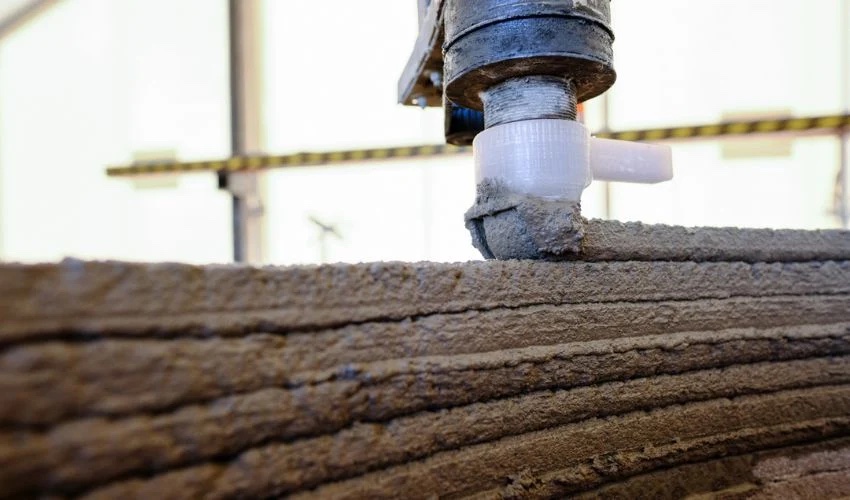
Oregon State University and Sandia National Laboratory have received a three-year, $540,000 grant from the U.S. Department of Energy to explore whether it would be possible to capture carbon dioxide from industrial emissions before trapping its mineralized form in 3D printed construction materials. The researchers’ goal is to green an important sector of the economy, construction, which is one of the highest polluting. The study will be conducted by a team led by Pavan Akula, assistant professor of civil engineering at the OSU College of Engineering, and composed of researchers from Sandia, the Indian Institute of Science, the Indian Institute of Technology Roorkee, and the two industrial partners, Graymont and Verdant Building Alternatives.
In recent years, the issue of global warming and the need to take measures to decrease global warming and protect the environment have been increasing. The construction industry alone is responsible for generating 13% of global CO₂ emissions. 3D printing is seen as a possible solution to the problem, and already we have seen a number of 3D printing projects with concrete over the years. Yet, according to the researchers who initiated this study, the problem could actually lie in the very material used. “In recent years, 3D-printing technology for concrete has been gaining popularity in building construction as it is a more sustainable alternative – it reduces both waste and transport costs. However, most 3D printing of concrete still relies only on traditional materials that are really carbon intensive,” commented Professor Pavan Akula.
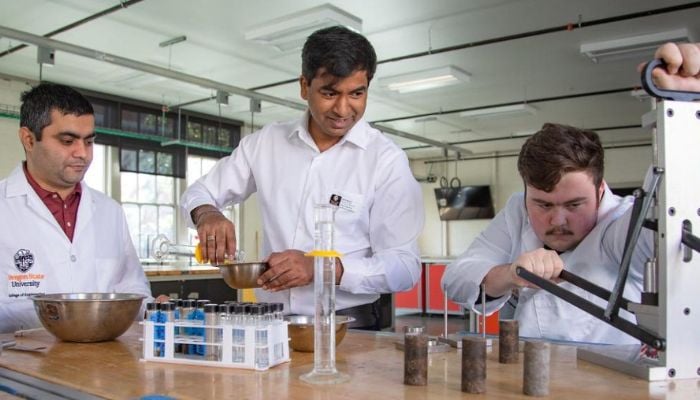
Photo Credits: Oregon State University
Or more specifically, he is speaking about Portland cement, which was developed in England in the early 1800s. Currently, it is the most common type of binder used in concrete. It is usually produced by mining, grinding and heating clay and limestone in industrial kilns at temperatures up to 2,820 degrees Fahrenheit. The process alters the chemistry of the materials and creates “clinker,” the main component of cement. However, this process also generates large amounts of carbon dioxide. This is what the researchers are hoping to address.
More from the desk
Six other notes from the rest of the bench.
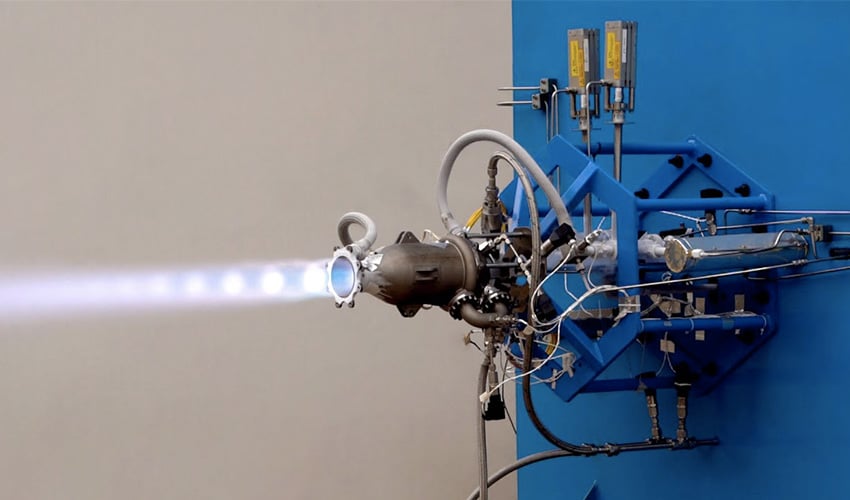 ApplicationsSkyroot Aerospace and Dhawan-II’s More Powerful 3D Printed Cryogenic EngineBack in 2020, we introduced you to Dhawan-I, a 3D printed cryogenic engine made by Skyroot Aerospace. Three years later, the Indian company has been working on a more powerful model, unveiling to the public the new and improved Dhawan-II,…
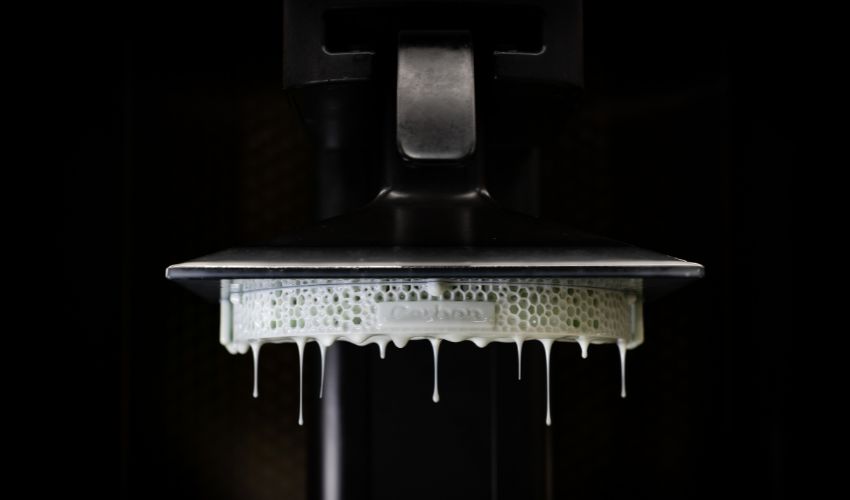 SoftwareCarbon Has Made its First Acquisition, Expanding its Software CapabilitiesThe additive manufacturing market, despite some setbacks, has generally been showing its growth through a number of mergers and acquisitions in the past few years. Now Carbon, one of the leaders when it comes to resin 3D printing solutions, has…
 MaterialsAll You Need to Know About Alumide 3D PrintingDo you want to 3D print your parts, but can’t decide between polymers or metals? When it comes to 3D printing, there’s one material that combines the best of both worlds: alumide. This is an interesting option that involves combining…
 Applications3D Printing Nanostructures Could Fight CancerAether is a startup based in San Francisco which offers AI-enhanced 3D bioprinting. They have collaborated with UCL (University College London) and Loughborough University to develop a new approach to 3D printing nanotechnology. Working Together to Democratise 3D Printing Nanotec
 GuidesAdvancing into SLS Manufacturing: Raise3D’s Strategy to Build a Complete Polymer AM EcosystemOver the past decade, Raise3D has established itself as a key player in professional polymer 3D printing. Initially known for its FDM systems, the company has progressively expanded its portfolio to address a wider range of industrial needs, entering the…
 NewsSteakholder Foods Expands Menu With 3D Printed ShrimpSince we learned about the ability to buy 3D printed bacon in supermarkets last year, it has been clear that food 3D printing is ready to soar. What was once deemed unreliable for consumer applications has now become possible on…