News
MEAN* creates 3D printed pavilion in Dubai to explore sustainable construction
Dubai has welcomed major 3D printing construction projects, possibly more than any other city in the world. The city is truly home to much of the innovation and experimentation in this sector. Recently, the Middle East Architectural Network, also known…
- 3 min read
- News
- Six more stories
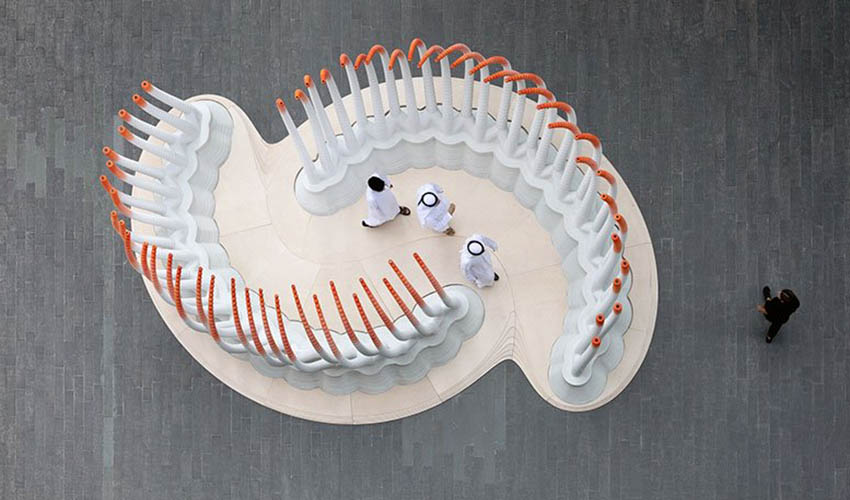
Dubai has welcomed major 3D printing construction projects, possibly more than any other city in the world. The city is truly home to much of the innovation and experimentation in this sector. Recently, the Middle East Architectural Network, also known as MEAN* completed the construction of a 3D printed pavilion for Dubai’s International Financial Centre. According to MEAN*, the pavilion, named Deciduous, presents an abstract botanical form that suggests our relationship with nature. It measures 11 foot in height and visitors can walk through its S-shaped pathway.
The construction of this pavilion was a collaborative project. In fact, it’s more than 5 companies that joined their expertise to see this project through. MEAN* explained that in light of Dubai’s focus on 3D printing as a sustainable technology, robotic 3D printing in plastic and concrete was an attempt at exploring the possibilities these two technologies can offer. Working on polymer 3D printing was the company Ai Build, based in the UK. It used recycled plastic filament from 30,000 water bottles, supplied by Reflow Filament. On the other hand, Besix 3D was called on for its expertise in concrete 3D printing.
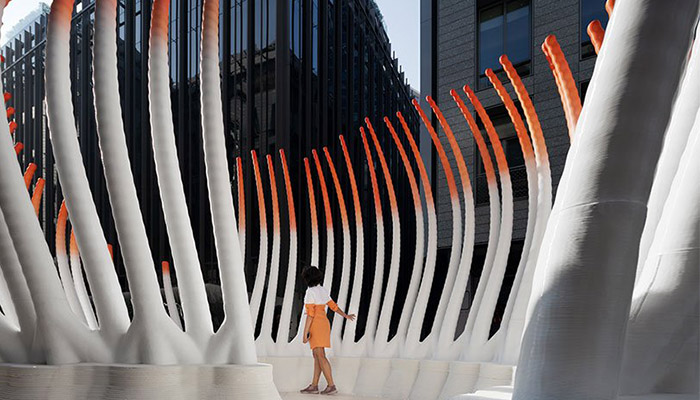
The construction process of Deciduous
The design process behind Deciduous was a complex one, yet less complex than if it had been designed using traditional manufacturing techniques. The pavilion was designed to come together in interconnected parts, and was completely prefabricated off-site. Following the construction of these various parts off-site – namely the CNC cut birch plywood, the robotically 3D printed concrete and robotically 3D printed polymer – assembly was performed on-site with no need for heavy machinery. The company explains: “Computational modeling was used to conceive and quantify the design to a level of detailing optimal within the parameters and constraints of large format robotic 3D printing.”
More from the desk
Six other notes from the rest of the bench.
 ApplicationsU.S. Military Increases Fleet Readiness With 3D PrintingThe United States Navy is continuing its exploration into using additive manufacturing at sea and ashore. More specifically, at The Rim of the Pacific Exercise (RIMPAC) 2024), NPS students showed how 3D printing could be used to increase fleet readiness.…
 NewsGE Research 3D printed a heat exchanger for more efficient energy conversionAs part of a two-and-a-half year mission led by Advanced Research Projects Agency, GE Research launched a $2.5 million project to 3D print a high temperature, high pressure and super compact heat exchanger. This should produce cleaner and more efficient…
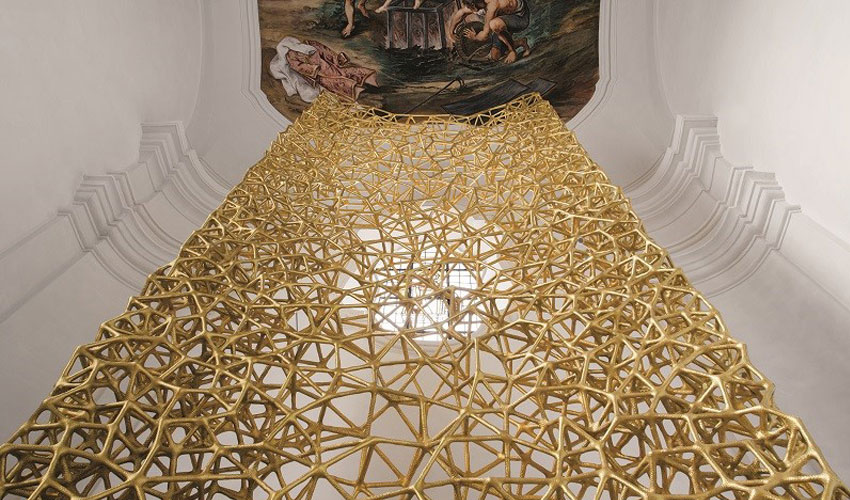 NewsEmploying 3D printing for the restoration of a churchAdditive manufacturing is everywhere, even where you don’t really expect it. In Germany, if you walk around Altmühldorf in Bavaria, you will have the opportunity to see a 3D printed altarpiece in the village church. Designed by Oliver Tessin and…
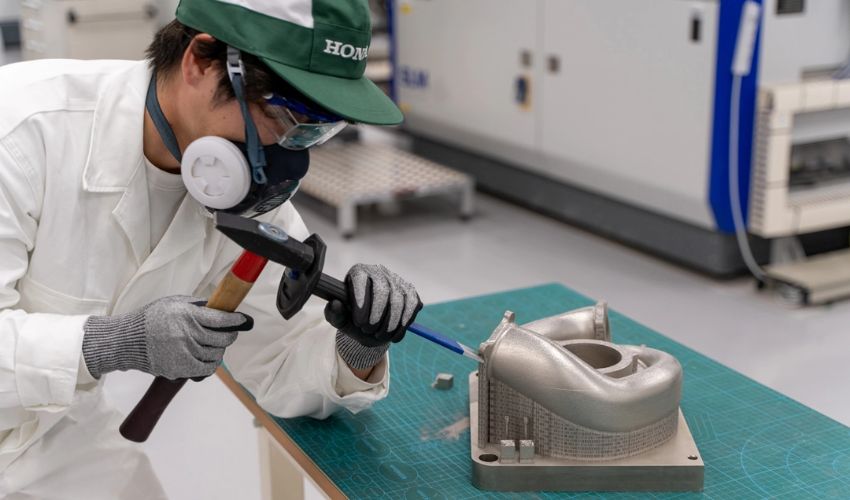 ApplicationsHonda Is Leveraging (and Improving!) Laser Powder Bed Fusion for TransportationJapanese car manufacturer Honda recently revealed how it uses 3D printing to increase efficiency. The company’s technology of choice? Laser powder bed fusion (LPBF). This metal additive manufacturing technology can create complex geometries that are impossible to achieve th
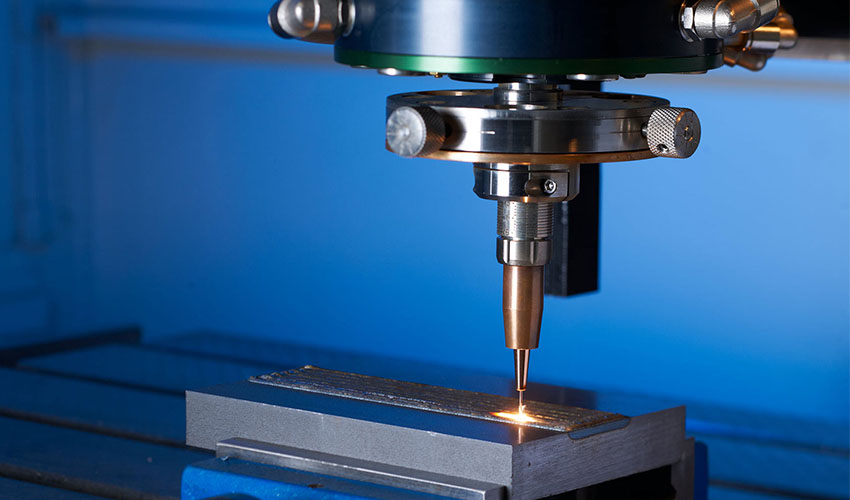 PrintersCHIRON Group launches first metal 3D printer for wire and powderThe CHIRON Group, specialist in the field of CNC equipment such as CNC-controlled vertical milling, has developed the AM Cube. It is the group’s first 3D printer for manufacturing larger and more complex metal components. The AM Cube is based…
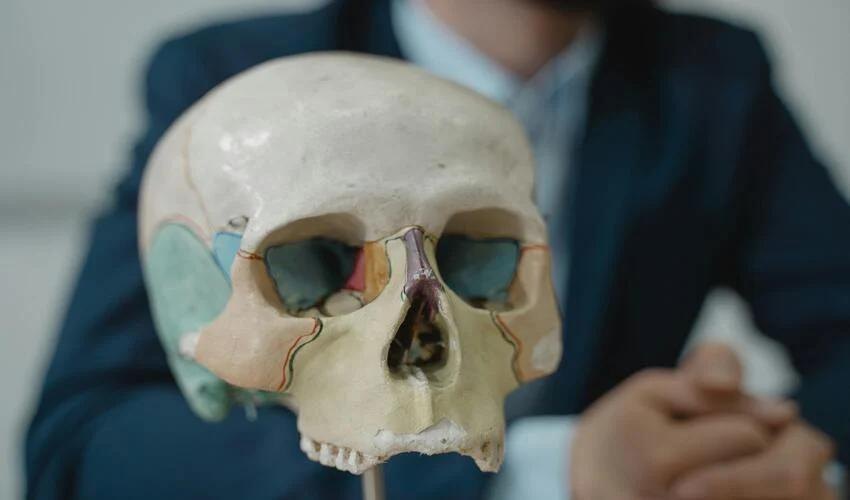 Applications3D Printed Mastoidectomy Simulator Improves Surgeon Training and Patient OutcomesIn medicine, one of the most prevalent applications of additive manufacturing is associated with surgical planning and surgeon training. New advancements are continuously surfacing in this field. For instance, 3D models depicting hearts with pathologies have been crafted to facil