News
Employing 3D printing for the restoration of a church
Additive manufacturing is everywhere, even where you don’t really expect it. In Germany, if you walk around Altmühldorf in Bavaria, you will have the opportunity to see a 3D printed altarpiece in the village church. Designed by Oliver Tessin and…
- 3 min read
- News
- Six more stories
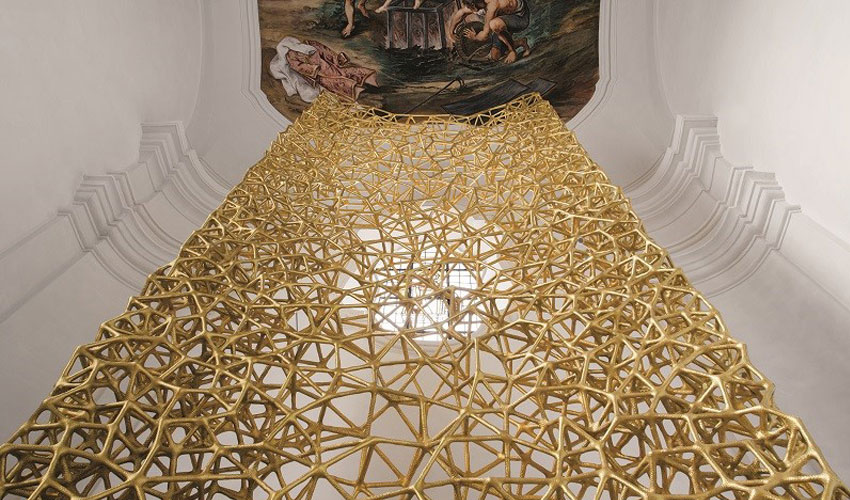
Additive manufacturing is everywhere, even where you don’t really expect it. In Germany, if you walk around Altmühldorf in Bavaria, you will have the opportunity to see a 3D printed altarpiece in the village church. Designed by Oliver Tessin and the artists Corbinian Böhm and Michael Gruberen, in partnership with the German 3D printing service FIT AG, the golden structure is 8 metres high, 2.5 metres wide, and is a fine example of topological optimization. It is reminiscent of a honeycomb where all the branches are meticulously interlocked.
The entire 3D modeling phase that precedes the printing stage allows the user to play with the shapes, material and to check whether the design is optimized for additive manufacturing. Often, the 3D model is designed with as little material as possible to avoid increasing costs and post-processing steps. Topological optimization removes material where it is not needed: the final weight of the part is therefore reduced, as is its cost. This is a key advantage in the design of a part such as an altarpiece. Yet additive manufacturing is not a production method that comes to mind when it comes to restoring a church. In fact, the teams behind the project had to prove to the city that 3D printing technologies were a viable method.

The structure of the altarpiece resembles honeycomb
The manufacturing process of the 3D printed altarpiece
Originally, the architects in charge of the project wanted to use WAAM technology, attracted by its unique appearance, properties and above all the possibility of using metal. However, when they approached FIT AG’s 3D printing department, they realised that other processes and materials could be more attractive in terms of cost, geometric restrictions and durability of the parts. SLS proved to be the most relevant, offering high mechanical performance, low weight and design freedom.
More from the desk
Six other notes from the rest of the bench.
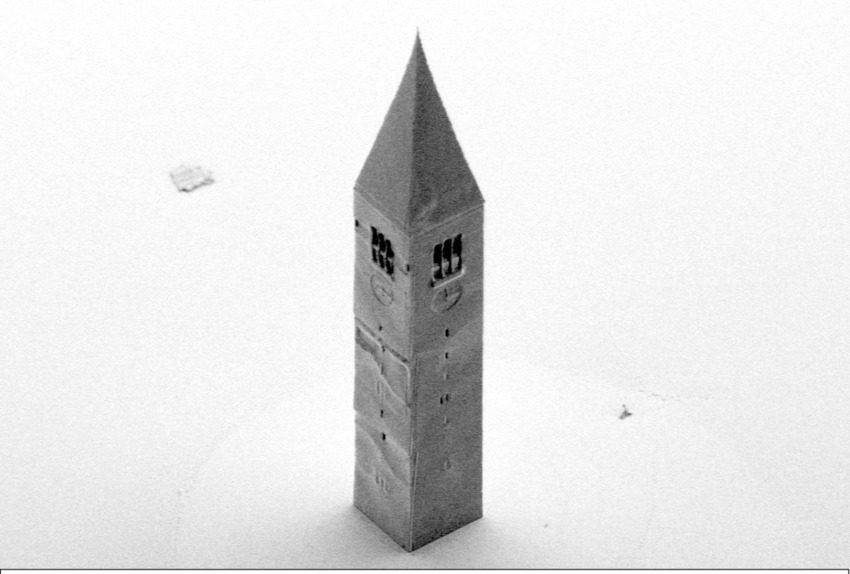 NewsNano-Sized Rendition of Cornell’s McGraw Tower Marks Step Forward for 3D Printing TechnologyEarlier this month, a team led by staff photolithographer Ed Camacho at Cornell NanoScale Science and Technology Facility (CNF), in Duffield Hall created what is thought to be the world’s smallest rendition of Cornell’s iconic McGraw Tower. The tower is…
 NewsTop 5 Videos: Purdue University’s 3D Printed Solar Race CarCome one, come all! Welcome to another top 5 videos of the week where we will get behind the wheel of Purdue’s 3D printed solar race car, learn about developing technologies at the cutting edge of the industry, and how…
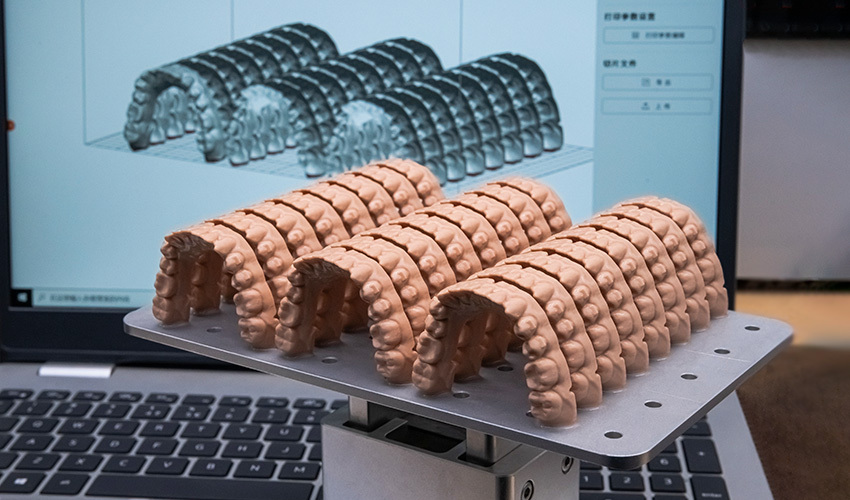 GuidesThe Top 3D Printing Applications in DentistryOne of the fields where 3D printing is gaining great popularity is dentistry. 3D printing in the dental sector is a tool that allows the creation of parts adapted to the needs and morphology of each patient. Whether it is…
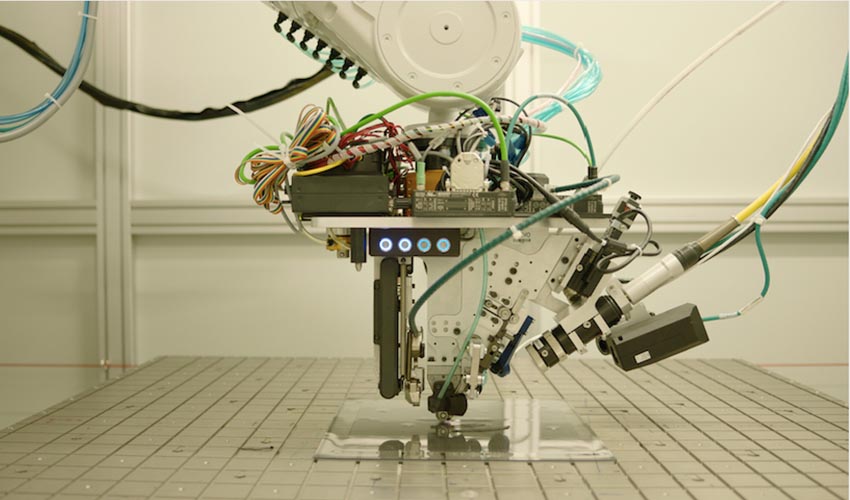 GuidesAREVO launches world’s first high-speed AM composite systemAREVO, a young Californian company, is known for having developed an additive manufacturing platform to transform composites production in the AM sector. As you may know, composites represent a growing segment in this industry, and have started competing with some…
 NewsSteakholder Foods Expands Menu With 3D Printed ShrimpSince we learned about the ability to buy 3D printed bacon in supermarkets last year, it has been clear that food 3D printing is ready to soar. What was once deemed unreliable for consumer applications has now become possible on…
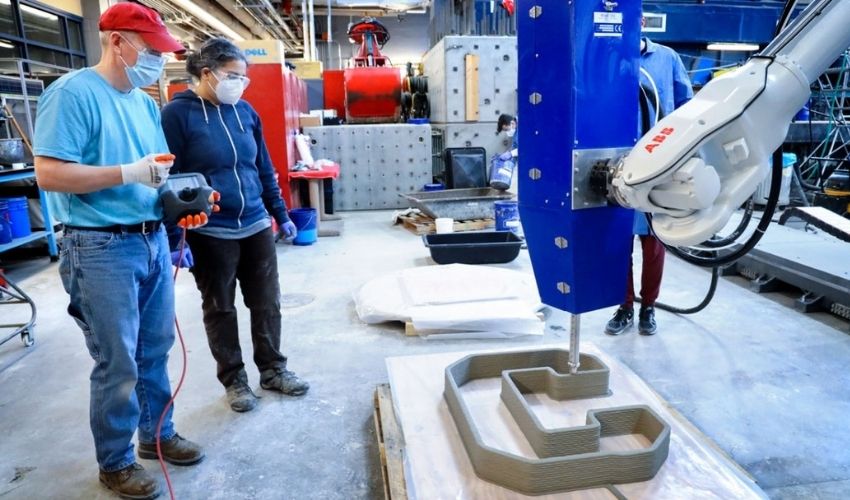 NewsCornell University Has Purchased A 3D Printing Robot for More Sustainable ConstructionThe Bovay Civil Infrastructure Laboratory Complex, located in the basement of the Thurston Hall at the Cornell University in New York, recently purchased an industrial 3D printing robot. The roughly 6000 lbs heavy machine has the ability to 3D print…