Applications
U.S. Military Increases Fleet Readiness With 3D Printing
The United States Navy is continuing its exploration into using additive manufacturing at sea and ashore. More specifically, at The Rim of the Pacific Exercise (RIMPAC) 2024), NPS students showed how 3D printing could be used to increase fleet readiness.…
- 3 min read
- Applications
- Six more stories
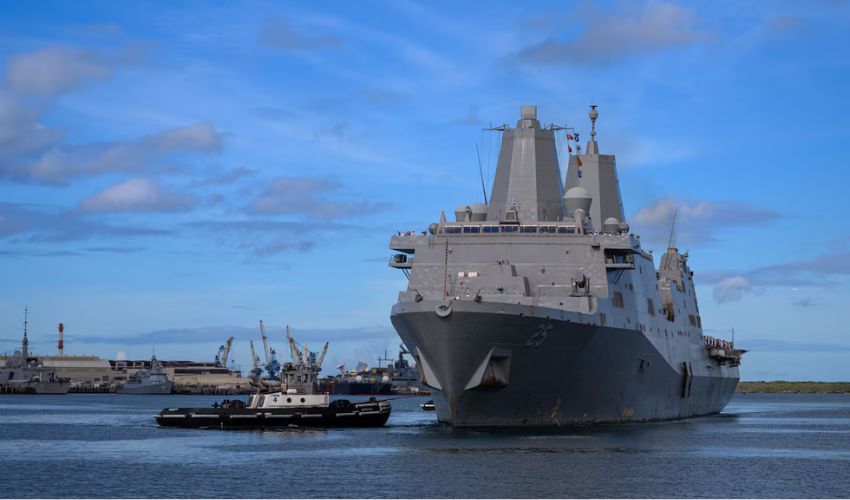
The United States Navy is continuing its exploration into using additive manufacturing at sea and ashore. More specifically, at The Rim of the Pacific Exercise (RIMPAC) 2024), NPS students showed how 3D printing could be used to increase fleet readiness. Notably, they were able to show how additive manufacturing can be used for ship repair.
RIMPAC is the world’s largest international maritime exercise, held biannually on even-numbered years. This year, it took place between June 26th and August 2nd in and around the Hawaiian Islands. It is the 29th time the exercise has held place and was centered on the theme of being integrated and prepared with 29 nations, 40 surface ships, 3 submarines, 14 national land forces, over 150 aircraft and more than 25,000 personnel participating. This is what made it the perfect place to test the applications of technologies like additive manufacturing, especially when it comes to repairing parts on ships.
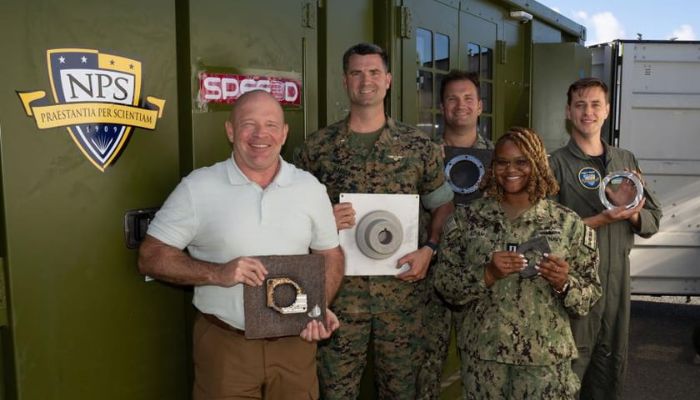
Retired Marine Corps Col. Patrick Tucker, Marine Corps Lt. Col. Michael Radigan, Navy Lt. Cmdr. Zachary Vrtis, Lt. Ashley Adams and Lt. Andrew Staley showcasing parts made with the XSPEE3D expeditionary cold spray printer (photo credits: NPS)
“Ship and submarine repair is one of our crucial focus areas,” explained Navy Lt. Cmdr. Zachary Vrtis, an engineering duty officer currently pursuing a doctorate in mechanical engineering with a dissertation focused on metal additive manufacturing. “We are working to implement advanced metal manufacturing to better supplement traditional fabrication methods, repair fleet assets quicker, and assist in revitalizing the submarine industrial base to meet production goals.”
More from the desk
Six other notes from the rest of the bench.
 NewsCan 3D Printing Correct Color Blindness?3D printing could now treat color blindness according to a study conducted by Abu Dhabi’s Khalifa University of Science and Technology (UK). Otherwise known as color vision deficiency, this condition is an inherited eye disorder in which one or more…
 NewsWhat Can You Expect at ADDITIV Polymers World?The 2nd edition of ADDITIV Polymers World is only a week and a half away! The high-anticipated virtual event delving into the worlds of polymers and 3D printing will be taking place on Thursday, October 10th at 9:00AM – 1:30…
 News3D Printing Show: AM Trends and Innovations at Formnext 2023The 3D Printing Show is here! With our team back in Frankfurt, Germany for Formnext 2023, we are excited to once again share with you all the latest innovations direct from the show. This time, we are exploring the 3D…
 PrintersHow to choose a 3D printer: Experts give their advice!There are now hundreds of 3D printer manufacturers vying for market share in the 3D printing industry. Many wish to occupy the lucrative rewards that 3D printing is poised to bring. Therefore, it is difficult for someone to choose which…
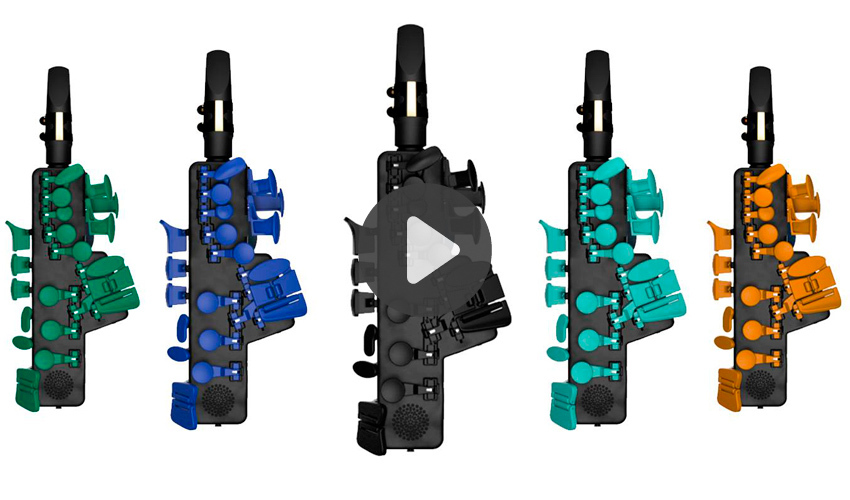 NewsTop 5 Videos: A 3D Printed SaxophoneAnother week has come to an end and like every Sunday, we have collected our top 5 videos of the week from the exciting world of 3D printing! Our first video is an interesting interview with an AM manufacturer of…
 NewsAmerican researchers prints a functional 3D brainResearchers at the Johns Hopkins University have succeeded in printing a functional 3D brain for a mouse! A first in the medical world that shows how bio-printing could advance research especially in the surgical sector. The researchers have collaborated with the American company