News
GE Research 3D printed a heat exchanger for more efficient energy conversion
As part of a two-and-a-half year mission led by Advanced Research Projects Agency, GE Research launched a $2.5 million project to 3D print a high temperature, high pressure and super compact heat exchanger. This should produce cleaner and more efficient…
- 3 min read
- News
- Six more stories
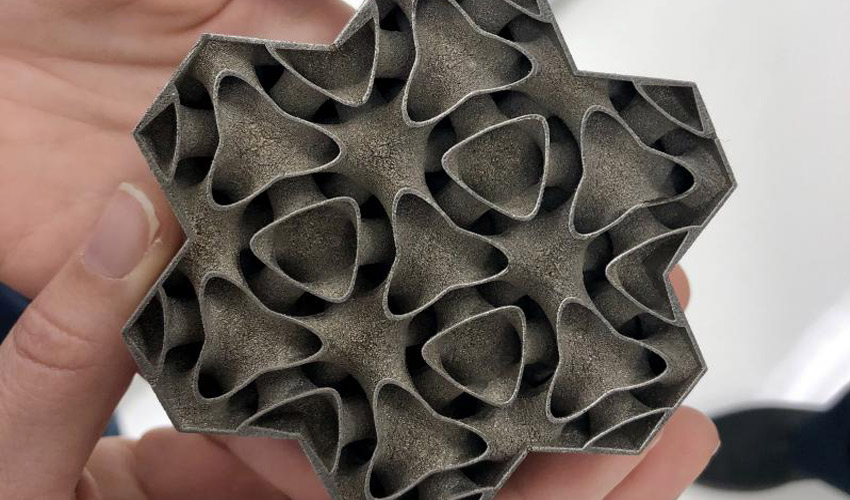
As part of a two-and-a-half year mission led by Advanced Research Projects Agency, GE Research launched a $2.5 million project to 3D print a high temperature, high pressure and super compact heat exchanger. This should produce cleaner and more efficient energy for the platforms of existing and future power plants. The group’s research division has teamed up with the University of Maryland and the Oak Ridge National Laboratory (ORNL) to complete this ambitious project. The partners were able to present a first prototype that was quite convincing.
A heat exchanger is a device that allows a fluid to be heated or cooled by another fluid circulating at a different temperature, without the two fluids mixing. These devices are beginning to be designed using additive manufacturing, a method that offers more complexity to the part while reducing production times and costs.
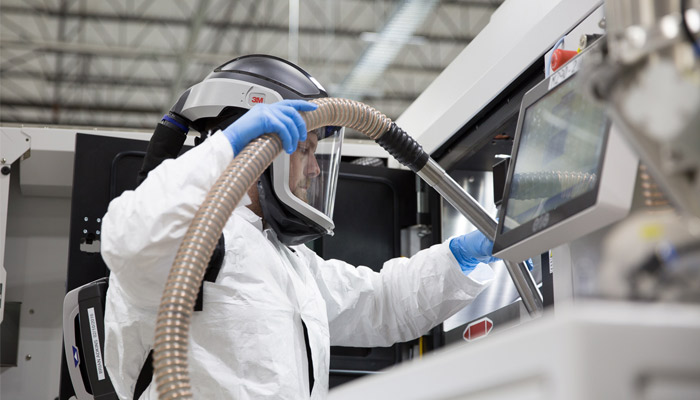
Credits: GE Research
A 3D printed heat exchanger by GE Research
GE and its partners explain that their heat exchangers should operate in environments up to 900°C and 248 bar. Peter deBock, thermal engineer at GE Research explains: “We use our extensive knowledge in metal management and thermal management and apply it like never before thanks to the power of 3D printing. Thanks to this method, we can now realize new architectural designs that were previously impossible. This will allow us to create a “UPHEAT” device that can operate cost-effectively at temperatures higher than those of current heat exchangers (+250°C).“
More from the desk
Six other notes from the rest of the bench.
 Printers3Dnatives Lab: Testing MakerBot’s Method X CFEMakerBot, founded in 2009, is considered a pioneer of desktop 3D printing and has operated as an independent subsidiary of Stratasys since 2013. The company has already introduced its sixth generation of 3D printers with the launch of the Method…
 GuidesThe #3DStartups of 2018!Throughout every year, we present you with the monthly new, innovative #3DStartup and learned more about their exciting applications. Whether it is software or hardware, the applications were in sports or construction it is all interesting. Regardless of the general use…
 NewsINDUSTRY From Needs to Solutions, the evolution of industry 4.0In the next few days, the 4th edition of INDUSTRY From Needs To Solutions will be held in Barcelona, since its inception the fair has collaborated in the growth of the so-called Industry 4.0. Between the 29th and 31st of…
 GuidesPrint2Taste Makes It Easier to 3D Print FoodYou don’t play with food, or do you? Print2Taste, founded in Freising in 2014, has an answer. With its 3D printers, the company offers users the possibility to playfully design and 3D print food. Easy handling and fast, high-quality results…
 NewsResearchers Develop More Sustainable Lithium-Ion Batteries with 3D PrintingResearchers from the University of Glasgow have a developed a novel type of 3D printed battery which relies on electrodes made from vegetable starch and carbon nanotubes. The battery could offer a more environmentally friendly and higher capacity source of…
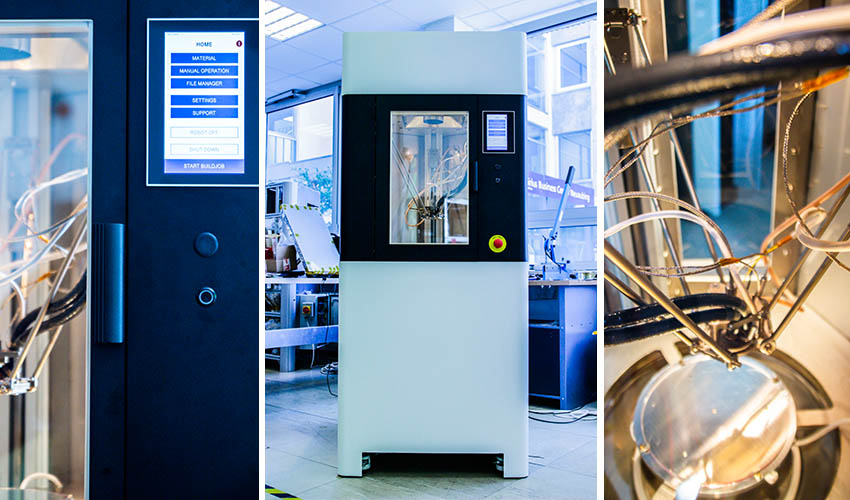 PrintersNew Kumovis R1 3D printer for medical and industrial applicationsKumovis is the German startup focused on delivering 3D printing systems for medical applications. They manufacture solutions for a variety of medical products, you can use their system for prototyping or to create personalised human implants. Recently, the company unveiled&hellip