Applications
Researchers Have Developed 3D Printed Heart Valves That Can Grow in Your Body
A team of researchers recently announced that they have developed a new form of 3D printed heart valves. These new artificial organ parts are designed to give the patient’s own cells the possibility to form new cells and thus grow…
- 3 min read
- Applications
- Six more stories
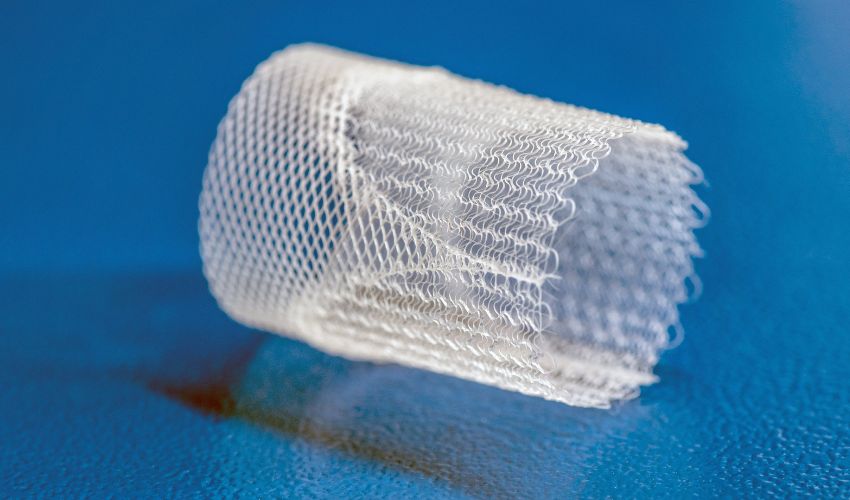
A team of researchers recently announced that they have developed a new form of 3D printed heart valves. These new artificial organ parts are designed to give the patient’s own cells the possibility to form new cells and thus grow with the rest of the patient’s body of the patient, helping potentially to reduce many of the complications associated with transplants. As you know, the use of additive manufacturing in the medical sector has grown exponentially as it has enabled scientists and doctors to explore possibilities that were completely unimaginable just a few years ago. However, although 3D printing has already been successfully used in areas like the manufacturing of prosthetics, other fields like internal medicine, notably the concept of bioprinting, are still being explored. But this research represents a significant step forward in the field.
A team of researchers, including Petra Mela, professor of medical materials and implants at the Technical University of Munich (TUM), and Professor Elena De-Juan Pardo from the University of Western Australia, have been working on the idea of creating 3D printed heart valves, which can be used as life-lasting implants, due to their ability to form new tissue. By using AM technologies in combination with special, biodegradable materials, professionals were able to create implants that copy the unique complexities of a human organ. Considering that in the United States alone there are 182,00 heart valve replacements per year, the research could help save a number of lives once it is viable.
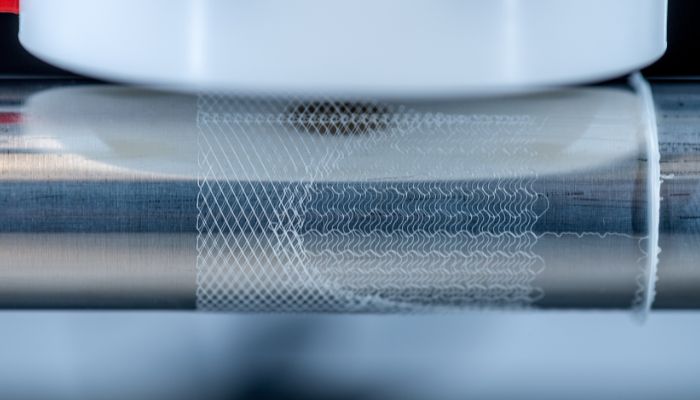
The details on the 3D printed heart valve are incredibly fine
Although other kinds of heart valve implants may already exist, the use of those is always accompanied by different complications. Mechanical valves, for example, have a tendency to form blood clots on the metal surfaces, which may lead to serious complications. In addition to that, patients also are bound to the lifelong use of blood-thinning medication, as well as limitations in physical activity. Another disadvantage is that these valves cannot grow and eventually need replacement, as Petra Mela explains, “Our goal is to engineer bioinspired heart valves that support the formation of new functional tissue in patients. Children would especially benefit from such a solution, as current heart valves don’t grow with the patient and must be replaced over the years in multiple surgeries. Our heart valves, in contrast, mimic the complexity of native heart valves and are designed to let a patient’s own cells infiltrate the scaffold.”
More from the desk
Six other notes from the rest of the bench.
 MaterialsAll You Need to Know About Polypropylene (PP) for 3D PrintingToday’s additive manufacturing sector is characterized by a wide variety of materials, from plastics and metals to ceramics and concrete. If we look at the family of polymers, the diversity is great, with many thermoplastics that are more or less…
 NewsThe Earth Moc Has Unveiled a Biomimetic 3D Printed ShoeIn recent years, the number of 3D printed shoes has increased rapidly. The number has become even so significant, that earlier this year, 3D printer manufacturer Sintratec organized the 3D Printing Shoe Design Contest, a competition that, as the name…
 SoftwareZBrush: The CAD Software for Creating 3D-Printed SculpturesAs you may know, before starting a printing process, it is first necessary to obtain a 3D digital model of a part. Perhaps the best-known modeling method is computer-aided design (CAD). It can be used to create individual models with…
 NewsMatt Harkness is Recycling PLA Waste Using TattoosThe 3D printing filament PLA is often advertised as environmentally friendly since polylactic acid is largely made from renewable raw materials such as corn starch. Thus, products made from PLA are able to be labeled “biodegradable.” This eco-stamp can therefore&helli
 NewsWhat Are the Major Post-Processing Challenges in 2021?Post-processing solutions manufacturer PostProcess Technologies has released the third edition of its Annual Additive Post-Printing Survey: Trends Report 2021. This year’s report confirms what was already announced last year, namely the desire to shorten this time-consuming
 GuidesUsing 3D Printing to Conquer Outer SpaceEveryone has heard of the Space Race that took place in the 20th century. The battle between the Soviet Union ended in 1975, but did you know a new Space Race has been sparked? This time, scientists all over the…