Applications
3D Printed Heart Valves from Silicone
A team of researchers from ETH Zurich has teamed up with South African company Strait Access Technologies to create artificial 3D printed heart valves from silicone. These could serve as replacement valves for an aging population – they represent a…
- 3 min read
- Applications
- Six more stories
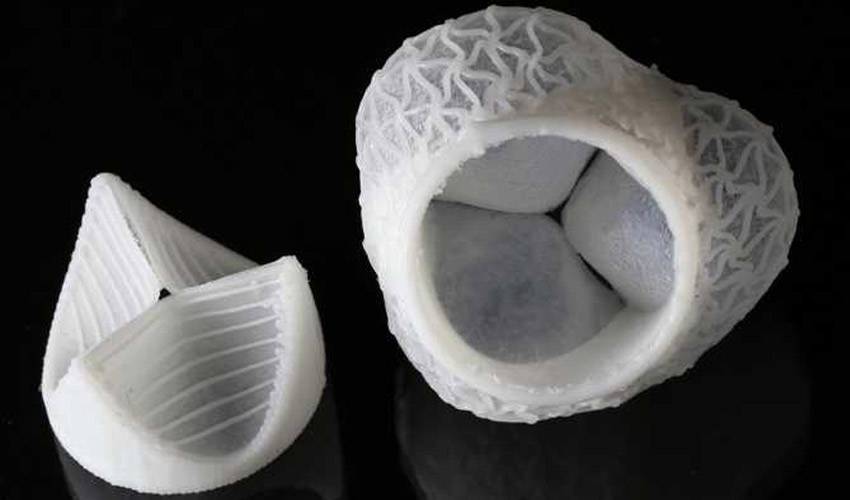
A team of researchers from ETH Zurich has teamed up with South African company Strait Access Technologies to create artificial 3D printed heart valves from silicone. These could serve as replacement valves for an aging population – they represent a viable solution as they are easier to manufacture and much more accessible than those that already exist on the market today.
According to a study published by Sewell-Loftin MK, 850,000 people worldwide will need artificial heart valves by 2050 due to an aging population, lack of physical exercise and poor nutrition. Additive manufacturing could provide a way to meet this important need: in the medical sector, it allows each device to be personalised to the patient. So we could have 3D printed valves, designed according to the heart of each person. ETH Zurich and Strait Access Technologies are anticipating this demand by carrying out initial silicone tests.
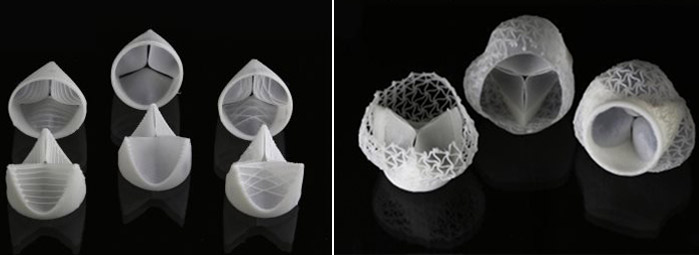
Credits: Fergal Coulter / ETH Zurich
Before explaining the process of creating these 3D printed valves, it is important to review their role. Our heart consists of four chambers, each with a valve that allows the blood flow to move in one direction only. If one of the four valves does not work properly (leakage, narrowing, distension), blood returns to the atria or ventricles, weakening the heart. This is why arrhythmias and heart failures are observed. This is where artificial valves come in: they can be inserted to ensure good blood flow.
More from the desk
Six other notes from the rest of the bench.
 NewsSmithsonian’s 3D program allows users to 3D print thousands of artifactsHave you been missing museum visits and other cultural activities due to the COVID-19 pandemic? The Smithsonian Institution in Washington D.C. might have a solution for you. One of the many applications of 3D printing is its possibility to be…
 NewsUniversity of Idaho Awarded $4M to Develop 3D Printing Building Method Using Wood WasteAn interdisciplinary research team from the University of Idaho (U of I) was given $4M USD to develop technology that will turn Idahoan wood waste into a more sustainable building construction material. Ultimately the goal is to use the material…
 News3DEXPERIENCE World 2020: shaping the world of designToday, 3DEXPERIENCE World 2020, organized by Dassault Systèmes, is coming to a close. Previously known as SOLIDWORKS World, the event was renamed to mirror the ecosystem formed by the whole family of solutions from Dassault Systèmes. Taking place in Nashville,…
 NewsPurmundus 3D Printing Design Award Winners go Beyond 3D Printing!During Formnext, the seventh edition of the Purmundus 3D Printing Design Award took place. This year’s theme was Beyond 3D Printing and 38 projects and companies made it to the finalists’ list. Three winners were named, voted by an international…
 NewsThe first 3D printed residential building in GermanyThe first 3D printed residential building will be erected in Germany, more precisely in the city of Beckum, Westphalia. The two-storey house will offer 80 square meters per floor, with walls built by the concrete 3D printer BOD2 from the…
 Printers3Dnatives Lab: Testing the Artec Ray 3D ScannerLuxembourg-based manufacturer Artec 3D has specialized over the years in the development of portable 3D scanners such as the Eva, the Space Spider and the Leo. More recently, the company has also broadened its spectrum of applications by unveiling 3D…