News
Smithsonian’s 3D program allows users to 3D print thousands of artifacts
Have you been missing museum visits and other cultural activities due to the COVID-19 pandemic? The Smithsonian Institution in Washington D.C. might have a solution for you. One of the many applications of 3D printing is its possibility to be…
- 3 min read
- News
- Six more stories
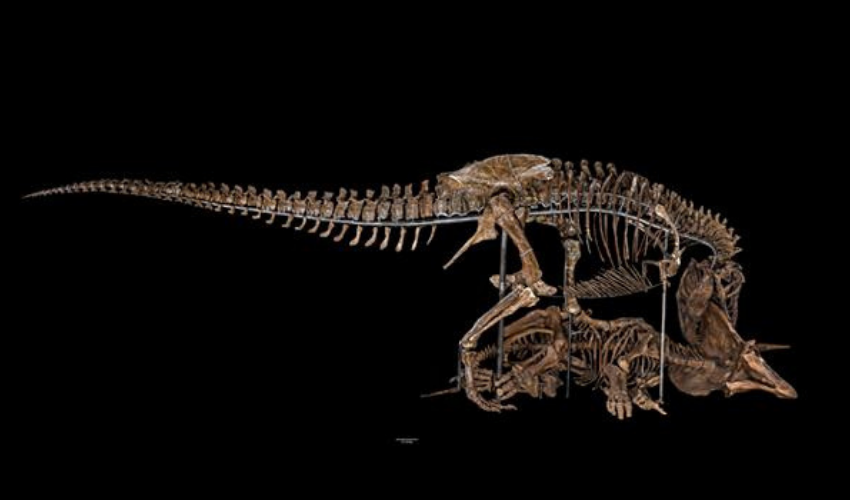
Have you been missing museum visits and other cultural activities due to the COVID-19 pandemic? The Smithsonian Institution in Washington D.C. might have a solution for you. One of the many applications of 3D printing is its possibility to be used to educate. This can especially be seen in the medical sector where 3D printing is used for personalized training for surgeons and students. However, this is not the only way 3D printing can be used for education purposes, as 3D scanning technologies have important applications for learning around the world. This can be seen for example at the Smithsonian Institution. There, the 3D Program has been working on scanning the millions of artifacts available across their 19 museums, 9 research centers, zoo and storage facilities. These scans are available to the public and aim to allow visitors from around the world access to their incredible collection, either by viewing the scans in the online collection or downloading them to 3D print.
3D Scanning at the Smithsonian
The Digitization Program Office (DPO) was founded at the Smithsonian in 2009. As the Smithsonian is the largest museum, education and research complex in the world, it also boasts an impressive archive of material. With less than 1% of their collections being displayed at one time, the office seeks to find a way to showcase the more than 155 million objects and specimens, volumes, and archives. As part of this project, the 3D Program was formed. With their website greeting visitors with the words “Welcome to the 3D Scanning Frontier” the 3D program aims to help educate people around the globe about the incredible artifacts present in the Smithsonian’s collections.
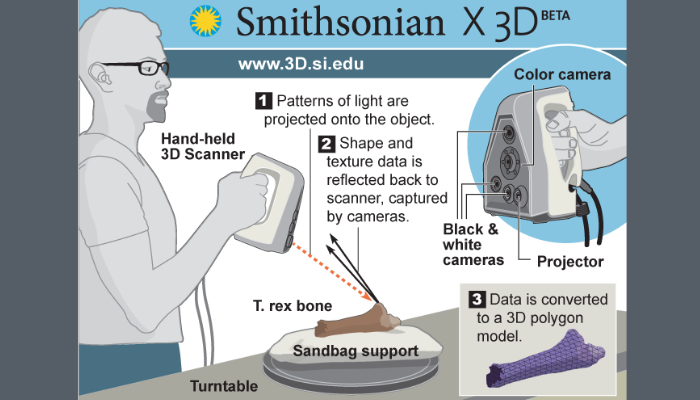
An infographic showing the process the team at the Smithsonian used to 3D scan a T.rex (photo credits: Smithsonian)
According to their website, “The 3D program is a small group of technologists working within the Smithsonian Institution’s Digitization Program Office. We focus on developing solutions to further the Smithsonian’s mission of ‘the increase and diffusion of knowledge’ through the use of three-dimensional scanning technology, analysis tools, and our distribution platform.” The best thing about it? Most of these scans are open access! Meaning that any user can download, transform and share thousands of Smithsonian 3D objects for any purpose for free, including to 3D print. As long as a model has “CC0,” it can be taken. The 3D portal currently has 2544 scans up, with 2346 labelled with CC0. This includes important historical artefacts like the Apollo 11 Command Module, the Triceratops horridus Marsh, a mammoth, Abraham Lincoln’s bust and more.
More from the desk
Six other notes from the rest of the bench.
 NewsAlibaba and Tronxy 3D Sued Over 3D Printer Death in San FransiscoAccording to court documents from San Fransisco, the parents of Calvin Yu, who died in a fire caused by a 3D printer in 2020, are suing both the 3D printer manufacturer, Tronxy 3D, and Alibaba. The fire occurred when a…
 Guides#3DStartup: sallea Prints Edible Scaffolding for Cultured Meat and Fish ProductsOur western eating habits, with meat and fish regularly on our plates, have far-reaching ecological consequences. Monocultures, overfishing and factory farming are just some of them. To counteract this, we have seen some innovative approaches in the last decade, such…
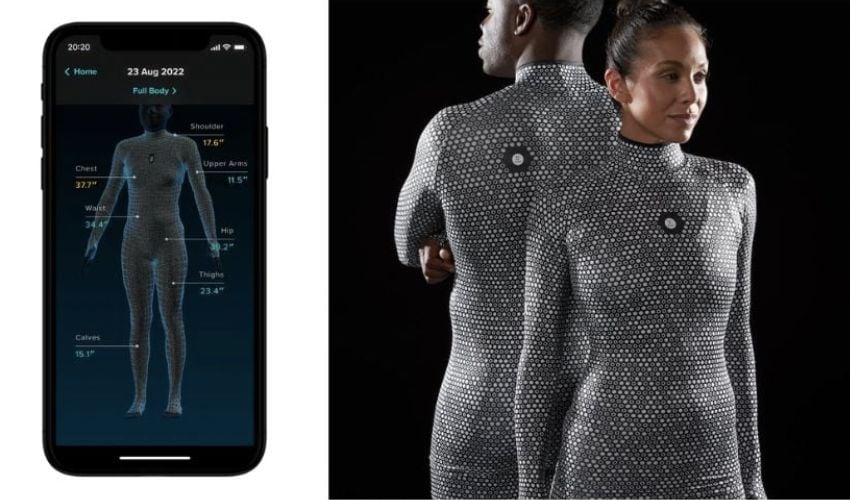 PrintersZOZOSUIT, the Suit with an Integrated 3D Body Scanner For Weight TrackingZOZOFIT is a fitness technology brand and Japan’s largest fashion e-commerce company, recognized worldwide for its use of new technologies in its products. Its latest innovation is the world’s first affordable 3D body scanning technology, the suit they have named&hell
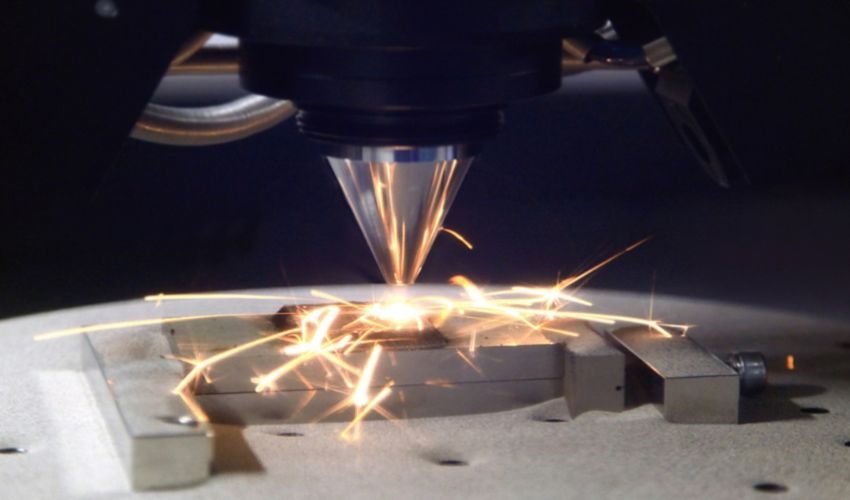 NewsWhat Are the Future Trends of Additive Manufacturing in Europe?In recent years, the additive manufacturing market has clearly shown its potential as trends begin to emerge. And since a technology like additive manufacturing never stands still, we can also always look forward to new trends, developments and opportunities. This…
 ApplicationsAmerican 3D Printers to Speed Up Repairs on Ukraine’s Front LinesIn Ukraine’s continued fight against Russia, the use of 3D printers has taken on an ever-growing role. The transportable, on-site, on-demand nature of additive manufacturing has proven to be a real boost to the Ukrainian war effort. Applications are varied…
 NewsTop 5 Videos: 3D Printing With Neil Patrick HarrisThis week, tag along with actor Neil Patrick Harris and 3D printing YouTuber 3D Printing Nerd, on the 87-day 3D-printing adventure. Next, discover amorphous metals. 3D printer manufacturer Trumpf has notably developed a printer compatible with these metals, which are…