News
University of Idaho Awarded $4M to Develop 3D Printing Building Method Using Wood Waste
An interdisciplinary research team from the University of Idaho (U of I) was given $4M USD to develop technology that will turn Idahoan wood waste into a more sustainable building construction material. Ultimately the goal is to use the material…
- 3 min read
- News
- Six more stories

An interdisciplinary research team from the University of Idaho (U of I) was given $4M USD to develop technology that will turn Idahoan wood waste into a more sustainable building construction material. Ultimately the goal is to use the material for the 3D printing construction sector. The team will be funded through 2025 and seek to develop and test an additive manufacturing process as well as design a 3D printer that can be used in the construction sector.
Funding for this project was awarded by the National Science Foundation’s (NSF) EPSCoR Research Infrastructure Improvement Program and is more proof of U of I’s leading role when it comes to sustainable building projects. We found it particularly interesting because though construction 3D printing has been growing in popularity in recent years, especially due to its potential as a more sustainable building method, though most projects are extrusion based and use concrete. This has been controversial because while 3D printing is a key technology for reducing waste of materials, concrete itself is not actually a very sustainable material. In fact, even though efforts have been made to reduce its carbon footprint over the past decade or so, in 2018, it was the source of about 8% of the world’s carbon dioxide emissions according to Chatham House.
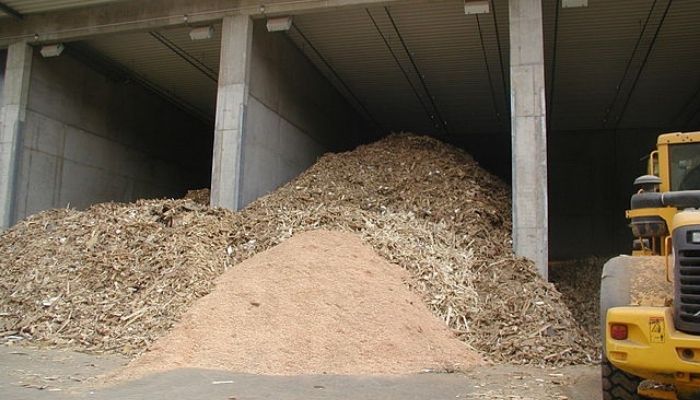
Wood waste is the resulting waste from wood processing and normally cannot be used in construction (photo credits: Tetris L, CC BY 3.0, via Wikimedia Commons
As part of the project, the team is working on a new advanced 3D printing technology that seems similar in many ways to binder jetting. The process will use a binding agent though instead of the traditional powder, they will be combining that with wood fibers that are not used by the lumber market. This would include waste wood and sawdust from mills and wood processing plants. This means that not only does it set itself apart from other projects due to the materials used but also the method. Most 3D printing construction methods today use extrusion technologies.
More from the desk
Six other notes from the rest of the bench.
 GuidesThe Most Impressive 3D Printed Jewelry Designs on the MarketWhether in jewelry or jewelry, additive manufacturing is a technique increasingly used by professionals in the sector because of its ability to design complex and unique parts, all more quickly. It is used in particular to produce molds used later…
 NewsTop 5: Markforged’s Part Production For Own UseHello everyone and welcome to our top 5 of the week! It is of course Christmas Day, but 3Dnatives is still here with a weekly video round up. Perhaps you’re reading this tucking into your turkey or laying on the…
 News3D Printed Robots to Be Used in Search-and-Rescue OperationsIn Search-and-Rescue operations, timing and flexibility is often key to successful results. It is often integral not only that rescue efforts happen as quickly as possible to guarantee the maximum number of survivors in a crisis, but that responses be…
 NewsL’Oréal to use AMFG MES software at its 3D printing labL’Oréal have announced that they will be using AMFG ’s Manufacturing Execution System software, more commonly referred to as MES workflow software in order to optimise its rapid prototyping workflows at its 3D printing lab. With this software, the leading…
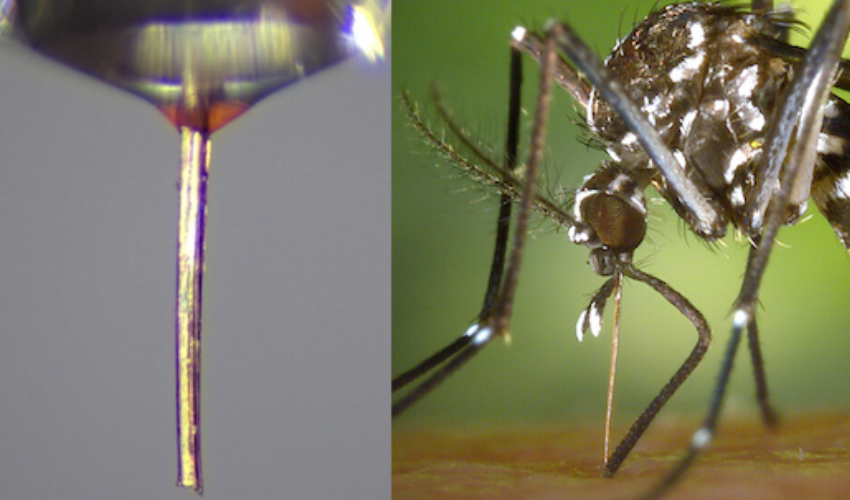 ApplicationsMosquito Proboscis Repurposed as a Micro Nozzle for High Resolution 3D PrintingMost people think of mosquitoes as pests, not as tools for next-generation micro-fabrication. Yet researchers at McGill University have shown that the proboscis of a deceased female mosquito can serve as a biodegradable micro nozzle for high-resolution 3D printing. With…
 NewsTop 5: 3D Printed Custom GlassesHello everybody, and happy Sunday! We hope you had a good week and are enjoying our content (in the run up to Formnext, you might particularly like our news coverage of the event). This week, we have an exciting collection…