News
3D printed fibers can detect leakage in your protective mask
A research group at the University of Cambridge has 3D printed electronic fibers capable of monitoring health and detecting possible leaks in the masks. How does it work? The tiny transparent conductive devices act as sensors to capture breath, sound,…
- 3 min read
- News
- Six more stories
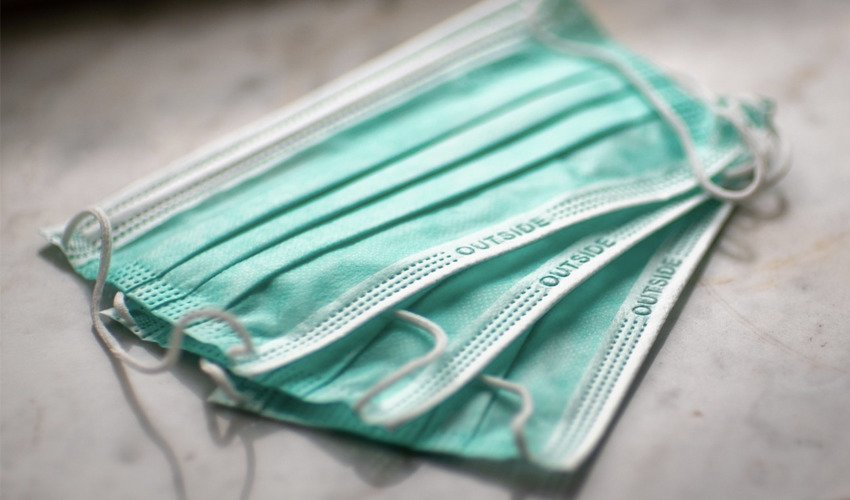
A research group at the University of Cambridge has 3D printed electronic fibers capable of monitoring health and detecting possible leaks in the masks. How does it work? The tiny transparent conductive devices act as sensors to capture breath, sound, and biological cells. Communicated through the journal Science Advance, this project is especially useful for health monitoring and biosensitivity applications, especially in the context that we currently live in.
Due to the health crisis caused by COVID-19, many 3D printing companies stepped up to manufacture protective gear. In the last months we have seen how technology developed respirators, swabs for virus testing, and other equipment for the healthcare sector. In addition, the use of masks has become the “new normal” in society. However, it is important to pay attention to the quality of these masks to avoid further spread of the virus.
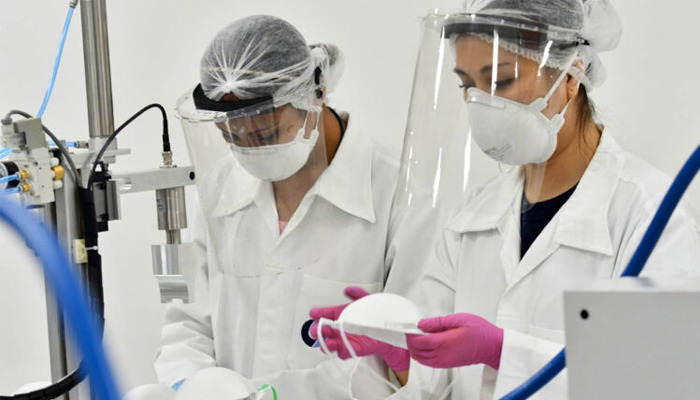
3D printed fibers to ensure better protection
In this context, the research team from Cambridge began to develop this project to find the leaks in masks. From capturing the breath to guiding the biological movements of the cells, the 3D printed fibers are able to “smell, hear and touch”. The researchers opted for 3D printing with silver and semiconductor polymers for the production of the conductive fiber core. Found in a thin polymer sheath, the core resembles a classic electrical wiring, although with a diameter of a few micro centimeters.
More from the desk
Six other notes from the rest of the bench.
 PrintersHP Metal Jet; HP’s new metal 3D printing technologyEarlier this year the American company HP announced; it will indeed embark on the field of metal additive manufacturing. An announcement confirmed at the IMTS Chicago show. The manufacturer, now one of the largest resellers of professional 3D printers on…
 NewsOrbex Commisions Europe’s Largest Industrial 3D PrinterOrbex, a Scottish company specializing in space launch, has just commissioned AMCM to build an industrial 3D printer set to be the largest of its kind in Europe. Weighing more than twelve metric tons, the machine is purposed for in-house…
 GuidesTwente Additive Manufacturing puts 3D printing at the heart of more sustainable constructionTwente Additive Manufacturing (TAM) is a Dutch company that has developed a concrete 3D printing method to build the walls of our future homes. This method is particular in that it relies on the famous Fibonacci sequence to conceptualise spiral-shaped…
 Guides#3DStartup: Gastronology’s 3D-Printed Food Can Help Patients With Eating DifficultiesFood is a basic fact of human life, and global trade means most people can enjoy cuisines and options from all over the world. However, not everyone can benefit from the rich variety of food available to us. What happens…
 ApplicationsResearchers create a 3D printed neural implantResearch in the field of neural interfaces has existed since the 1970s, but innovation in the field has often been impeded by the high cost and long development time of producing prototypes. Additive manufacturing counteracts these limitations. As a result,…
 News#3Dstartup: Metallum3D offers microwave sintering for metal AMIn recent years, the metal additive manufacturing segment has experienced a strong growth, explained in great part by the arrival of players who wanted to make it more accessible to users. These players have offered technologies close to MIM or…