Applications
Researchers create a 3D printed neural implant
Research in the field of neural interfaces has existed since the 1970s, but innovation in the field has often been impeded by the high cost and long development time of producing prototypes. Additive manufacturing counteracts these limitations. As a result,…
- 3 min read
- Applications
- Six more stories
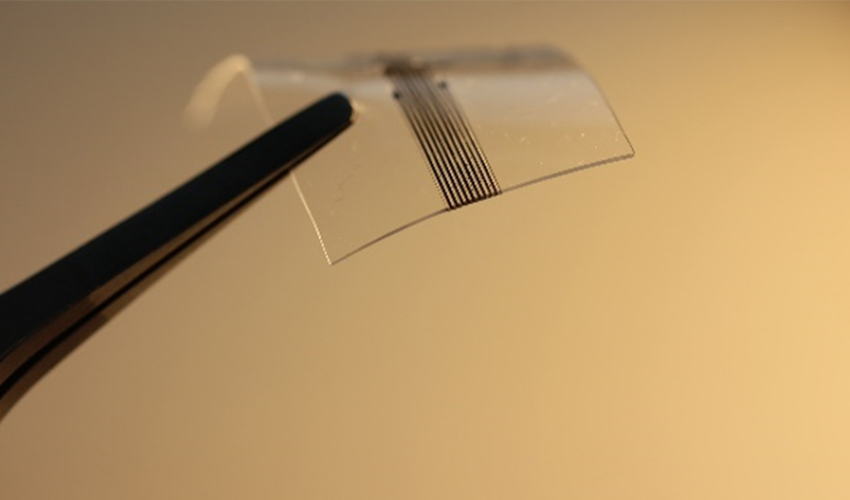
Research in the field of neural interfaces has existed since the 1970s, but innovation in the field has often been impeded by the high cost and long development time of producing prototypes. Additive manufacturing counteracts these limitations. As a result, it was possible for a research team consisting of engineers and neuroscientists from the Technical University of Dresden and the State University of St. Petersburg to develop a 3D printed neural implant prototype.
The 3D printed neural implant is a combination of biology and electronics. This combination is intended to connect the human brain with a computer. Potentially, it can be a rather effective method for treating neurological diseases such as paralysis, for instance. Through additive manufacturing processes, the implant is 3D printed layer by layer with biocompatible soft materials. This is not only much cheaper and faster, but also more adaptable. Ivan Minev, Professor of Intelligent Health Technologies at the Faculty of Automatic Control and Systems Engineering at the University of Sheffield, says: “The research we have started at TU Dresden and continuing here at Sheffield has demonstrated how 3D printing can be harnessed to produce prototype implants at speed and cost that hasn’t been done before, all whilst maintaining the standards needed to develop a useful device. The power of 3D printing means the prototype implants can be quickly changed and reproduced again as needed to help drive forward research and innovation in neural interfaces“.
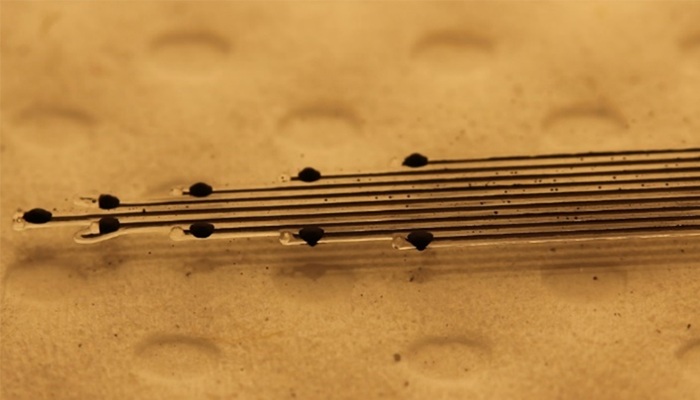
The 3D printed neural implant has been tested in animals with spinal cord injuries and may have the potential to treat paralysis in humans. (Image credits: Sheffield)
With the study, the researchers proved that the implant can fit well on various neural surfaces such as the brain, but also the spinal cord, peripheral nerves and even muscles. In order for it to be used in paralysis treatments on humans, the implants must be capable of perceiving tiny electrical impulses and transmit them to the brain and nervous system. The researchers were able to achieve this result as the 3D printed neural implant succesfully communicated with the body areas.
More from the desk
Six other notes from the rest of the bench.
 NewsThe First 3D Printed Parkour Playground Made Using Recycled Concrete Will Be in PragueIn the construction sector, 3D printing has been implemented in various projects as a solution to problems related to time, labor, and materials. Just last year, the city of Prague made headlines for its floating 3D-printed house. The capital city is…
 PrintersCurious about 3D printing in color? then let us explain!These are always questions that may arise as you begin taking an interest in 3D printing, and one of these areas where we see many questions asked is when it comes to 3D printing in color. Most people, when 3D…
 NewsExploring jewelry making using 3D printing with Caroline AuraixIn the jewellery sector, additive manufacturing has many benefits, especially in terms of creativity. It enables designers to design complex shapes that are impossible to obtain using traditional manufacturing methods. It also offers greater scope for personalization, satisfying
 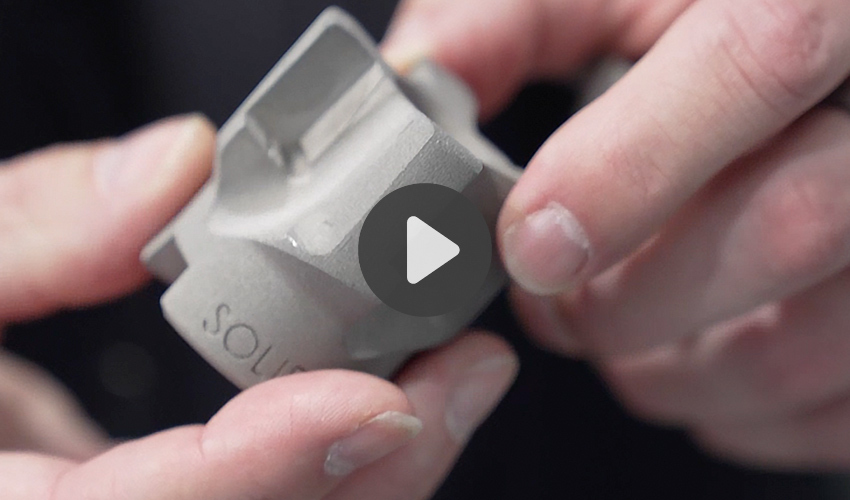 NewsSolidCAM Explains the Benefits of Combining CNC Machining and Additive ManufacturingMore and more, additive manufacturing is showing its worth as a complement to CNC machining. One notable example of this is through CNC manufacturing leader, SolidCAM. Best known for its CAM (computer-aided manufacturing) solutions, the company announced during IMTS that…
 NewsScan the World Calls to Immortalize Cultural Heritage After Easter Island FireLast week, a fire on Rapa Nui, colloquially often referred to as Easter Island in English, damaged many of the more than 1000 Moai statues located there. The damage was extensive and cannot be undone, with more than 100 hectares…
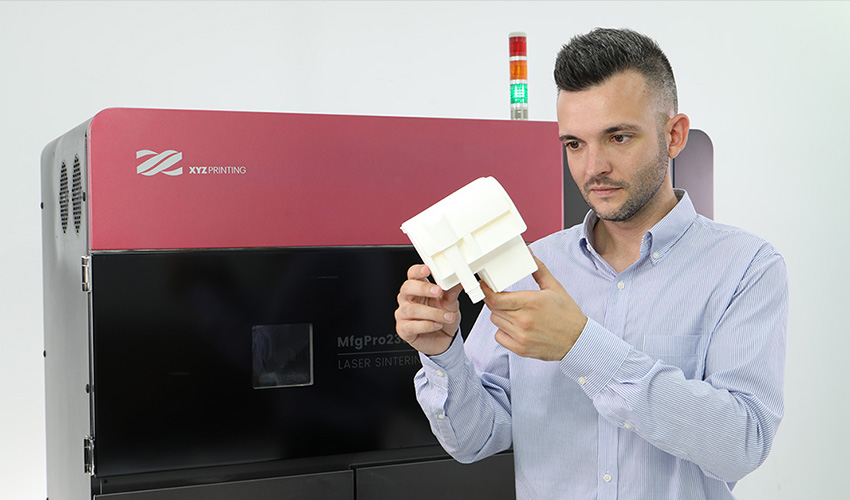 MaterialsXYZprinting SLS Machines Are Compatible with High Performance PP and TPU3D printing solutions manufacturer XYZprinting has announced a partnership with AM Polymers to offer two new materials for its selective laser sintering (SLS) machines. The range now includes an FDA-approved, food-grade PP01 polypropylene powder and a PB01 TPU powder for…