News
TU Graz 3D Prints Ceramic Cubes to Cool Rooms by Nearly 7°C, No Electricity Needed
Europe is living through its fourth major heatwave of the 2026 season, with temperatures above 40°C recorded across the Iberian Peninsula, France, Italy, and Austria. Cities are hit hardest: urban heat island effects can push local temperatures 1.7 to 4°C…
- 3 min read
- News
- Six more stories
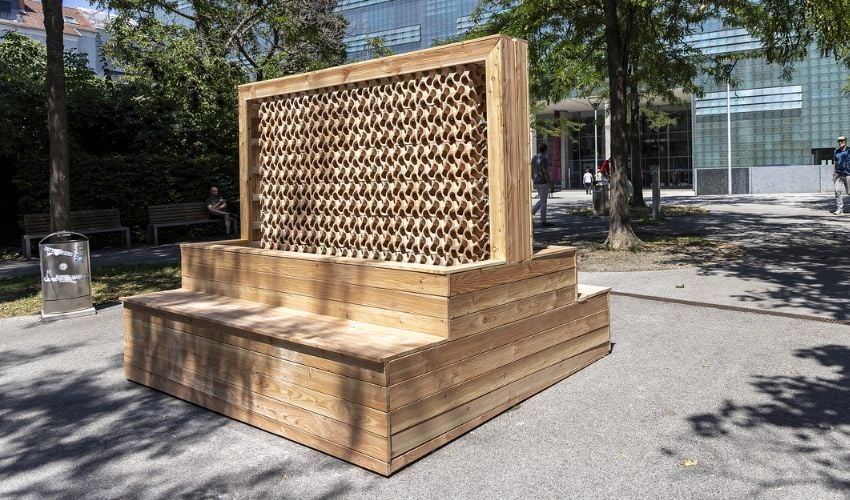
Europe is living through its fourth major heatwave of the 2026 season, with temperatures above 40°C recorded across the Iberian Peninsula, France, Italy, and Austria. Cities are hit hardest: urban heat island effects can push local temperatures 1.7 to 4°C or more above surrounding rural areas. Against that backdrop, the Institute of Architecture and Media at TU Graz is testing a low-tech physical principle to cool buildings without drawing power. They’re leverage the power of evaporative cooling, delivered through 3D-printed, highly porous ceramic cubes. Another testament to how 3D printing can be used to create sustainable technology.
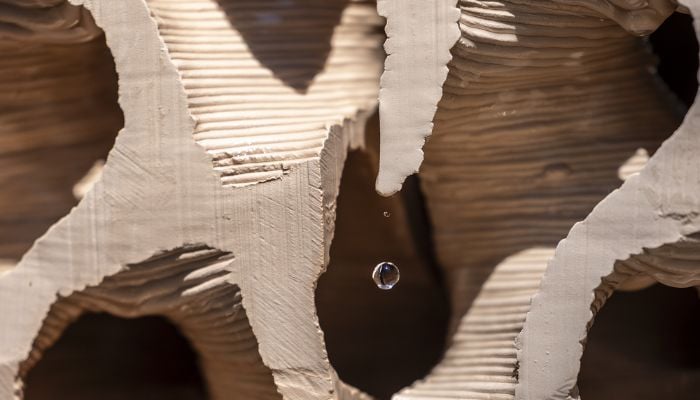
An up-close look at the 3D printed cubes.
What Is Evaporative Cooling?
When water evaporates, it draws heat from its surroundings, causing evaporative cooling. “[Evaporative cooling] has been working for centuries, both in clay jugs and in traditional wind towers,” explains Milena Stavric from TU Graz. “The key technological advance here lies in the use of 3D printing, which enables us to produce highly complex, porous and functionally optimised geometries from clay mixtures. These special structures store water particularly efficiently and, despite their small volume, create an enormous evaporation surface.”
The cubes, with sides of around 23 centimetres, are 3D printed from a ceramic clay mixture, then fired at low temperature to reach a highly porous consistency. Water is drawn into the porous ceramic by capillary forces and spreads evenly through the structure, creating a large surface over which it continuously evaporates, pulling heat from the surrounding air.
More from the desk
Six other notes from the rest of the bench.
 ApplicationsItalian Volt have unveiled their 3D printed electric motorcycleItalian Volt is an Italian company that manufactures customizable electric motorcycles (such as the Lacama), by using 3D printing. Different styles, shapes and colors are offered thanks to 3D printing manufacturing, as it offers greater possibilities in terms of the personalizati
 MaterialsEmerging Objects on their unique approach to materials and architecture thanks to 3D printingLast year we were telling you about the Cabin of Curiosities, a 3D printed building project a little out of the ordinary from the American company, Emerging Objects. This 3D printed hub is composed of 4,500 3D printed ceramic tiles…
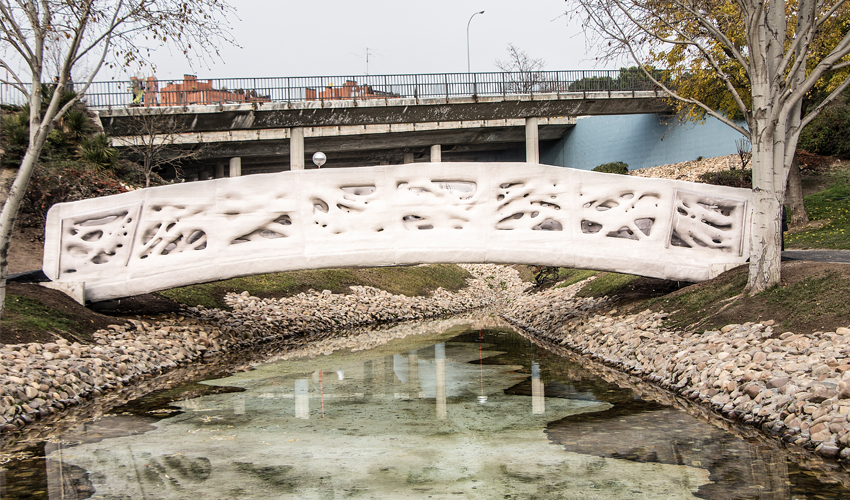 GuidesHow is ACCIONA using AM to support sustainability?ACCIONA, founded back in 1931, is a Spanish conglomerate group dedicated to the development and management of infrastructure and renewable energy. The sectors with which ACCIONA works include energy and infrastructure, which is why, not long ago, they began to integrate…
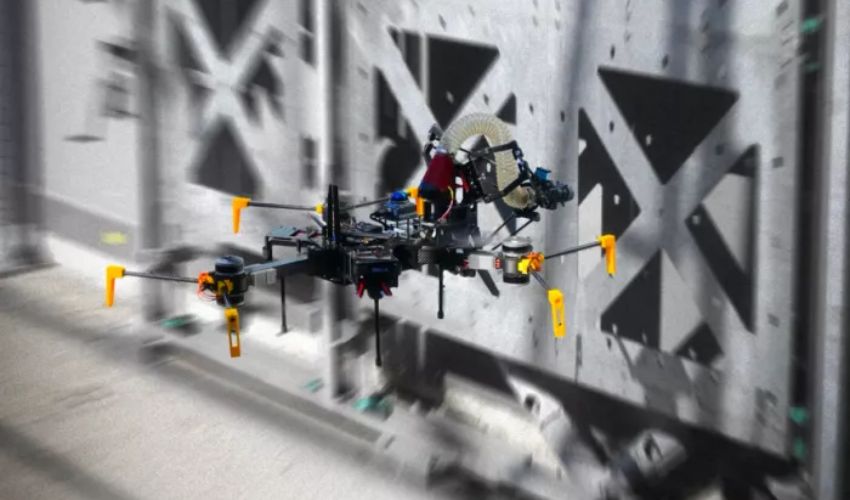 NewsAerial Additive Manufacturing: Architecture with 3D Printing DronesTypically, standard 3D printing is limited by a maximum print volume. 3D printing with robotic arms offers somewhat of a solution, with a greater range of motion and volume, but even here, the technology has a restricted capacity. A research…
 NewsTOP 5 Videos: 3D printed meat, a hybrid chair and much more!This week we found the top 5 videos about 3D printing and the way additive manufacturing is shaping our society. The technology has infiltrated many sectors, from medical to automotive! Check out our selection of the week to keep up with the innovations! This week we…
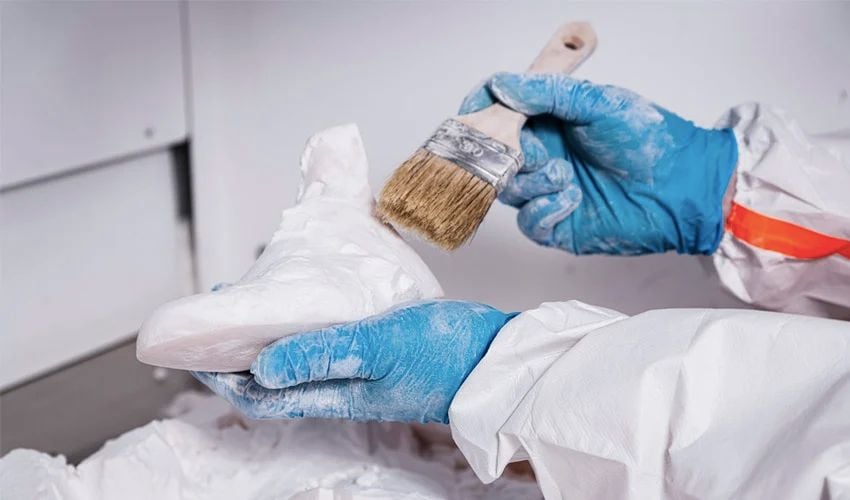 MaterialsAn Introduction to Post-Processing in 3D PrintingThe value chain of additive manufacturing consists of multiple steps before having a final part. There is, of course, the printing phase, but also the modeling phase, which is start of any project. But once the 3D printer has finished…