News
3D Printed Plant-Based Calamari Set To Make Waves
Humanity’s appetite for seafood is vast and worldwide. An average person eats over 45 pounds of fish per year, but overfishing, accessibility, affordability, and increasing ocean contamination with dangerous materials such as microplastics and heavy metals have pushed pione
- 3 min read
- News
- Six more stories
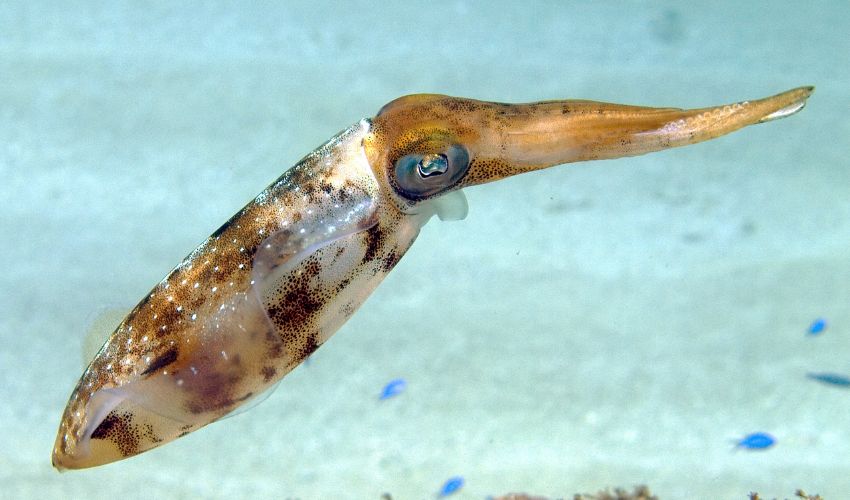
Humanity’s appetite for seafood is vast and worldwide. An average person eats over 45 pounds of fish per year, but overfishing, accessibility, affordability, and increasing ocean contamination with dangerous materials such as microplastics and heavy metals have pushed pioneers to seek out familiar flavors in new places. Demand for more plant-based seafood alternatives has steadily risen over the past few years, seeing the introduction of 3D printed, plant-based fish substitutes such as salmon, tuna, and even eel. In most recent news, researchers at the University of Singapore have been working to add calamari rings to the menu next with the help of food-grade 3D printing using edible bioink.
Dr. Dejian Huang heads the team at the University of Singapore that is behind the research and creation of new 3D printed plant-based substitutes. The team has previously worked on salmon and shrimp alternatives and has now set its sights on the viability of plant-based calamari. Dr. Huang explains, “Plant-based seafood mimics are out there, but the ingredients don’t usually include protein. We wanted to make protein-based products that are nutritionally equivalent to or better than real seafood and address food sustainability”. As an early convert to plant-based meat substitutes might tell you, it can be difficult to nail the right balance of flavor and texture to closely resemble the properties of meat. The research team is therefore paying close attention to both in this vegan calamari by using a protein-based bioink made of microalgae and mung beans, mixed with omega-3 fatty acids. The bioink is then turned into a paste and then extruded by a food-grade 3D printer.
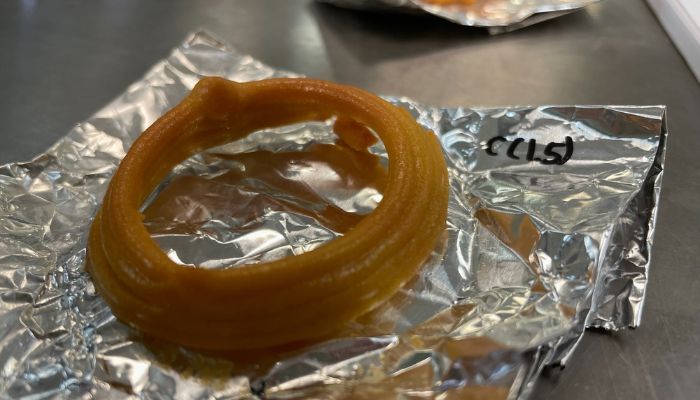
The first of the 3D printed calamari rings after being air fried (Photo Credits: Poornima Vijayan)
Algae has already proven to be a game-changing component in several fields, with promising characteristics for CO2 reduction and medical advances. Moreover, as a food source it requires far fewer resources than traditional agriculture. The University of Singapore team specifically chose microalgae for its protein density, environmental sustainability and slight fishy flavor which adds to the overall character of the faux calamari. Mung beans, the second protein, are also plentiful and readily available. An additional benefit? The excess material particularly from the manufacture of mung bean vermicelli or glass noodles can be used in bioink for 3D printed foods instead of becoming waste.
More from the desk
Six other notes from the rest of the bench.
 NewsNew Cafe Features 3D Printed Furniture from Coffee GroundsIn recent years, global efforts to implement the circular economy have significantly increased. A key component of this model is circular design, which focuses on developing products that are environmentally friendly and have a sustainable life cycle. A notable example…
 ApplicationsHyundai and Kia Open Dedicated Additive Manufacturing Center in South KoreaHyundai Motor Group installed its first industrial 3D printer in 1996. Nearly 30 years later, Hyundai Motor and Kia have opened an entire facility dedicated to additive manufacturing research and production: the Additive Manufacturing Solution Center (AMSC), located at the&hellip
 PrintersMastrex Is Making Metal 3D Printing More Accessible at RAPID + TCT 2026At RAPID + TCT 2026 this year, Mastrex is tackling one of the biggest barriers in metal additive manufacturing: cost. While laser powder bed fusion has long delivered high-performance parts in materials like titanium and Inconel, the price of entry…
 NewsTop 5 Videos: 10 ways to upgrade your 3D printer in 2021This week we found the top 5 videos about 3D printing and the way additive manufacturing is changing production. The technology has infiltrated many sectors, from medical to automotive: check our selection of the week to keep up with the innovations! If you enjoy these, you&helli
 NewsResearchers in China Test Earthquake Resistance of 3D Printed HouseA team of researchers in China have carried out a new experiment to test how well a 3D printed concrete house can withstand earthquakes. The trial took place at the Institute of Engineering Mechanics of the China Earthquake Administration in…
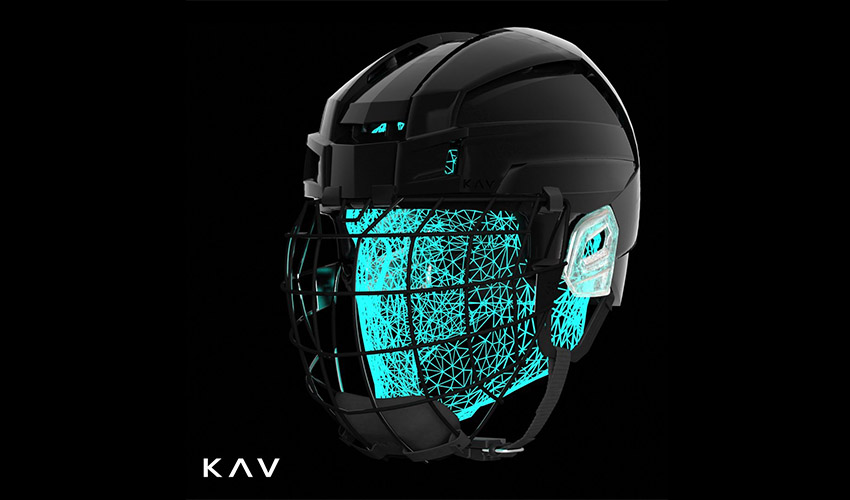 NewsAre 3D printed helmets becoming the norm?In the world of sports, additive manufacturing technologies can offer many benefits to athletes. Sporting equipment can be custom-made, geometrically more complex and made from smarter materials. Over time, manufacturers have understood the benefits of integrating 3D printing pie