Applications
3D Printed ‘Band-Aid’ for the Heart Could Help Heal Cardiac Tissues
Whether as a result of a heart attack, a disease like diabetes, smoking, drugs or an accident, damage to the heart is slow to heal by itself and often requires surgical intervention to prolong lifespan. But what if it was…
- 3 min read
- Applications
- Six more stories
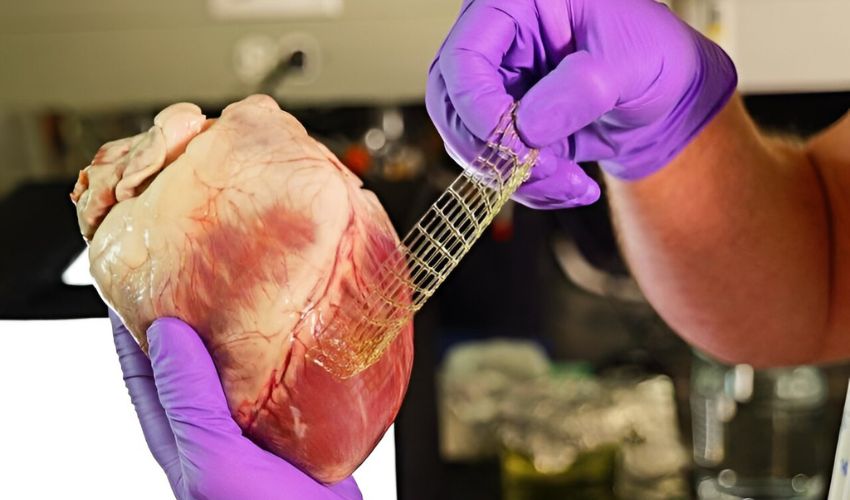
Whether as a result of a heart attack, a disease like diabetes, smoking, drugs or an accident, damage to the heart is slow to heal by itself and often requires surgical intervention to prolong lifespan. But what if it was possible to repair it with artificial tissues? A University of Colorado Boulder (CU Boulder) team, in collaboration with the University of Pennsylvania, have developed a new way to 3D print a material that is both elastic and tough, making it capable of withstanding the heart’s beating. The result? A 3D printed ‘band-aid’ for the heart that could change the way that doctors replace or repair human body parts.
One of the key issues in developing materials for the heart is that it is necessary to be both strong and stretchy, while still being customizable in terms of shape and size for each patient. This is due to the nature of the organ: the constant beating means it is not possible to have a rigid plastic that is adhered to it. The material needs to be able to change with the heart, rigidity would result in fracturing. This means that biomedical devices and implants traditionally made with injection molding or casting are just not practical. Adding to that the fact that heart damage is both deadly and unable to be healed naturally, this material which could be used as a 3D printed ‘band-aid’ for the heart could really revolutionize cardiac patient care.
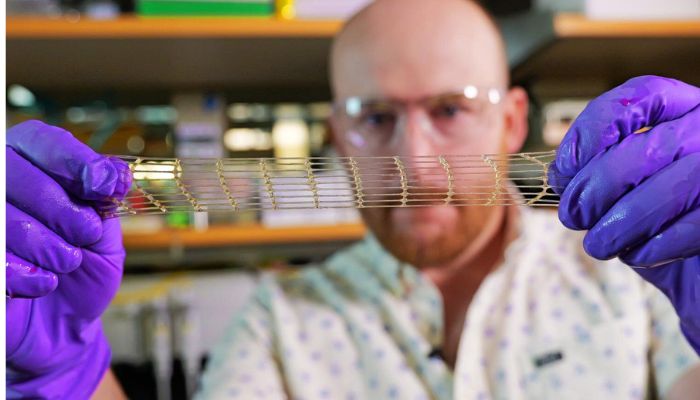
The stretchy material can be used as a 3D printed ‘band-aid’ for a heart
Senior author Jason Burdick, a professor of chemical and biological engineering at CU Boulder’s BioFrontiers Institute, further explains, “Cardiac and cartilage tissues are similar in that they have very limited capacity to repair themselves. When they’re damaged, there is no turning back. By developing new, more resilient materials to enhance that repair process, we can have a big impact on patients.”
More from the desk
Six other notes from the rest of the bench.
 NewsCreating Lightweight and Robust Bicycles With Metal 3D PrintingMore than once, British manufacturer Renishaw has proven that additive manufacturing is capable of helping many different industries. From aerospace to healthcare all the way to sports, the company is slowly integrating the technology into a variety of sectors through…
 ApplicationsUsing Cancer Cells And Computer Modeling, Researchers Have Optimized 3D BioprintingResearchers in a multi-university collaboration between the University of Waterloo, Canada, University of Swansea, and University of St Andrews, both UK, have conducted experiments on 3D bioprinted cancer cells over a period of 11 days, to compare to results from…
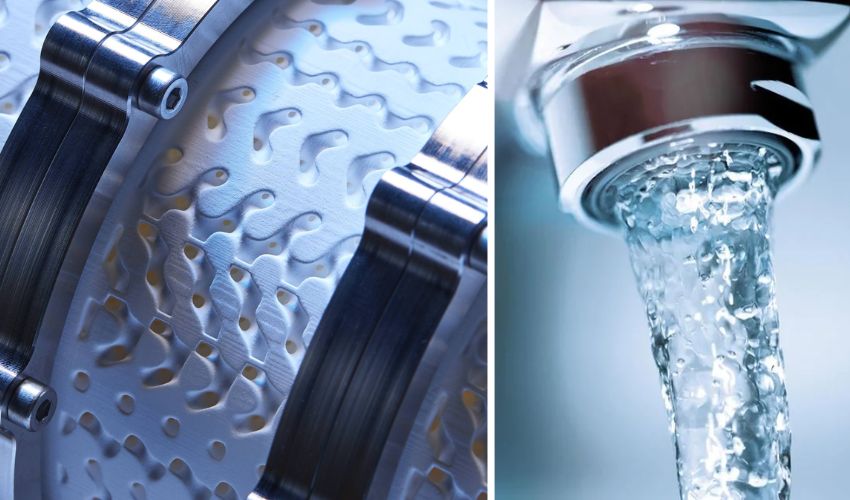 NewsHow 3D Printing is Transforming Water InfrastructureYou learned it in science class: water is the foundation of life. The renewable resource is often taken for granted, since for many of us, it is easily accessible with a turn of the tap. However, the infrastructure that delivers…
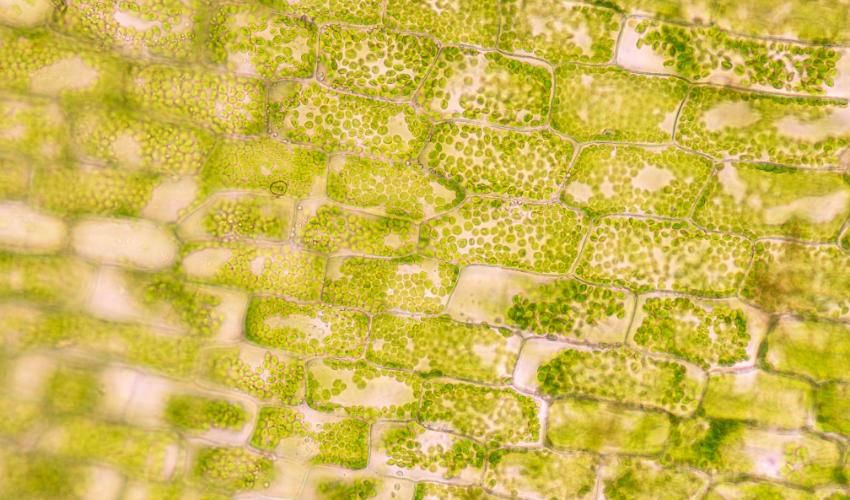 MaterialsResearchers Unveil Breakthrough 3D Bioprinting Method Using Plant Cells3D printing has proven to be a versatile technology, expanding its applications across various fields, from manufacturing to medicine. It has become an indispensable tool in many sectors due to its ability to customize products and create complex, unique structures…
 NewsTop 5 Videos: DED Simply ExplainedToday is Sunday, which is time for the week’s top 5 3D printing videos! To start, we have one of our very own, Elliot Saldukaite, to explain everything that you need to know about Directed Energy Deposition (DED), from the…
 ApplicationsWEBINAR: The Role of FDM 3D Printing in Automotive and MotorsportsWhen it comes to automobiles and especially motorsports, speed is key. As such, teams and manufacturers are constantly looking for ways to optimize weight on their vehicles. Enter 3D printing. Additive manufacturing is quickly being adopted in the automotive sector,…