News
Top 5 Videos: DED Simply Explained
Today is Sunday, which is time for the week’s top 5 3D printing videos! To start, we have one of our very own, Elliot Saldukaite, to explain everything that you need to know about Directed Energy Deposition (DED), from the…
- 3 min read
- News
- Six more stories
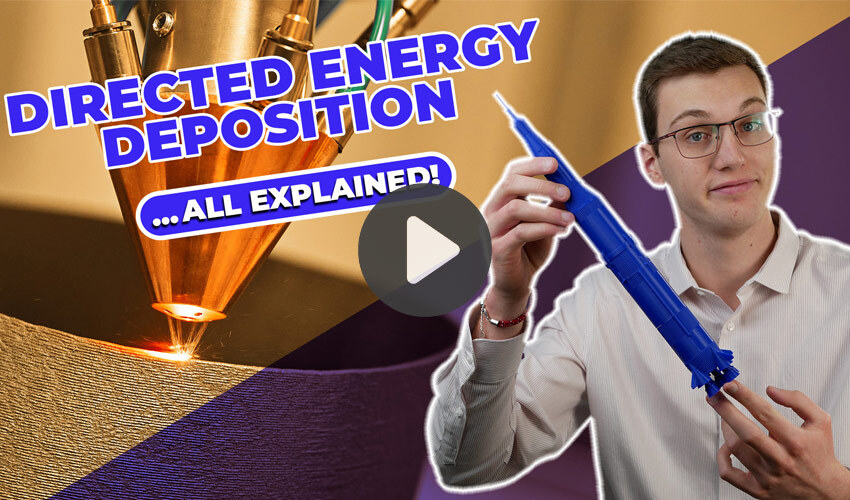
Today is Sunday, which is time for the week’s top 5 3D printing videos! To start, we have one of our very own, Elliot Saldukaite, to explain everything that you need to know about Directed Energy Deposition (DED), from the broad generalities of the technology to the nooks and crannies. Next, step onto Mars with NASA’s impressively visceral Mars simulation, and learn about Creality’s potential game-changing K1 Series printer. Finally, we have the first-ever office building built with 3D printing in Bengaluru, India, and the best 3D printed workshop projects collected over the past year. Happy Sunday, and as always, happy watching!
Top 1: Directed Energy Deposition Explained Simply
In our 3D Explained series, we guide you through all you need to know about the various additive manufacturing technologies and their application. In this week’s 3D explained, Elliot elaborates on some of the basic principles of DED, informing us on how it functions, the pros and cons, what materials are used, and for which industries it is most prevalent. While it may seem complicated at first glance, the two-minute information-packed explanation is bound to help you better understand the technology. Check it out if you want to become an expert in no time!
Top 2: Walk on Mars with NASA’s 3D Printed Habitat Simulation
Have you ever wanted to visit Mars? Well, now you can get pretty close. A 3D-printed structure with four small bedrooms designed to a simulation habitat on Mars is located at NASA’s Johnson Space Centre in Houston, Texas and this video takes you on a tour. The initiative is part of NASA’s plans to ship astronauts to the planet sometime in the 2030s. The Crew Health and Performance Exploration Analog (CHAPEA) and the space agency are conducting a preliminary study before the actual take-off by observing the effects of a four-person crew staying in the compact, simulated Mars habitat for roughly one year. Watch the video to find out who will be part of the four-crew team! (spoiler, they’ll be announced in the summer).
More from the desk
Six other notes from the rest of the bench.
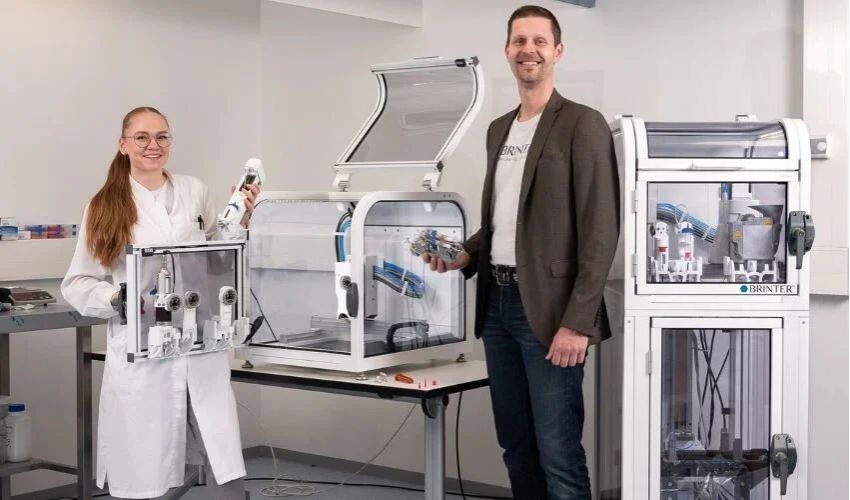 ApplicationsA 3D Bioprinter on Board the ISS: The Future of Space Medicine?Astronauts must be prepared for a variety of health problems in space, because they have no direct access to comprehensive medical care in their isolated environment. Although medical equipment and medicines are available on board space stations, and astronauts can…
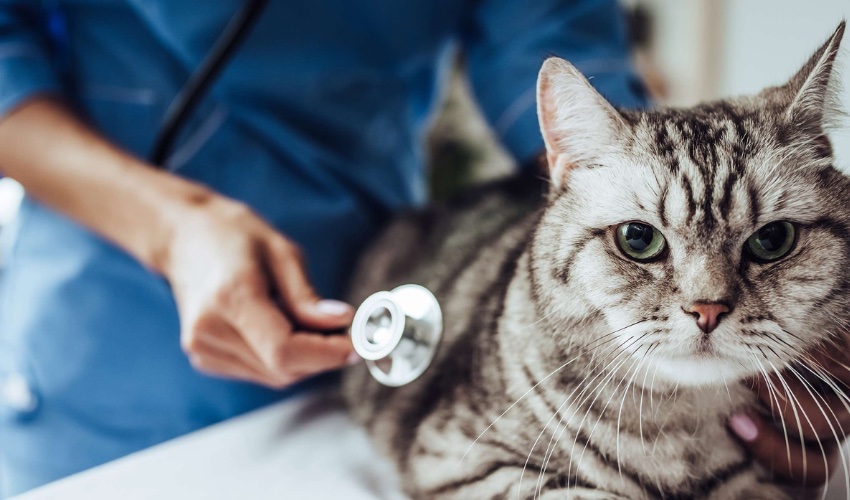 NewsHow Veterinary Medicine Benefits From Additive ManufacturingThey are considered man’s best friend and occupy a large place in our hearts and sometimes on our sofa: we are talking of course about animals, specifically pets. Since the beginning of time, humans have lived together with animals and…
 NewsMatt Harkness is Recycling PLA Waste Using TattoosThe 3D printing filament PLA is often advertised as environmentally friendly since polylactic acid is largely made from renewable raw materials such as corn starch. Thus, products made from PLA are able to be labeled “biodegradable.” This eco-stamp can therefore&helli
 News£1 million Grant Awarded to 3D Printing Company by UK Research and Innovation AgencyThe UK government’s Research and Innovation agency (UKRI) has announced a recent investment of £14 million into novel projects in a scheme known as the Sustainable Smart Factory Competition. Funding has been granted to those companies which promise to harness…
 NewsTokyo Olympics Medal Ceremony Podiums 3D Printed Using Recycled PlasticThe various applications of additive manufacturing have become increasingly broad. For instance, 3D printing is now used in aeronautics, automotive, fashion, food, even in the world of sports. Now, for the first time in its history, additive manufacturing is coming…
 MaterialsRethinking the AM Workflow: Montana Mixers on Solving Problems Before the PrinterAs additive manufacturing moves into production, the conversation is starting to change. Instead of asking whether a part can be printed, manufacturers are asking whether they can print it the same way every time. More often than expected, the answer…