
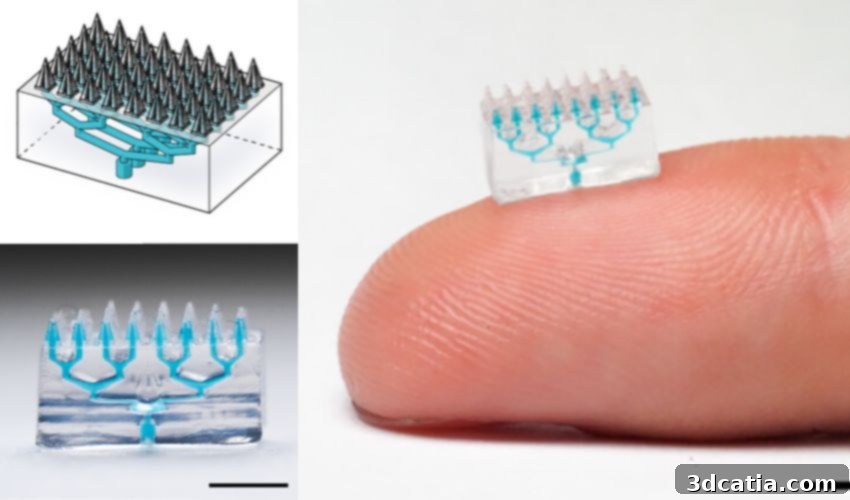
PinPrint and iCLIP: Revolutionizing Healthcare with Advanced 3D Printed Microneedle Patches
Just over a decade ago, the scientific community witnessed a significant leap in additive manufacturing with the introduction of Continuous Liquid Interface Production (CLIP) technology by renowned chemist Dr. Joseph DeSimone. As co-founder and CEO of Carbon, DeSimone pioneered a method that dramatically transformed resin 3D printing, boosting its speed and efficiency by orders of magnitude. Today, DeSimone, alongside his dedicated team of researchers at Stanford University, has unveiled an even more advanced iteration: Injection CLIP, or iCLIP. This groundbreaking innovation is now the technological cornerstone of PinPrint, DeSimone’s latest venture, co-founded with the ambitious goal of fundamentally reimagining the patient experience in both vaccinations and drug delivery. This article delves deep into the technology and strategic vision propelling PinPrint forward, offering unique insights from Dr. DeSimone himself on the factors behind Carbon’s monumental success, and his invaluable advice for emerging leaders in science and additive manufacturing.
PinPrint’s initial focus centers on the development of state-of-the-art microneedle patches. These innovative devices present a pain-free, highly effective alternative to traditional hypodermic needles, offering a gentler approach to medicine. Their versatile applications span vaccine and drug administration for a wide array of therapeutic and cosmetic needs, as well as the efficient collection of interstitial fluid samples for diagnostic purposes. Compared to conventional needles, microneedle patches boast numerous advantages: they are remarkably easy to apply, significantly reduce biohazard risks, and are minimally invasive, making them ideal for administration not only in clinical settings but also conveniently in homes or other non-clinical environments. Furthermore, their design inherently lowers the potential for microbial infection, and they pose fewer disposal challenges than their sharper counterparts. While microneedle devices have existed for decades and can be manufactured through traditional methods, PinPrint distinguishes itself by harnessing the power of additive manufacturing. This advanced approach enables the creation of exceptionally complex geometries, including microneedles integrated with intricate microfluidic channels and precise negative spaces – features that would be entirely impossible to achieve using conventional fabrication techniques, thus unlocking unprecedented levels of functionality and precision in drug delivery.
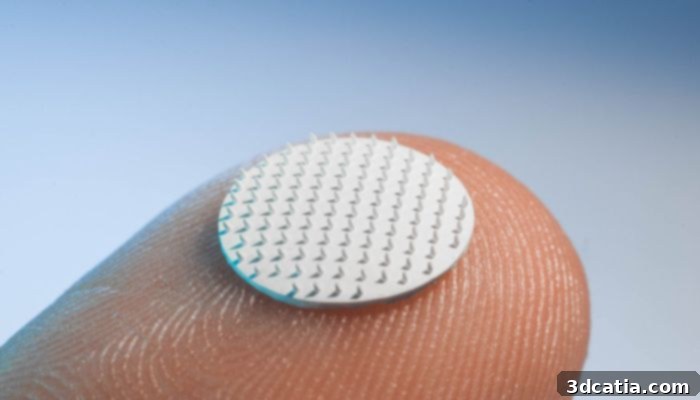
A standard microneedle patch, without microfluidic channels (Photo Credits: MyLife Technologies)
Solving the Problem of Overcuring: CLIP vs. iCLIP
The realization of such intricate geometries within microneedle patches demanded a fundamental breakthrough in resin 3D printing—specifically, addressing the pervasive issue of overcuring. Overcuring is a critical challenge in photopolymerization, referring to the unintended hardening of resin in areas designed to remain open or form negative spaces. This phenomenon occurs when ultraviolet (UV) light inadvertently reaches previously cured layers or penetrates areas intended to be voids, causing resin to solidify where it shouldn’t. The result is a significant degradation in the resolution of the Z-axis, leading to blurred features, blocked channels, and compromised functionality of the printed object. Dr. DeSimone and his pioneering research team at the Stanford lab were determined to overcome this limitation, striving to achieve unparalleled resolution not only across the XY plane but also with equal precision and fidelity along the Z-axis, thereby unlocking new possibilities for highly complex and functional designs, particularly in the realm of advanced medical devices.
To truly appreciate the elegance of the team’s solution, it’s essential to first understand the mechanics of CLIP (Continuous Liquid Interface Production) technology. Like other VAT photopolymerization methods, CLIP utilizes UV light to selectively cure liquid resin. However, CLIP introduces a crucial innovation: a specialized, oxygen-permeable window positioned beneath the resin vat. This window is transparent to UV light but allows for the controlled diffusion of oxygen into the resin. This precise control creates a thin, “dead zone”—a layer just tens of microns thick—where photopolymerization is inhibited due due to oxygen’s interference with the curing process. This persistent liquid interface acts as a non-stick surface, eliminating the need for traditional layer-by-layer peeling and drastically reducing print times. The continuous pull created by the rising build plate draws fresh resin into the dead zone, allowing the object to “grow” continuously from the resin vat, directly above this inhibitory layer. This ingenious mechanism enables printing speeds 100 to 1000 times faster than conventional 3D printing methods, achieving remarkable resolution in the XY plane. Despite these advancements, the Z-axis resolution in CLIP was still challenged by residual overcuring, prompting further innovation.
Nearly a decade after the initial development of CLIP, Dr. DeSimone and a dedicated team from Stanford unveiled iCLIP (Injection CLIP) as the definitive solution to the Z-axis overcuring problem. Their landmark study, published in the prestigious Proceedings of the National Academy of Sciences (PNAS) in September 2024, detailed this revolutionary technique. iCLIP ingeniously addresses overcuring by constantly pumping naturally oxygenated, or “inhibited,” resin through all negative spaces within the printed structure, whether these are intricate microfluidic channels, complex lattices, or tiny pores. This continuous flow effectively flushes out any residual, unpolymerized resin that could otherwise be prone to overcuring, ensuring that these delicate features remain open and precisely formed. Unlike CLIP, which relies on suction to draw resin into the build area, iCLIP mechanically pushes fresh, inhibited resin into the gap, maintaining a constant, precise flow. This profound advancement has enabled the creation of microchannels with significantly smaller diameters and heights, pushing the boundaries of miniaturization. iCLIP now achieves high-resolution features down to an astonishing 10 to 25 microns, greatly enhancing the functionality and complexity of printed devices. The Stanford lab’s broader research continues to focus on manufacturing with light, with an ambitious goal of achieving single-digit micron resolution across all three Cartesian coordinates, promising a new era of ultra-precision additive manufacturing.
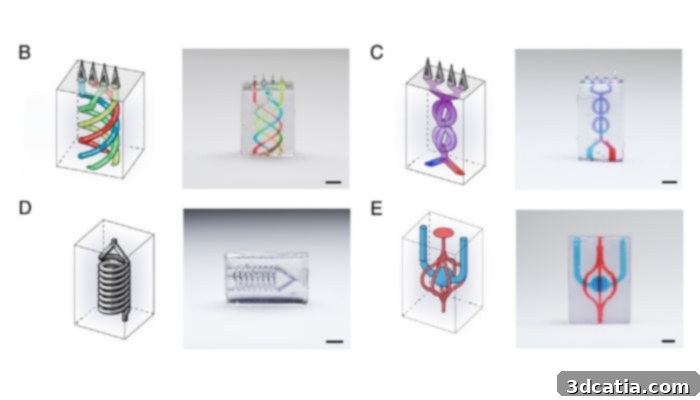
Diagrams illustrating microfluidic channels created with iCLIP technology (Photo Credits: I.A. Coates, et al./PNAS)
How Can PinPrint Microneedle Patches Be Used?
Armed with a definitive solution for overcuring, Dr. DeSimone and his team embarked on a mission to elevate microneedle patches by seamlessly integrating them with sophisticated microfluidics. While PinPrint’s innovative microneedle patches are not yet commercially available, the company is actively engaged in rigorous human trials to ensure their safety and efficacy. Upon their anticipated market release, one of the inaugural pharmaceutical applications PinPrint will focus on is lidocaine, a widely used local anesthetic renowned for its ability to numb specific areas upon application. DeSimone envisions these advanced lidocaine patches being distributed to dermatological clinics, offering patients instant localized numbing. This would dramatically reduce the typical 30-minute waiting period required for conventional numbing creams to take effect, significantly improving patient comfort and clinic efficiency. He aptly compared this strategic business approach to bowling, articulating, “What is the first pin you want to knock over that knocks over additional pins? For us, that first pin is lidocaine.” This analogy underscores PinPrint’s clear, targeted entry strategy into the market, aiming to establish a foundational success from which to expand.
Beyond lidocaine, Dr. DeSimone envisions numerous “bowling pins” that PinPrint aims to address with its revolutionary technology. One significant area of potential lies in leveraging the patches for non-invasive collection of interstitial fluid. DeSimone paints a vivid picture: “Imagine walking into a Walmart, putting a patch on, doing your shopping, leaving a patch at the counter, and getting molecular information instead of doing a venous puncture and a blood draw.” This scenario highlights the transformative potential for convenient, at-home diagnostics and personalized health monitoring, moving away from more invasive and less comfortable traditional methods. Another compelling use case involves pharmaceutical companies procuring these advanced patches and pre-filling them with single or multiple vaccines. This approach could revolutionize vaccine delivery by simplifying administration, potentially enabling self-administration, and enhancing distribution in remote or underserved areas. The ability to customize patches for various drugs and diagnostic applications underscores the profound versatility and far-reaching impact of PinPrint’s iCLIP-enabled microneedle technology in the future of healthcare.
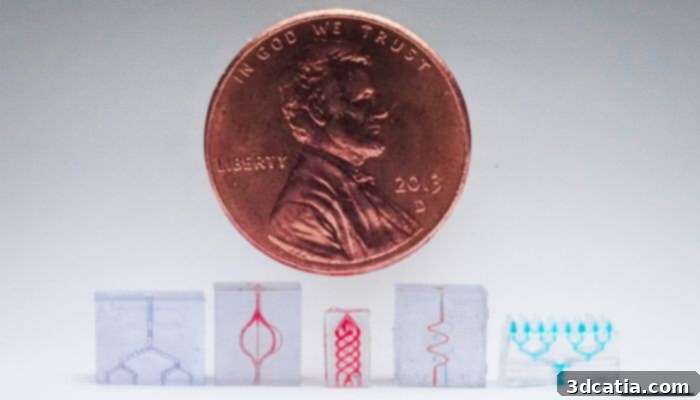
A visual comparison of microchannels created with iCLIP and a penny (Photo Credits: I.A. Coates, et al./PNAS)
An Entrepreneurial Perspective
In recent years, the broader additive manufacturing industry has navigated a particularly challenging market landscape, characterized by a wave of major acquisitions and unfortunate layoffs across various companies. Despite this prevailing somber economic climate, Dr. DeSimone shared that Carbon, under his leadership, has largely remained resilient and unaffected. He attributes Carbon’s sustained success to an unwavering and relentless focus on practical manufacturing applications, stating, “I think that perhaps it is because we have relentlessly focused on manufacturing and how to take 3D printing into real-world manufacturing.” He cited Carbon’s pivotal early partnerships with industry giants like adidas and Invisalign as prime examples of this strategy in action, demonstrating the company’s ability to deliver tangible, scalable solutions. DeSimone further emphasized that living at the critical intersection of all three core elements—hardware, software, and advanced materials—has been the paramount key to Carbon’s unique differentiation and enduring market success, allowing for seamless integration and optimized performance across their entire additive manufacturing ecosystem.
Dr. DeSimone further elucidated that a significant portion of Carbon’s exceptional success can be credited to the company’s pioneering subscription-based business model. This innovative approach stands out in the manufacturing sector, as DeSimone noted, “We have a subscription model and there’s no other piece of manufacturing hardware that I’m aware of that is subscribed to in any industry sector.” Initially, even Carbon’s own investors harbored concerns regarding the viability of securing multi-year subscriptions (e.g., three years) over shorter, one-year agreements. However, due to Carbon’s deep integration into critical manufacturing processes and the proven value of their continuous service and technology upgrades, these subscriptions have evolved and are now commonly extending to five-year contracts. This long-term contractual commitment provides Carbon with tremendous visibility into future revenue streams, creating a stable and predictable financial foundation. This strategic shift from a traditional capital expenditure model to a predictable operational expense model has not only fostered strong customer loyalty but has also become a cornerstone of Carbon’s financial stability and competitive advantage in the additive manufacturing space.
Where Should We Be Directing Energy?
When asked to impart his wisdom to young scientists and engineers eager to make a tangible impact within the industry, Dr. DeSimone offered a perspective that might initially seem counterintuitive but carries profound strategic implications. He began by stating, “I think one can make a pretty compelling argument that, in many ways, no more research is needed in green, sustainable polymers as an example.” He further elaborated, “You could snap the chalk line today and say, OK, no more, but implement what you’ve got…There’s a lot of great stuff out there that’s not getting used. Why is that?” His central point resonated clearly: there exists a vast reservoir of untapped potential within already developed, sustainable technologies and materials. The challenge, according to DeSimone, is not necessarily the lack of innovation at the research stage, but rather the failure to effectively transition these brilliant discoveries from the lab into widespread practical application and commercial use. This emphasizes a crucial need for a greater focus on implementation, scaling, and market adoption of existing breakthroughs, rather than solely pursuing novel research.
For aspiring entrepreneurs and innovators dedicated to introducing disruptive technology to the marketplace, Dr. DeSimone strongly recommends Geoffrey Moore’s seminal book, Crossing the Chasm. He underscored its foundational importance, stating, “That book was our Bible at Carbon. It’s our Bible at PinPrint.” DeSimone’s emphatic endorsement highlights the enduring relevance and practical utility of Moore’s insights into navigating the perilous gap between early adopters and the mainstream market. The book provides crucial strategies for targeting specific niche markets, understanding distinct customer segments, and overcoming the inherent challenges in transitioning from a visionary product to widespread commercial success. For any venture aiming to commercialize truly disruptive innovations, especially in complex fields like advanced manufacturing or healthcare, Moore’s framework offers an indispensable guide for strategic planning and execution, proving its worth repeatedly in DeSimone’s entrepreneurial journeys.
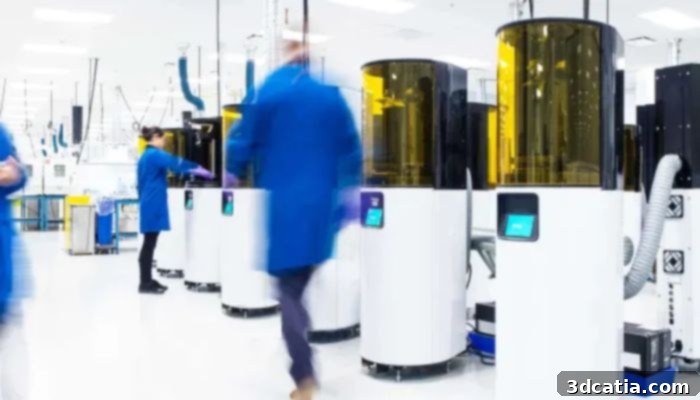
Carbon offers to scale production for its partners with its fleets of 3D printers (Photo Credits: Carbon)
More broadly, Dr. DeSimone acknowledged the indispensable and symbiotic roles that both visionary businesses and enabling policy play in driving meaningful progress and innovation. He asserted, “It takes entrepreneurs and policy changes, and there’s a huge opportunity now to be focused on vertical integration and taking things forward…Young people should be thinking about where they want to play,” he urged. This call to action emphasizes the immense potential for emerging leaders to shape the future, particularly within burgeoning fields that demand cohesive strategies from ideation to market. The concept of vertical integration, where a company controls multiple stages of its supply chain, is particularly relevant in additive manufacturing and healthcare, promising greater efficiency, quality control, and faster innovation cycles. DeSimone’s insights underscore that genuine transformative change requires a concerted effort, combining entrepreneurial drive with supportive governmental frameworks to overcome systemic challenges and unlock new opportunities for growth and societal benefit.
DeSimone also raised a pertinent concern currently unfolding within the United States, remarking, “We’re in the midst of a challenge in the United States right now with the war on universities, and our technology arguably spun out of that kind of setting.” He acknowledged the imperative for reform, stating, “Don’t get me wrong, I think changes need to happen in academic research, but I worry about whether the community is ready to make those hard decisions about what needs to be funded and what doesn’t.” This statement highlights a critical tension: while academic institutions are vital engines of foundational innovation, the current climate poses challenges to their funding and operational models. DeSimone expressed hope that a more nuanced understanding of commercialization pathways could help guide—though not entirely dictate—some of these difficult funding decisions. Ultimately, he emphasized that the sustained success of any technology business hinges on a dual foundation: an exceptionally strong business strategy coupled with a robust and innovative technological core. With PinPrint, the harmonious combination of strategic foresight and groundbreaking iCLIP technology holds immense promise. The industry keenly anticipates how this revolutionary technology will be embraced and integrated into the dynamic and demanding healthcare space, marking a new chapter in patient care and medical delivery systems.
What are your thoughts on PinPrint and its potential impact? We invite you to share your insights in a comment below or join the conversation on our LinkedIn or Facebook pages! For the latest updates in the world of 3D printing, remember to sign up for our free weekly Newsletter, delivered directly to your inbox. You can also explore our extensive video library on our YouTube channel. Interested in more news concerning medical and dental 3D printing? Visit our dedicated page HERE for comprehensive coverage.
*Cover Photo: Microneedle patches created with iCLIP technology. Credits: I.A. Coates, et al./PNAS