
Chennai’s Urban Revolution: How 3D Printed Bus Shelters Are Redefining Public Transportation and Smart City Infrastructure
The bustling metropolis of Chennai, India, is embarking on a pioneering journey to transform its urban landscape, particularly its public transportation infrastructure. Currently, the city grapples with approximately 1,420 bus shelters, many of which are in a state of disrepair, underutilized, or even abandoned. These dilapidated structures often detract from the urban aesthetic and fail to provide the necessary comfort and utility for daily commuters. However, a groundbreaking solution is emerging from the realm of additive manufacturing. This innovative technology is set to revolutionize Chennai’s public spaces, with plans to install nearly 90 state-of-the-art 3D-printed bus shelters. This long-term vision aims to imbue bus stops with enhanced functionality, durability, and a renewed sense of civic pride and modern “glamour.”
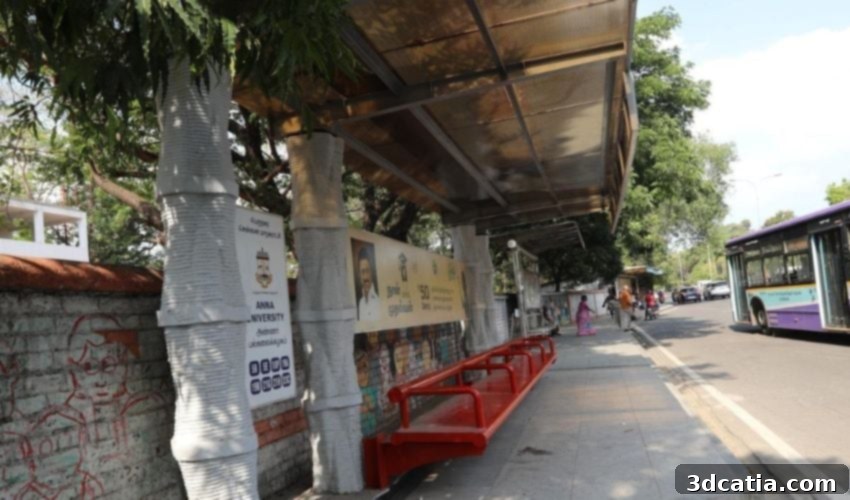
Imagine a future where collapsed roofs, uncomfortable seating (either too low or too high), and walls marred by layers of old posters are distant memories for Chennai’s commuters. This vision is rapidly becoming a reality. The Greater Chennai Corporation (GCC), the city’s municipal body, has officially announced its ambitious intention to rectify these long-standing issues through the strategic deployment of 3D printing technology. This initiative represents a significant leap forward in urban development, demonstrating a commitment to integrating advanced technology for public benefit. Last September marked a historic moment with the successful installation of the very first 3D-printed bus shelter near the iconic Marina Beach, a high-visibility location chosen to showcase the potential of this technology. Following this initial success, more shelters have been unveiled at key locations, including the Anna University stop on Sardar Patel Road and opposite the TWAD building on Kamarajar Salai, both critical arteries for daily commuters and students. This is merely the beginning; in the forthcoming months, numerous other bus stops across Chennai are slated for renovation and upgrade using this transformative 3D printing methodology, signaling a systematic overhaul of the city’s public transport amenities.
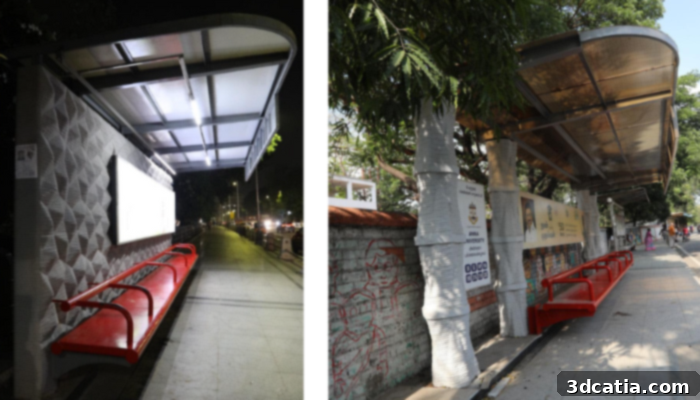
The pioneering 3D-printed bus shelter installed in September 2024 near Marina Bay (left) marks a new era for Chennai’s public transport. This innovation is now expanding to other key locations, such as the Anna University bus stop (right), demonstrating the city’s commitment to modern, functional infrastructure (Photo credit: unseenchennai on Instagram).
Beyond Aesthetics: 3D Printed Bus Shelters Combine Smart Functionality and Modern Design
The new generation of 3D-printed bus shelters in Chennai is not merely about visual appeal; they represent a harmonious blend of innovative design and practical functionality, meticulously engineered to enhance the commuter experience. At the core of these structures is an advanced concrete structure, meticulously crafted using sophisticated 3D printing techniques. A distinctive feature of these shelters is the presence of intricately designed grooves on the reinforced concrete columns. This thoughtful design choice gives the columns an organic, almost biomorphic appearance, subtly reminiscent of the natural texture of a tree trunk. This not only adds an element of natural beauty to the urban environment but also serves a practical purpose: the unique surface texture ingeniously deters the placement of unauthorized poster advertisements, thereby effectively mitigating vandalism and preserving the shelters’ aesthetic integrity. This proactive approach to design ensures that public spaces remain clean and visually appealing, reducing maintenance efforts and costs for the city.
In a striking visual juxtaposition, the shelters feature vibrant scarlet metal benches, which provide a bold and refreshing contrast to the muted gray tones of the concrete columns. This deliberate color choice injects a sense of modernity and vibrancy into the typically utilitarian bus stop environment. However, the innovation extends far beyond color. These new bus shelters are engineered for superior functionality, particularly in terms of user comfort. The benches are not just visually appealing; they are oversized and meticulously placed at an optimized height, a design consideration that significantly contributes to greater comfort for a diverse range of users, whether waiting briefly or for extended periods. This ergonomic focus aims to make public transport more accessible and enjoyable for everyone.
Achieving this level of comfort and innovative design was not without its challenges. The Greater Chennai Corporation (GCC) encountered specific logistical hurdles during the installation phase, primarily due to the large dimensions of the custom-designed benches and the often-limited space available at urban bus stop locations. However, through diligent planning and effective problem-solving, these obstacles were successfully overcome, underscoring the GCC’s commitment to delivering a superior public infrastructure project. The result is a series of bus shelters that are not only eye-catching and modern but also remarkably practical, setting a new benchmark for urban design and public utility.
The Power of Additive Manufacturing: Flexibility, Speed, and Design Freedom
While the precise 3D printing method and specific printer models employed for Chennai’s bus shelters remain undisclosed, the inherent advantages of additive manufacturing were undoubtedly instrumental in the successful execution of this ambitious project. This technology offered the Greater Chennai Corporation unparalleled flexibility and rapidity in construction, allowing for the realization of complex, custom designs that significantly improve both the functionality and aesthetics of these vital public spaces. Unlike traditional construction methods, 3D printing enables the creation of intricate geometries and organic forms with relative ease, opening up new possibilities for architectural expression and structural innovation.
The ability to print structures layer by layer also translates into several key benefits for urban development. Firstly, it allows for highly precise material deposition, potentially reducing material waste compared to conventional formwork-based concrete construction. Secondly, the speed of fabrication can dramatically shorten project timelines, enabling cities to address infrastructure needs more efficiently and respond rapidly to urban planning demands. Furthermore, the design freedom offered by 3D printing means that each bus shelter can potentially be tailored to its specific location, integrating unique features or adapting to site-specific constraints, although this might also involve standardized modular designs for scalability across 90 shelters.
An intriguing aspect for the future is whether the GCC will maintain a consistent design aesthetic for all subsequent planned bus shelters or if they will fully explore the expansive potential of 3D printing by experimenting with diverse designs. The iterative nature of additive manufacturing allows for rapid prototyping and design modifications, offering an exciting opportunity to customize solutions for different zones within the city. For instance, shelters in commercial hubs might incorporate digital displays for public information, while those near residential areas could prioritize enhanced seating or integrated green elements. Regardless of the design evolution, one aspect is abundantly clear: these 3D-printed bus shelters are more than just functional structures; they are bold statements of innovation that are sure to captivate attention and spark conversations about the future of urban infrastructure. For more in-depth information on this pioneering initiative, interested readers can click HERE to access the original report from The Hindu.
A Vision for Smart Cities: The Broader Impact of 3D Printing in Urban Development
The deployment of 3D-printed bus shelters in Chennai transcends a mere infrastructure upgrade; it represents a significant stride towards establishing Chennai as a “smart city” and a leader in sustainable urban development. By embracing additive manufacturing, the city is showcasing its commitment to leveraging cutting-edge technology for the betterment of its citizens’ daily lives. This project serves as a compelling case study, not only for other Indian cities struggling with similar infrastructure challenges but also for global urban centers seeking innovative, cost-effective, and aesthetically pleasing solutions for public spaces.
The success of these shelters could pave the way for wider application of 3D printing in urban environments. Imagine 3D-printed street furniture, public art installations, modular housing, or even pedestrian bridges, all designed with unprecedented complexity and fabricated with remarkable efficiency. The “glamour” mentioned in the initial discussion speaks to the elevated quality of life and civic pride that comes with well-designed and maintained public amenities. When citizens feel proud of their urban environment, it fosters a stronger sense of community and encourages greater respect for shared spaces.
Beyond the immediate benefits, this initiative highlights the potential for additive manufacturing to contribute to environmental sustainability. By optimizing material usage and potentially incorporating recycled or locally sourced aggregates into the concrete mix, 3D printing can lead to more eco-friendly construction practices. As cities worldwide face the dual challenges of rapid urbanization and climate change, technologies like 3D printing offer viable pathways to build smarter, greener, and more resilient urban landscapes. Chennai’s bold move with these bus shelters is a testament to this transformative potential, setting a precedent for how technology can reshape our urban future.
What are your thoughts on these innovative 3D-printed bus shelters? Do you believe additive manufacturing holds the key to fundamentally changing our urban spaces for the better? We encourage you to share your insights and opinions in a comment below, or join the discussion on our LinkedIn or Facebook pages! Furthermore, don’t miss out on the latest advancements in the world of 3D printing by signing up for our free weekly Newsletter, delivered directly to your inbox. You can also explore our extensive library of videos on our YouTube channel for visual insights into additive manufacturing. If your interests lie specifically in the application of 3D printing within the automotive and transportation sector, we invite you to visit our dedicated page HERE for more specialized news and analyses.
*Photo Credits: The Hindu / Prince Frederick