
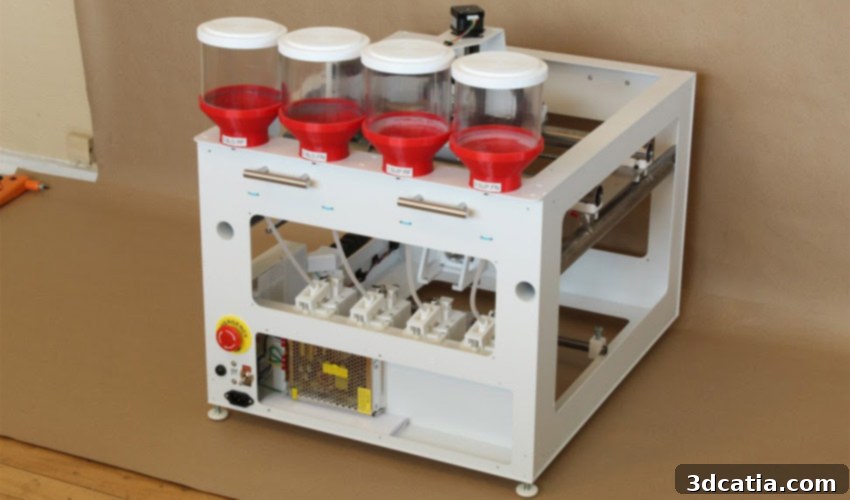
iro3d: Democratizing Metal 3D Printing with Unprecedented Affordability
The landscape of metal 3D printing is undergoing a significant transformation, driven by innovations focused on making this advanced manufacturing technology more accessible. Leading this charge is the US start-up iro3d, which has commenced shipping its first low-cost metal 3D printers. These groundbreaking machines are now available starting at an astonishing price point of just $5,000. This pricing strategy represents a radical departure from established norms within the metal additive manufacturing market, where entry-level solutions often come with a six-figure price tag.
To truly appreciate the disruptive potential of iro3d’s offering, it’s essential to contextualize its price against the backdrop of the existing market. Traditional industrial metal 3D printers, such as those developed by industry giants like 3D Systems or EOS, typically demand investments running into hundreds of thousands, if not millions, of dollars. Even more recent innovators like Desktop Metal and Markforged, who have been actively striving to lower the cost barrier of metal additive technology, still offer machines that are priced closer to €100,000. This stark contrast highlights iro3d’s ambition to fundamentally redefine who can access and utilize metal 3D printing, opening up possibilities for a much broader audience, from small businesses and educational institutions to research labs and even advanced hobbyists.
iro3d’s Journey to Market: From Concept to Commercialization
Earlier this year, iro3d captivated the additive manufacturing community by unveiling the initial version of its eponymous metal 3D printer. The announcement generated considerable buzz, promising a level of affordability previously unheard of in the sector. Following its presentation, the manufacturer strategically engaged with a select group of American dealers, allowing them to rigorously test the machine and provide invaluable feedback. This crucial testing phase ensured that the iro3d printer met performance expectations and was ready for broader deployment.
Today, iro3d has successfully delivered its innovative metal 3D printers to several pioneering companies across the United States, marking a significant milestone in its commercialization efforts. Building on this initial success, the company is actively planning to extend its market reach, with intentions to continue its momentum into key international markets such as Asia and Canada. This global expansion underscores the universal appeal of its proposition: high-quality metal 3D printing without the prohibitive cost. The combination of an extremely attractive selling price and promising technical specifications has clearly positioned iro3d as a compelling solution for a wide range of applications.
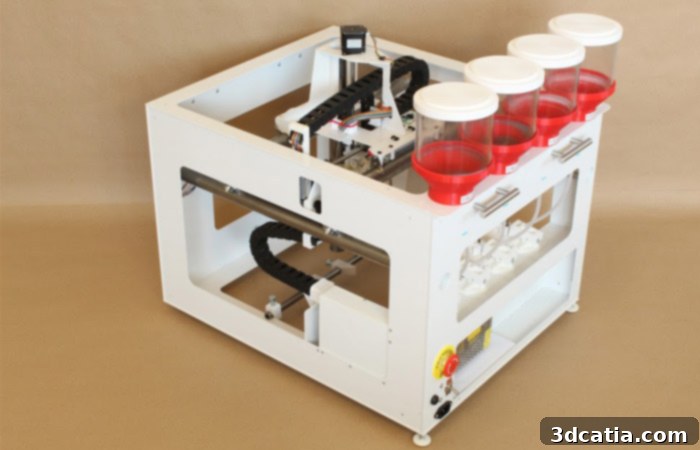
Revolutionary Technology: An Accessible Approach to Metal Additive Manufacturing
Inspired by Metal Injection Molding (MIM)
Much like the innovative Pollen AM 3D metal printer, the iro3d machine draws its core inspiration from an indirect metal fabrication process known as Metal Injection Molding (MIM). MIM is a well-established industrial manufacturing method used for producing complex metal parts with excellent mechanical properties. Instead of directly melting and fusing metal powder, iro3d’s approach leverages the principles of MIM by creating a ‘green part’ that is subsequently sintered to achieve its final metallic form. This indirect method often allows for the use of more readily available metal powders and can significantly reduce the complexity and cost of the printing apparatus itself, compared to direct metal laser sintering (DMLS) or selective laser melting (SLM) technologies.
The Unique Sand Crucible Printing Process
At the heart of the iro3d system is its distinctive selective powder deposition technology, utilizing sand as a support material. This innovative technique distinguishes itself from other metal 3D printing methods. Instead of directly printing a finished metal part, the iro3d machine first creates a precision sand crucible. This crucible acts as a mold, meticulously formed to encapsulate the metal powder in the desired shape of the final component. Once the sand crucible is complete and filled with the chosen metal powder, the part undergoes a crucial sintering step.
Sintering is a thermal treatment process that compacts and forms a solid mass of material by heat or pressure without melting it to the point of liquefaction. During this stage, the metal powder particles within the crucible are heated to a temperature below their melting point, causing them to bond together and coalesce, forming a dense, solid metal part. After the sintering process is complete and the part has cooled, the surrounding sand crucible is simply removed, leaving behind the desired metal component. The precise temperature and duration of the sintering cycle are critical and vary significantly depending on the specific metal alloy being processed. For instance, the manufacturer specifies that for copper-iron alloys, the sintering process typically requires approximately 2 hours at an elevated temperature of 1184°C, demonstrating the precise control needed for material transformation.
Material Compatibility and Future Prospects
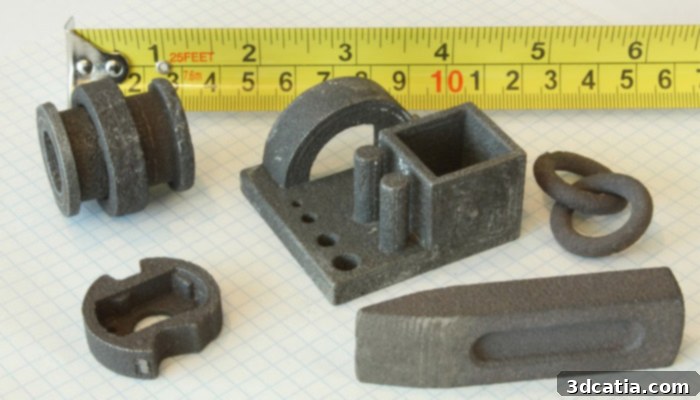
Currently, the iro3d system demonstrates compatibility with a range of industrially relevant materials, including high carbon steel, various copper alloys, and nickel. These materials offer diverse properties suitable for numerous applications, from robust structural components to highly conductive parts. High carbon steel, for example, is valued for its strength and hardness, making it ideal for tools and wear-resistant components. Copper alloys are highly sought after for their excellent electrical and thermal conductivity, crucial for heat exchangers, electrical contacts, and motors. Nickel, and its alloys, are prized for their corrosion resistance, high-temperature strength, and unique magnetic properties, finding use in aerospace, marine, and chemical processing industries.
While the current material palette is robust for many uses, the printing system is not yet optimized for producing parts with some of the most widely used metals in industry, such as aluminum, stainless steel, or titanium. Aluminum is lauded for its lightweight properties and corrosion resistance, making it indispensable in aerospace and automotive sectors. Stainless steel is renowned for its excellent corrosion resistance and hygiene, commonly used in medical, food processing, and architectural applications. Titanium, with its exceptional strength-to-weight ratio and biocompatibility, is critical for medical implants, aerospace, and high-performance sports equipment. The absence of immediate compatibility with these materials indicates potential areas for future development and expansion, which would significantly broaden the iro3d’s applicability across an even wider spectrum of industries.
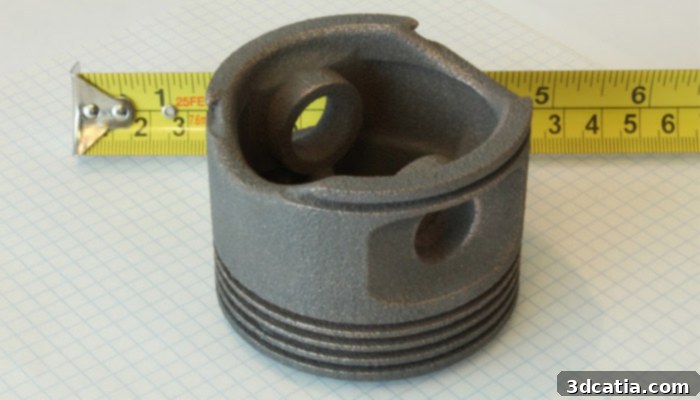
Technical Specifications and Performance Insights
Delving into the technical specifications, the iro3d printer is designed to balance capability with affordability. It offers a respectable print volume of 300 x 300 x 100 mm, which is ample for prototyping small to medium-sized components, creating custom tools, or producing end-use parts in limited runs. This build volume makes it a versatile tool for engineers, designers, and small-scale manufacturers who might otherwise be constrained by the size limitations of desktop FDM printers or the cost of larger industrial systems.
The minimum layer thickness offered by the iro3d stands at 0.3 mm. While this might be considered coarser than some high-resolution industrial metal printers, it is perfectly adequate for many functional prototypes and parts where extreme fine detail or pristine surface finish is not the primary requirement. For applications demanding higher precision, subsequent post-processing such as machining or polishing can be employed. Regarding printing time, the manufacturer estimates an average of 24 hours. Naturally, this duration is highly dependent on the complexity and size of the desired part. For many in-house prototyping needs, a 24-hour turnaround for a metal part represents a significant improvement over traditional machining or outsourcing, which can take days or weeks.
One of the notable advantages highlighted by iro3d is that its machine avoids the common issue of shrinkage often observed in other metal 3D printing solutions that rely on plastic pellets loaded with metal powder (often associated with Bound Metal Deposition or FDM-based metal printing). These systems typically require a debinding step followed by sintering, during which significant shrinkage (up to 20% or more) can occur, necessitating complex scaling and design compensation. iro3d’s method, by contrast, minimizes this, simplifying the design process.
However, it is important to note a specific characteristic related to the crucible material. When creating parts within a stainless steel crucible, the manufacturer observes a 2% distortion of the workpiece. This distortion is attributed to the horizontal thermal expansion of the stainless steel crucible during the sintering process. This subtle deformation is a factor designers must consider for applications requiring extremely tight tolerances. Interestingly, iro3d also explains that when using a ceramic crucible, this deformation was nullified. This suggests that the choice of crucible material offers a pathway to mitigate such issues, providing flexibility for users to select the optimal material based on their precision requirements.
Unlocking Affordability: Price and Material Costs
The cornerstone of iro3d’s market appeal remains its accessible pricing. To acquire this revolutionary metal 3D printer, customers can expect to pay $5,000, excluding shipping costs. This price point not only makes metal 3D printing a viable option for small and medium-sized enterprises (SMEs) but also positions it within the reach of educational institutions looking to incorporate advanced manufacturing into their curriculum, or even individual innovators and makers with ambitious projects. This drastically lower initial investment removes a significant barrier to entry that has historically stifled innovation and experimentation in metal additive manufacturing.
Beyond the initial machine cost, the operational expenses are equally attractive. Users must budget an additional $5 for 500 grams of print media. This material cost is highly competitive when compared to the specialized and often proprietary metal powders required by other metal 3D printing technologies, which can cost significantly more per kilogram. The combination of a low-cost printer and affordable consumables ensures that the total cost of ownership remains manageable, allowing for greater experimentation, faster iteration cycles, and more widespread adoption of metal additive processes.
The Future of Metal Additive Manufacturing: Impact and Outlook
The introduction of the iro3d metal 3D printer at such an aggressive price point signals a pivotal moment for the additive manufacturing industry. It has the potential to democratize metal 3D printing, much like desktop FDM printers democratized plastic prototyping years ago. By making metal part production accessible to a far broader audience, iro3d could foster a new wave of innovation, enabling rapid prototyping of functional metal components, on-demand manufacturing of specialized tools, and the creation of custom parts in fields ranging from robotics to art and design.
The company’s strategic expansion into Asia and Canada further solidifies its ambition to become a global player in affordable metal additive manufacturing. As the technology continues to evolve, with potential future compatibility for materials like aluminum and titanium, iro3d’s impact will only grow, challenging traditional manufacturing paradigms and empowering a new generation of creators and engineers to bring their metal designs to life. More information on this innovative manufacturer and its products can be found on their official website HERE.
What are your thoughts on the iro3d metal solution and its potential to reshape the industry? We invite you to share your perspective in a comment below, or engage with us on our Facebook and Twitter pages! Don’t forget to sign up for our free weekly Newsletter to receive all the latest news in 3D printing delivered straight to your inbox!