
Unveiling the Future: Top 5 Revolutionary 3D Printing Innovations This Week
Welcome to our weekly dive into the fascinating world of additive manufacturing! As industries worldwide embrace the transformative potential of 3D printing, we continue to witness groundbreaking innovations that challenge conventional production methods and redefine what’s possible. This week’s curated selection of the top five 3D printing videos showcases a diverse range of applications, from delectable plant-based food experiences to high-performance automotive components and the future of sustainable housing. Join us as we explore how leading companies and innovative startups are leveraging 3D printing to drive efficiency, foster sustainability, and create entirely new products and services. Prepare to be inspired by the ingenious ways 3D printing is shaping our future, making processes faster, more customizable, and incredibly efficient across various sectors.
Top 1: IKEA’s Culinary Innovation – 3D Printed Plant-Based Meatballs
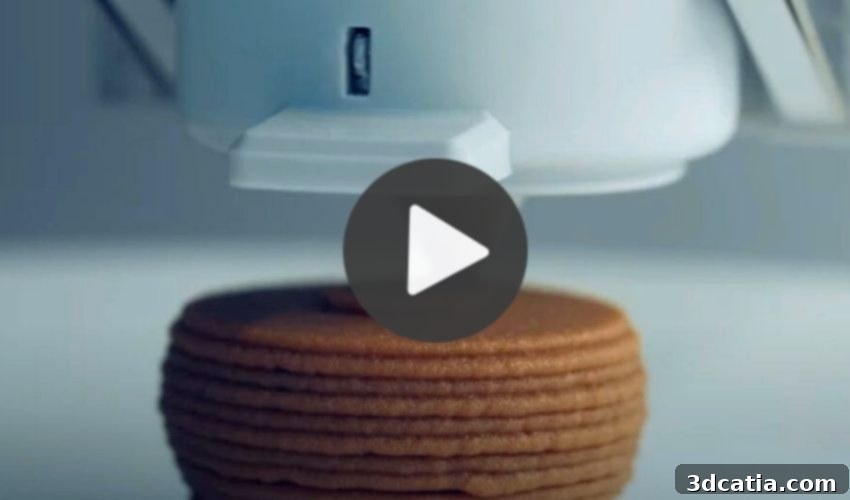
A trip to IKEA is almost synonymous with enjoying their iconic Swedish meatballs. However, the global furniture giant is now demonstrating its commitment to innovation not just in home furnishings but also in sustainable food technology. This week, IKEA unveiled a surprising and forward-thinking initiative: 3D printed, plant-based versions of their beloved meatballs. As part of a new data and technology recruitment campaign titled “Taste the Future,” select job interviewees are being offered the unique opportunity to taste-test these innovative creations. This move highlights IKEA’s dedication to exploring sustainable food alternatives and leveraging cutting-edge technology like 3D printing to achieve its environmental goals. It’s a bold step that blurs the lines between food science, sustainability, and advanced manufacturing, offering a glimpse into how future food production might evolve to meet growing global demands for plant-based and resource-efficient options. Witness the future of sustainable cuisine taking shape in the recruitment video below!
Top 2: Revolutionizing Construction with 3D Printed Modular Homes
The traditional methods of home construction, often characterized by lengthy timelines, high labor costs, and significant material waste, are on the cusp of a major transformation thanks to additive manufacturing. Cover, an innovative startup specializing in modular construction, is at the forefront of this revolution, fundamentally altering how homes are conceived and built. Cofounder and CEO Alexis Reavis posed a pivotal question: “What if houses were built like every other product in our lives?” This query sparked the inception of Cover’s modular approach, which integrates advanced manufacturing techniques, including the potential for 3D printing, to create homes with unparalleled efficiency. Modular construction inherently offers numerous advantages over conventional building practices, such as accelerated construction schedules, superior quality control achieved in factory settings, and a drastic reduction in on-site waste. By treating homes as products, Cover aims to deliver meticulously engineered, high-quality living spaces that are both sustainable and economically viable. This paradigm shift could pave the way for more accessible and eco-friendly housing solutions globally. Discover for yourself the compelling benefits and innovative process behind Cover’s vision for the future of residential construction.
Top 3: Driving Performance in Formula One with Additive Manufacturing
The automotive industry, particularly in its high-performance segments like Formula One racing, has long been an early adopter of cutting-edge manufacturing technologies. From luxury brands like BMW, Rolls-Royce, and Porsche to elite racing teams, the benefits of additive manufacturing are widely recognized and actively exploited. In a remarkable collaboration, 3D Systems, a global leader in the 3D printing sector, partnered with the Formula Electric Belgium Team to develop structural components for racing cars. This partnership highlights the critical role of additive manufacturing in pushing the boundaries of vehicle design and performance. By employing topological optimization alongside 3D printing, engineers can design parts that achieve an optimal balance between strength, stiffness, and crucial weight reduction – factors that are absolutely paramount in competitive motorsports. The ability to create complex geometries that are impossible with traditional manufacturing methods allows for innovative designs that enhance aerodynamics, improve structural integrity, and ultimately contribute to a car’s speed and efficiency on the track. This demonstrates how 3D printing provides a significant competitive advantage, enabling rapid iteration of designs and the production of highly optimized, bespoke components. Witness the fusion of advanced engineering and additive manufacturing in action.
Top 4: Markforged’s Breakthrough in Overnight Metal Part Delivery
In 2017, Markforged, a prominent 3D printer manufacturer, made waves with the introduction of the Metal X. This innovative metal 3D printing system was designed with a clear objective: to dramatically reduce manufacturing costs – by as much as 100 times – compared to conventional metal fabrication methods. Fast forward to today, and through continuous advancements in its technology, including significant software updates and the development of new tools, the American company proudly claims its ability to deliver metal parts faster than ever before. This rapid turnaround time represents a monumental leap for industries requiring quick access to functional metal components, whether for prototyping, tooling, or even small-batch production of end-use parts. Markforged has meticulously refined its entire workflow, notably improving the post-production processes with optimized washing and drying times. These enhancements collectively enable the production of high-quality metal parts with unprecedented speed and on-demand capability, effectively bridging the gap between design and physical realization in a single day. This efficiency is critical for accelerating product development cycles, reducing downtime, and fostering greater innovation across engineering and manufacturing sectors. Discover how Markforged is setting new benchmarks for speed and accessibility in metal additive manufacturing.
Top 5: The Power of Ultimaker’s Integrated 3D Printing Ecosystem
At Formnext 2021, one of the leading global events for additive manufacturing, numerous companies showcased their successful adoption of solutions offered by Ultimaker, a recognized specialist in FDM (Fused Deposition Modeling) 3D printing. Ultimaker’s distinctive strength lies not just in its high-quality printers, but in its comprehensive, integrated ecosystem. This holistic approach encompasses hardware (printers), a wide range of compatible materials, and sophisticated software solutions. By offering such a cohesive suite, the Dutch company empowers its partners to streamline and significantly improve their production processes. A prime example is their renowned Cura software, which stands out for its user-friendliness and powerful capabilities, making it equally accessible and valuable for both novice users and seasoned professionals. Ultimaker’s core mission is to democratize additive manufacturing, making it more accessible and easier to integrate into diverse workflows. The company frequently attributes its remarkable success and widespread adoption to this very ecosystem – a testament to how an integrated approach fosters innovation, reliability, and user satisfaction. This interconnected system ensures that users have all the necessary tools at their disposal, from design to final print, operating seamlessly together. Take a closer look at the intricate workings and profound impact of Ultimaker’s celebrated ecosystem in their informative video.
These top five videos offer a compelling snapshot of the current dynamism and future trajectory of 3D printing. From innovative culinary experiences and the transformation of construction to performance-driven automotive applications and highly efficient manufacturing processes, additive manufacturing continues to push boundaries across every sector. The integration of advanced materials, software, and hardware, as exemplified by Ultimaker’s ecosystem, is paving the way for even more widespread adoption and groundbreaking applications.
What are your thoughts on IKEA’s plant-based 3D printed meatballs? Would you be eager to give them a try? We’d love to hear your opinions! Share your comments below or connect with us on our LinkedIn, Facebook, and Twitter pages. For the very latest 3D printing news delivered straight to your inbox every week, don’t forget to sign up for our free weekly Newsletter here. You can also explore all our featured videos and more exclusive content on our YouTube channel. Happy watching and stay innovative!