
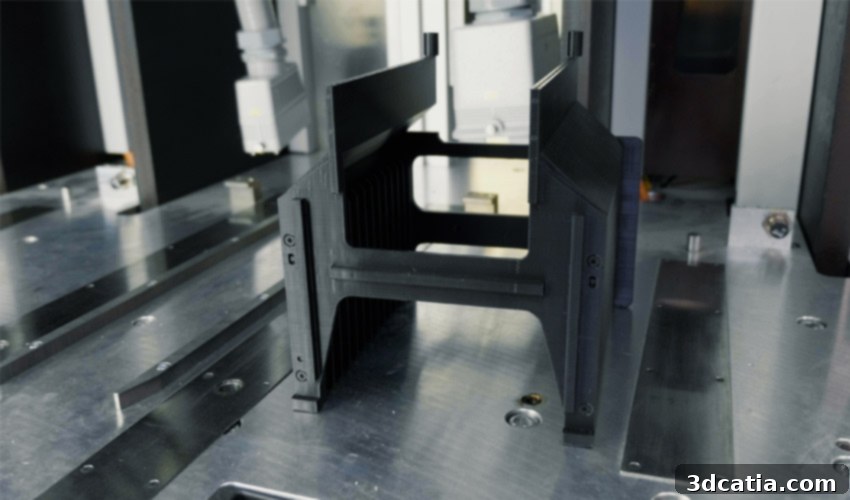
Schammer Maschinenbau Transforms Production with Industrial 3D Printing: A Strategic Partnership with IGO3D and Ultimaker S5
For over five decades, Schammer Maschinenbau GmbH, a distinguished German engineering firm, has been a cornerstone of various industries, renowned for its expertise in designing sophisticated solutions and manufacturing precision prototypes and finished components for traditional production machinery. In a strategic move to future-proof its operations and significantly accelerate production processes, Schammer has embarked on a transformative journey into additive manufacturing. This pivotal shift enables the rapid design of complex parts on demand and empowers the company with in-house tooling capabilities. To navigate the complexities of integrating advanced 3D technologies successfully, Schammer forged a crucial partnership with IGO3D, a leading German distributor recognized for its comprehensive support in additive manufacturing, expert advice, and tailored solutions.
The adoption of industrial additive manufacturing heralds a new era of unprecedented flexibility in the production workflows of forward-thinking companies. Historically leveraged for expediting prototype development, 3D printing has evolved dramatically to become an indispensable tool for fabricating intricate finished parts, high-performance tooling, and specialized jigs and fixtures. For instance, a growing number of assembly lines now seamlessly integrate 3D printed components, significantly slashing production times and facilitating the rapid iteration of bespoke tools. The ability to produce these critical parts internally mitigates reliance on external suppliers, drastically reducing lead times and minimizing operational downtime. Should a tool break, a replacement can be printed on-site, often within hours, eliminating the lengthy wait times associated with traditional procurement. This compelling advantage directly influenced Schammer’s decision to invest in 3D printing, specifically opting for Fused Deposition Modeling (FDM) technology. With the invaluable guidance and support from IGO3D, Schammer now possesses the capability to produce a diverse range of parts on demand, utilizing an array of high-performance materials.
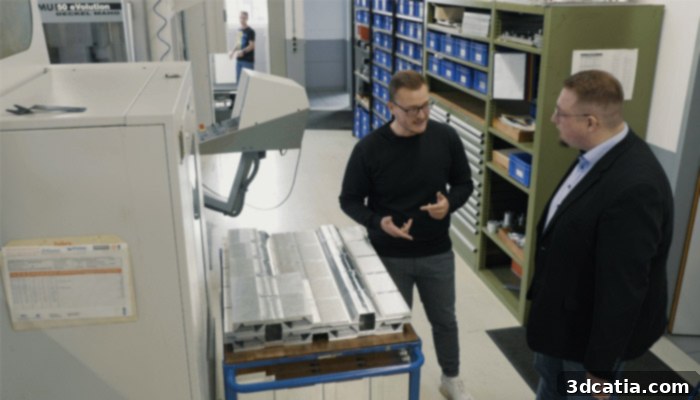
Schammer Maschinenbau GmbH is a German industrial group specialized in the manufacturing industry (photo credits: IGO3D)
Strategic Technology and Material Selection for Optimal Performance
Tobias Schammer, a distinguished mechatronics engineer at Schammer Maschinenbau, provided keen insight into the company’s strategic investment. He elaborated, “My initial exposure to 3D printing during my academic studies immediately highlighted its immense benefits in rapid prototyping, particularly in terms of significant cost savings and accelerated development cycles. Following extensive discussions with my team, we collectively recognized the strategic imperative of investing in our own additive manufacturing capabilities.” Given Schammer Maschinenbau GmbH’s unwavering commitment to exceptional service and meticulous customer consultation, the search for a technology partner extended beyond merely procuring a 3D printer. “We sought a company that not only provided cutting-edge hardware but also offered invaluable, long-term customer service, encompassing expert advice, comprehensive training, and ongoing support,” Tobias explained. After thorough market research and careful evaluation, IGO3D emerged as the ideal choice, distinguished by its outstanding distribution network, profound expertise in additive manufacturing, and robust training programs. This collaborative approach led Schammer and IGO3D to select an FDM 3D printer, specifically the highly acclaimed Ultimaker S5. According to IGO3D, the Ultimaker S5 stood out due to its remarkable ease of use, extensive material compatibility, and, crucially, its high reproducibility, ensuring consistent quality across all printed parts.
To maximize the return on this significant investment, IGO3D provided comprehensive, hands-on training to all relevant teams at Schammer. This intensive program ensured that engineers and technicians are now fully proficient in operating the Ultimaker S5 and adept at designing parts specifically optimized for additive manufacturing. Currently, the Schammer teams primarily leverage the 3D printer for a diverse range of applications, including the rapid creation of conceptual prototypes for design validation, functional prototypes subjected to rigorous testing, and the production of crucial spare parts to maintain operational continuity. The selection of the appropriate material is meticulously determined by the specific requirements of each final application. For internal developmental projects and early-stage prototyping, the company predominantly utilizes Ultimaker’s Tough PLA. This material is highly favored for its exceptional ease of printing, robust mechanical properties that exceed standard PLA, and its ability to produce parts with remarkably smooth surface finishes. For more demanding functional prototyping scenarios, where superior mechanical performance is paramount, the teams strategically opt for advanced engineering filaments such as nylon and various polyamides, known for their outstanding strength, durability, and resistance to wear.
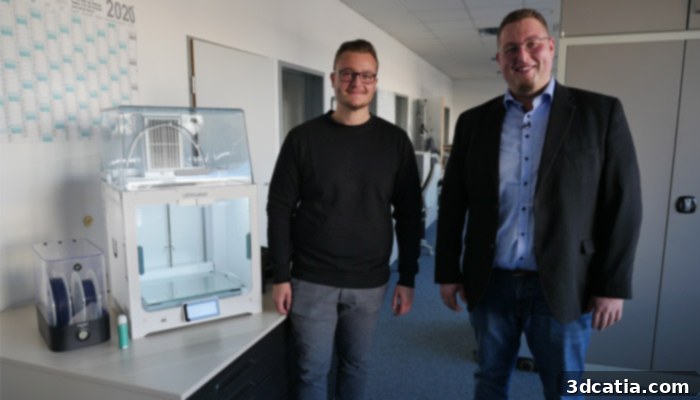
Accompanied by IGO3D, Schammer invested in an Ultimaker S5, enhancing their additive manufacturing capabilities (photo credits: IGO3D)
Looking ahead, Tobias Schammer enthusiastically articulated the company’s future aspirations: “While our current focus has been on printing highly engineered plastic parts, our heritage as a leading producer of metal components naturally leads us to explore the immense potential of metal 3D printing.” This ambitious next step signifies a significant expansion of Schammer’s additive manufacturing capabilities. To facilitate this transition, the company has already acquired BASF’s innovative 316L stainless steel filament, which is fully compatible with their existing Ultimaker S5. This strategic choice allows Schammer to experiment with FFF-based metal additive manufacturing, which combines the accessibility of FDM with the robust properties of metal. “We perceive tremendous potential in the synergistic combination of FFF technology and metal printing, anticipating groundbreaking results that will redefine our production capabilities,” Tobias affirmed, highlighting the company’s commitment to staying at the forefront of manufacturing innovation.
Compelling Advantages: Why Invest in Additive Manufacturing?
For Schammer Maschinenbau, the integration of 3D printing has delivered three primary, undeniable advantages that directly contribute to enhanced operational efficiency and competitive superiority: unparalleled ease of use, dramatically reduced lead times, and significant cost-effectiveness. The user-friendly nature of modern FDM printers like the Ultimaker S5, coupled with streamlined software and automated processes, has drastically lowered the barrier to entry, enabling a broader range of team members to utilize the technology effectively. This accessibility accelerates workflows and fosters greater innovation across departments.
The impact on lead times is profound. For highly complex components, which traditionally required several weeks of meticulous design, machining, and assembly, additive manufacturing offers a revolutionary alternative. The ability to rapidly design, iterate, and produce these parts in-house drastically compresses project timelines. This agility allows Schammer to respond to market demands with unprecedented speed, undertake more ambitious projects, and bring new solutions to market much faster than competitors relying solely on conventional methods. The strategic advantage of reducing reliance on external suppliers for critical parts cannot be overstated, mitigating supply chain risks and ensuring continuous operation.
Furthermore, the financial benefits are substantial. Schammer has observed that for intricate components, the savings derived from additive manufacturing often exceed 30 percent compared to traditional production methods. These savings stem from multiple facets, including significantly reduced material waste – a inherent benefit of additive processes compared to subtractive ones – lower labor costs associated with traditional tooling fabrication, and the elimination of external vendor markups and shipping expenses. As Tobias Schammer powerfully concluded, “As a manufacturing company, the design and development phase of a product represents the point of greatest leverage to influence its total cost. 3D printing unlocks a myriad of new optimization possibilities in these critical areas, allowing us to innovate more freely and cost-efficiently.”
Beyond the immediate operational and financial gains, Schammer also emphasizes the profound environmental benefits of additive manufacturing. Tobias noted, “I would also like to point out that 3D printing reduces waste to an absolute minimum, fundamentally because the process is generative, building layers upon layers, rather than subtractive, which typically involves removing material from a larger block.” This inherent waste reduction is a significant step towards more environmentally friendly and sustainable production practices, a commitment that holds paramount importance for Schammer Maschinenbau GmbH as it continues to evolve and lead in the modern manufacturing landscape.
Are you considering an additive manufacturing project to revolutionize your production? Do not hesitate to visit the IGO3D website to explore their extensive range of solutions and expert support! We encourage you to share your innovative projects and insights in the comments below or engage with our vibrant community on our Facebook, Twitter and LinkedIn pages! For the very latest advancements and news in the dynamic world of 3D printing, make sure to sign up for our free weekly Newsletter here, delivered directly to your inbox!