
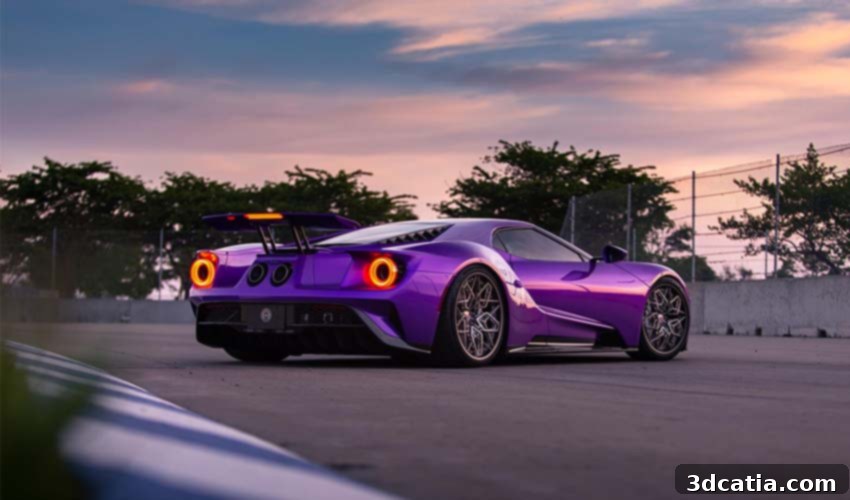
Revolutionizing Automotive Performance: The Next Generation of 3D Printed Titanium Wheels
The world of additive manufacturing continues to push the boundaries of innovation, and its profound impact on the automotive industry was once again highlighted at Rapid + TCT 2019. This premier event, a crucial gathering for professionals and enthusiasts in advanced manufacturing, served as the global stage for unveiling a groundbreaking achievement: the second generation of the HRE3D+ 3D printed titanium wheel. This engineering marvel, proudly fitted on a 2019 Ford GT, represents a monumental leap forward in wheel technology, showcasing what is possible when cutting-edge manufacturing processes meet visionary design.
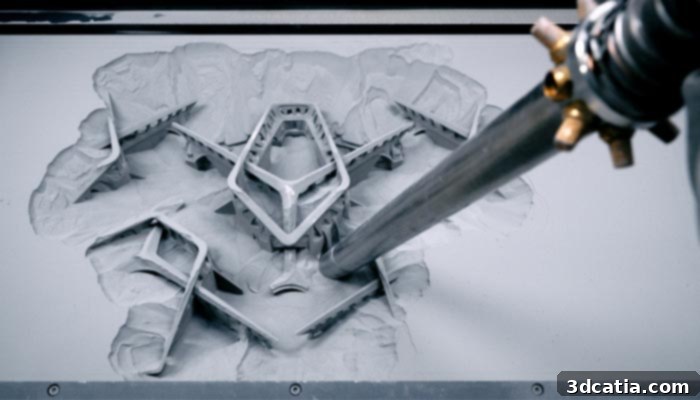
The HRE3D+ project is a testament to successful industry collaboration, born from the strategic partnership between renowned performance wheel manufacturer HRE Wheels and the additive manufacturing powerhouse, GE Additive. This alliance, first announced at Formnext 2018 with the debut of the initial HRE3D+ concept, has continuously evolved, leading to even more refined and efficient designs. The development of these advanced wheels leverages sophisticated manufacturing systems, specifically Direct Metal Laser Melting (DMLM) and Electron Beam Melting (EBM). These processes are critical for working with high-performance materials like titanium, enabling the creation of intricate structures that defy traditional manufacturing limitations.
Credits: HRE Wheels
Unlocking Unprecedented Design Freedom and Performance Gains with Additive Manufacturing
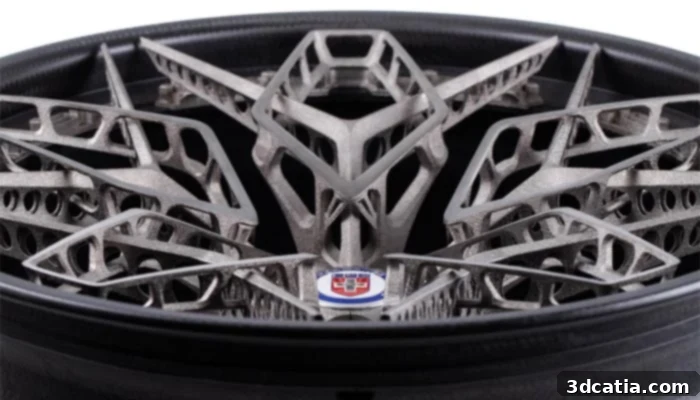
The very essence of the HRE3D+ wheel lies in its revolutionary design. Its futuristic aesthetic and incredibly complex geometry are a direct result of the capabilities inherent in additive manufacturing technologies. Such designs are simply unattainable using conventional manufacturing methods like forging or casting. Additive manufacturing, often referred to as 3D printing, allows for the layer-by-layer construction of objects directly from digital models, granting engineers unparalleled freedom to create intricate internal structures, optimize material placement, and achieve organic shapes that enhance both performance and visual appeal. This design flexibility is crucial for high-performance automotive components where every gram and every structural detail can impact the vehicle’s dynamics and aesthetics.
Beyond visual appeal, the HRE3D+ project demonstrates significant advancements in manufacturing efficiency and sustainability. One of the most compelling advantages of 3D printing, particularly with expensive and difficult-to-machine materials like titanium, is the dramatic reduction in material waste. Traditional wheel manufacturing processes can generate an enormous amount of scrap, sometimes as much as 80% of the raw material’s weight. With the HRE3D+, this waste has been drastically cut down to an astonishing 5%. This substantial reduction not only translates into significant cost savings by minimizing material expenditure but also contributes to more environmentally friendly and sustainable manufacturing practices. It highlights how additive manufacturing can be a game-changer for industries seeking to reduce their ecological footprint while simultaneously improving product quality and performance.
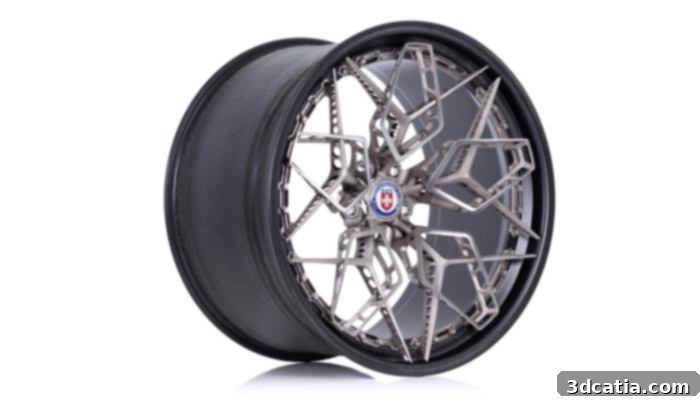
The performance benefits extend further to the critical aspect of weight reduction. For any high-performance vehicle, minimizing unsprung weight—the weight of components not supported by the suspension, such as wheels, tires, and brakes—is paramount. Lighter wheels contribute to improved handling, enhanced acceleration, shorter braking distances, and increased fuel efficiency. The first generation of the HRE3D+ wheel, while impressive, weighed approximately 9 kg (20 lbs). The second generation, however, pushes these boundaries even further. The current 20-inch HRE3D+ wheel weighs a mere 7.25 kg (16 lbs), representing a substantial 20% weight reduction. This makes it significantly lighter than traditional forged aluminum wheels of similar size, offering a tangible competitive advantage on the track and improved driving dynamics on the road. This relentless pursuit of lightness without compromising strength is a hallmark of advanced automotive engineering.
Credits: HRE Wheels
Engineering Evolution: Simplified Construction and Future Vision
Beyond weight and material efficiency, the second generation of the HRE3D+ also showcases improvements in structural simplification and manufacturing processes. The original HRE3D+ model was comprised of six individual 3D printed parts that were then assembled. Through clever redesign and optimization enabled by the sophisticated capabilities of DMLM and EBM, the middle section of the wheel was re-engineered, reducing the total number of printed components required to just five. This simplification not only streamlines the manufacturing and post-processing steps but can also contribute to increased structural integrity by reducing potential points of failure and simplifying the assembly process. It exemplifies a continuous cycle of innovation where each iteration builds upon the successes of the last, constantly seeking greater efficiency and performance.
The ambition behind these titanium wheels was eloquently articulated by HRE President and CEO Alan Peltier, who stated, “We are proud to break new ground in wheel manufacturing with the updated HRE3D+ wheels. Working with GE Additive has given us access to some really important information. We’re at the forefront of technology, and we’re exploring the future of wheel technology along with tools that will help us evolve over the next few years. We can’t wait to see what we can achieve next.” This statement underscores the strategic importance of collaborations between pioneering companies. GE Additive’s deep expertise in metal additive manufacturing processes, combined with HRE Wheels’ profound understanding of automotive performance and design, creates a synergy that drives rapid advancements. Their joint efforts are not merely about creating a single product but about laying the foundation for the future of wheel technology, impacting design methodologies, material science, and overall manufacturing paradigms.
The Broader Impact of Metal 3D Printing in the Automotive Sector
The HRE3D+ project serves as a powerful illustration of the transformative potential of metal 3D printing within the broader automotive industry. Beyond high-performance wheels, additive manufacturing is revolutionizing various aspects of vehicle production, from rapid prototyping of complex components and tooling to the creation of bespoke, highly customized parts for luxury vehicles and motorsports. The ability to produce strong, lightweight structures on demand, with minimal material waste, allows car manufacturers to innovate at an unprecedented pace. It opens doors for optimized aerodynamics, enhanced safety features through integrated designs, and unparalleled customization options for end-users, moving away from mass production towards mass personalization. This shift is particularly significant in the high-end and performance segments, where customers demand uniqueness and cutting-edge technology.
Titanium, the material of choice for the HRE3D+ wheels, plays a pivotal role in this revolution. Renowned for its exceptional strength-to-weight ratio, superior corrosion resistance, and biocompatibility, titanium is an ideal material for applications where performance, durability, and weight are critical. While it is traditionally challenging and expensive to machine, metal additive manufacturing technologies like DMLM and EBM make it feasible to produce complex titanium parts with minimal waste, unlocking its full potential for automotive and aerospace industries. These processes use powerful lasers or electron beams to selectively melt fine titanium powder, layer by layer, until the desired three-dimensional object is formed. The precise control offered by these methods ensures high material density and excellent mechanical properties, crucial for parts that endure immense stresses, such as wheels on a high-performance sports car like the Ford GT.
Credits: HRE Wheels
The successful deployment of the HRE3D+ on the iconic 2019 Ford GT is more than just a technological showcase; it’s a statement about the direction of automotive engineering. The Ford GT, itself a symbol of innovation and performance, provides the perfect platform to demonstrate the real-world advantages of additive manufacturing in extreme conditions. This project not only proves the viability of 3D printed structural components for mainstream high-performance vehicles but also inspires further research and development in materials science and manufacturing processes. It signals a future where lighter, stronger, and more efficiently produced components become the norm, enhancing vehicle performance, safety, and sustainability across the board. As the capabilities of additive manufacturing continue to expand, we can expect to see an even wider range of vehicle parts benefiting from this revolutionary approach, from engine components and chassis structures to interior elements, all contributing to a more advanced and exciting automotive landscape.
What are your thoughts on the latest version of this extraordinary 3D printed titanium wheel and its potential to reshape the automotive industry? We invite you to share your insights and comments below or join the conversation on our Facebook and Twitter pages! Don’t miss out on the cutting-edge developments in additive manufacturing; sign up for our free weekly Newsletter to get all the latest news in 3D printing delivered straight to your inbox!