
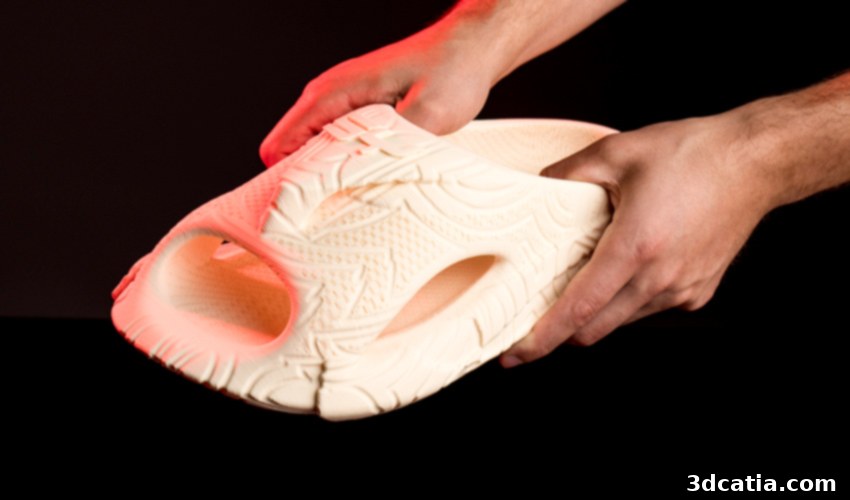
Revolutionizing Footwear: How Syntilay Unleashes Custom Design with AI and 3D Printing
The footwear industry is undergoing a transformative shift, driven by innovations that enable personalized, sustainable, and on-demand product creation. At the forefront of this evolution is the powerful combination of artificial intelligence and additive manufacturing. These technologies are democratizing access to footwear design, empowering independent creators and emerging brands to bring their unique visions to life without the traditional hurdles of large-scale manufacturing. To delve deeper into how this technological synergy is redefining the paradigm of modern footwear, we connected with the pioneering team behind the startup Syntilay.
Headquartered in Florida, Syntilay operates a groundbreaking platform where designers can conceptualize, produce, and launch distinctive shoe lines in an unprecedented timeframe—as little as three months. Ben Weiss, CEO of Syntilay, elaborated on their innovative model, explaining the vast opportunities it unlocks for digital creatives and underscoring the pivotal role 3D printing plays in shaping the future of personalized footwear.
Syntilay: Empowering Creators Through Innovation
Ben Weiss, CEO of Syntilay, introduces his company as an innovative brand dedicated to providing creators, brands, and talented individuals with the unprecedented opportunity to design and produce their own shoes. He explains that traditional footwear manufacturing has historically presented significant barriers, making it nearly impossible for independent talents to enter the market. Syntilay’s journey began with a keen interest in 3D printing, quickly recognizing its potential as the most effective method for creators to realize their bespoke footwear ideas. The inherent advantage of 3D printing lies in its moldless production process, allowing for on-demand manufacturing. This crucial capability significantly mitigates the financial risks typically associated with launching new products, offering a flexible and cost-effective pathway for innovation in footwear.
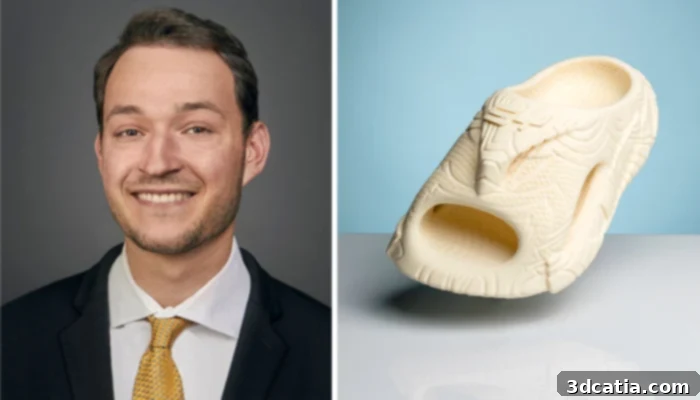
On the left, Ben Weiss, CEO of Syntilay.
The Genesis of Syntilay: Disrupting Footwear for a New Generation
Syntilay emerged from a fundamental realization: the footwear industry was ripe for disruption, especially for the digital-native generation. Ben Weiss observed a peculiar gap in the market: while YouTubers and other social media influencers successfully monetize various commercial products, shoes remained largely inaccessible to them. Unless they could secure a lucrative shoe deal with a major brand, their options were severely limited. They either had to embark on the daunting task of self-production, demanding substantial capital and expertise, or simply abandon their footwear aspirations. This glaring deficiency highlighted three significant traditional barriers to entry in the footwear sector—high costs, long lead times, and complex manufacturing processes.
Syntilay was founded to dismantle these obstacles. By streamlining the entire product development cycle, the company has dramatically reduced the time it takes to bring a new shoe from initial concept to market launch. What traditionally consumed 18 months in the industry, Syntilay now accomplishes in a mere three months. This accelerated timeline is not just about speed; it’s about enabling a new wave of creators to participate in the footwear market, fostering unprecedented levels of creativity and personal expression.
Syntilay’s Product Range: The Power of AI and 3D Printing in Action
What truly distinguishes Syntilay in the competitive footwear landscape is its revolutionary approach to the three core phases of shoe production: design, manufacturing, and distribution. Syntilay has meticulously optimized each stage to be less time-consuming and significantly more cost-effective than conventional methods. The design phase, often a laborious process, is largely automated using advanced artificial intelligence. This allows for rapid iteration and refinement of concepts, pushing the boundaries of traditional design. For manufacturing, Syntilay leverages a strategic partnership with the Zellerfeld 3D printing factory, a leader in additive manufacturing. This collaboration eliminates the need for expensive traditional molds, which are typically required for each shoe size (e.g., sizes 6, 7, 8). By bypassing mold creation, Syntilay and its partners save thousands of dollars and countless hours, making custom footwear economically viable.
The final phase, distribution, is transformed through on-demand 3D printing. Shoes are produced only when a customer places an order, eradicating the need for large inventories and reducing waste. This lean manufacturing model is not only sustainable but also highly responsive to market demands. Syntilay’s shoes are printed using high-quality TPU (thermoplastic polyurethane), a durable and flexible material. The expertise of Zellerfeld, led by Cornelius Schmitt, is crucial here; Zellerfeld has notably produced Nike’s first fully 3D-printed shoe, showcasing their advanced capabilities. Syntilay’s designs incorporate intelligent internal structures, often triangular, which are engineered to ensure both optimal comfort for the wearer and efficient printability, marrying aesthetics with functional performance.
The Synergy of AI and Additive Manufacturing
Artificial intelligence serves as the backbone of Syntilay’s design automation process. Instead of traditional hand-sketching as the primary first step, AI is employed to generate a multitude of design concepts, which are then meticulously refined for precision and feasibility. Once initial concepts are established, a human designer creates a basic sketch, which is subsequently fed into powerful AI tools like Vizcom AI to generate intricate 3D models. This collaborative process between human creativity and AI efficiency accelerates the design cycle dramatically. Furthermore, generative AI is extensively utilized to craft unique patterns and textures, adding bespoke aesthetic details to the footwear. Currently, approximately seventy percent of Syntilay’s shoe designs are produced with the assistance of AI, always under the expert supervision of a human designer to ensure quality, creativity, and brand alignment.
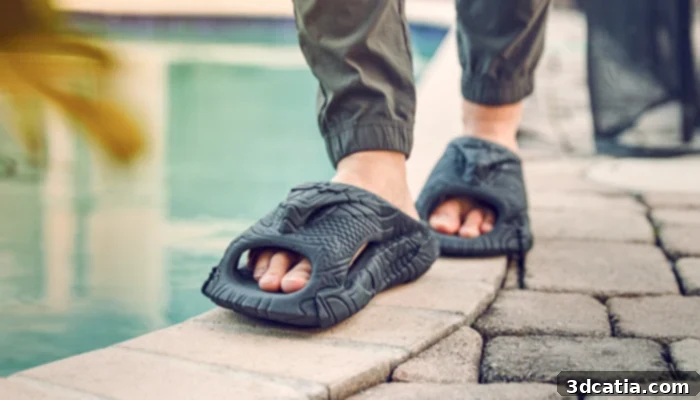
AI possesses an unparalleled ability to conceive entirely novel structures and innovative design concepts that might be beyond conventional human imagination. The most effective way to transition these complex AI-generated designs from digital abstraction to tangible reality, ensuring consumers can benefit from their uniqueness, is through the precision and flexibility of 3D printing. Syntilay’s partner factory, Zellerfeld, also leverages AI within its manufacturing processes, specifically to preempt and avoid production errors. By training sophisticated AI models on vast datasets of manufacturing parameters, Zellerfeld ensures that the 3D printing process is exceptionally smooth, reliable, and consistent, yielding high-quality results with minimal waste. This dual application of AI—in both design and manufacturing—highlights a holistic approach to innovation.
Additive Manufacturing vs. Traditional Methods: A Comparative Look
When comparing additive manufacturing to traditional footwear production methods, the advantages are compelling and transformative. Chief among them is the unparalleled speed of prototyping, which allows for rapid design iterations and swift modifications as needed. This agility drastically shortens the product development cycle, enabling quicker market entry. Moreover, 3D printing offers immense potential for design customization, allowing for truly personalized footwear that can be tailored to individual preferences and unique aesthetics, a capability virtually impossible with conventional molding techniques.
However, it is important to acknowledge the current challenges. The primary drawbacks of additive manufacturing today include a higher cost per final product unit, which can be two to three times that of shoes produced via traditional methods. Furthermore, achieving large-scale production, or scalability, remains an area of ongoing development for 3D printing. Despite these limitations, Syntilay views additive manufacturing as a vital enabler, democratizing footwear creation and empowering anyone with a design idea to bring it to fruition. For designs that achieve significant market success, Syntilay is prepared to evaluate the integration of traditional production methods to meet high demand, while simultaneously anticipating and supporting the advancements that will make 3D printing increasingly scalable and cost-competitive in the near future.
The Future Landscape: 3D Printing and Syntilay in a Decade
Looking ten years into the future, Ben Weiss envisions a dramatic shift in the manufacturing landscape. He predicts that the unit costs for 3D printed products will become highly competitive with, and in many cases, superior to traditional, localized production options globally. The inherent portability of 3D printing technology means that businesses will only require a specific number of printers strategically placed to efficiently cater to different geographical regions, fostering a more distributed and responsive manufacturing model.
Syntilay is poised to be a pivotal player in this future. The company anticipates producing AI-developed footwear that is 3D printed at an industrial scale, alongside innovative AI-designed footwear manufactured through more traditional means for mass markets. This hybrid approach will leverage the strengths of both methodologies. During this transformative period, Syntilay foresees extensive collaborations with numerous brands and independent creators, working together to bring a diverse array of original and groundbreaking designs to market, further solidifying its position as a leader in footwear innovation.
A Call to Innovate: Embracing AI and 3D Printing
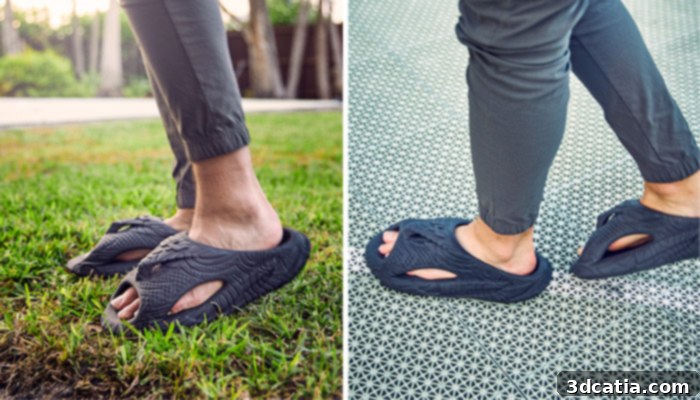
Artificial intelligence holds immense, largely untapped potential, particularly in its application to the physical world. While we’ve witnessed revolutionary software advancements, the realm of product development and tangible design is only beginning to experience its full impact. AI-designed footwear is no longer a futuristic concept; it is a present reality, and Syntilay has powerfully demonstrated how AI-generated designs can be flawlessly embodied through the precision and versatility of 3D printing. The message is clear: experiment with your own creative ideas by harnessing these two transformative methods. Explore what unique and innovative products you can build. For those eager to learn more about Syntilay’s pioneering work, additional information can be found HERE.
What are your thoughts on Syntilay’s innovative integration of AI and 3D printing to create custom shoes? We invite you to share your insights in a comment below or join the conversation on our LinkedIn, Facebook, and Twitter pages! Don’t forget to sign up for our free weekly Newsletter here to receive the latest 3D printing news directly in your inbox! You can also explore all our compelling videos on our YouTube channel.
*All Photo Credits: Syntilay