
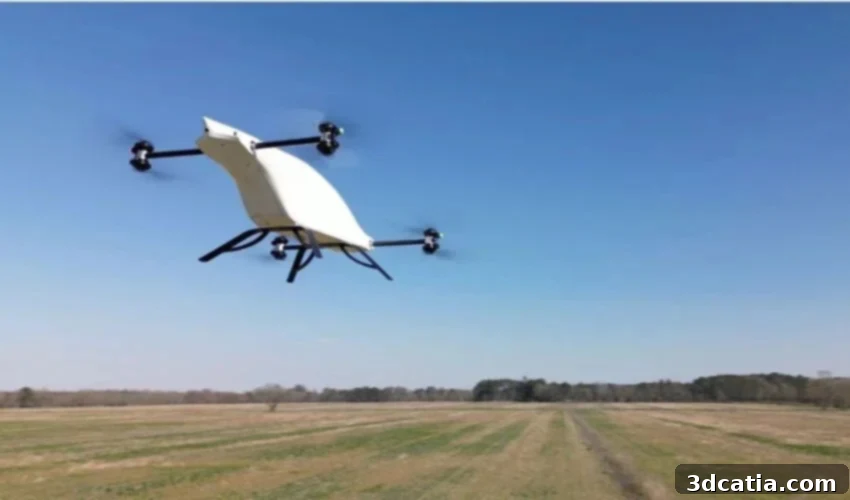
Revolutionizing Drone Logistics: Hydrogen Power and Additive Manufacturing Drive Blueflite’s Sustainable UAV Future
The landscape of logistics and transportation is on the cusp of a profound transformation, with unmanned aerial vehicles (UAVs), commonly known as drones, poised to play a decisive and increasingly vital role in the years to come. These aerial platforms promise to ensure the rapid, safe, and efficient transport of goods across diverse environments. Their utility extends far beyond mere package delivery; drones offer life-changing potential, particularly for isolated rural and remote areas. Imagine the rapid deployment of essential medicines or emergency foodstuffs to communities cut off by natural disasters or geographical barriers – drones make this a tangible reality, drastically reducing response times and improving access to critical supplies.
Beyond humanitarian applications, the advantages of drones are being harnessed across various commercial and industrial sectors. In agriculture, UAVs are revolutionizing precision farming through aerial surveillance, crop health monitoring, and targeted pesticide application, leading to increased yields and reduced waste. The mining sector benefits from drone-based inspections of vast and often hazardous sites, ensuring worker safety and optimizing operational efficiency. Recognising this burgeoning potential, numerous companies are intensely focused on making these unmanned aerial vehicles even more reliable, faster, and remarkably more efficient to meet the escalating global demand.
A significant driver behind the push for enhanced UAV capabilities is the growing requirement for long-distance flights. Conventional battery technologies, while advancing, still present limitations in terms of energy density and flight duration for extended missions. This limitation has spurred increasing interest in alternative, more powerful, and sustainable fuels, with hydrogen emerging as a frontrunner to power next-generation UAVs. Addressing this critical need, Blueflite, a pioneering Australian UAV logistics platform, has forged a strategic partnership with the Australian Northern Territory Government and Charles Darwin University (CDU). This collaborative project is dedicated to the groundbreaking development of hydrogen-based fuel storage technology specifically designed for UAVs. Crucially, this ambitious undertaking is being made possible and accelerated through the innovative application of additive manufacturing, often referred to as 3D printing.
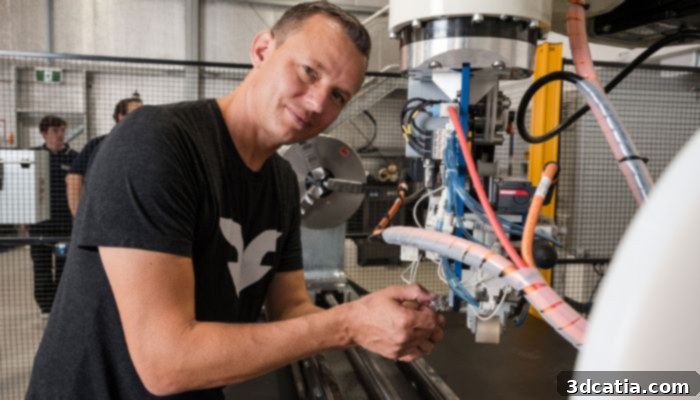
Advanced manufacturing techniques are crucial for producing the lightweight yet robust components of these next-generation hydrogen fuel systems.
Blueflite’s Strategic Position and the Expanding UAV Market
The global drone market is experiencing exponential growth, with long-range drones already accounting for nearly a quarter of its current valuation. Projections indicate that the overall drone market is expected to reach an impressive $3 billion by 2033, underscoring the immense commercial and operational opportunities in this sector. The sheer volume of drone operations further illustrates this expansion; Airservices Australia reported 1.5 million individual drone take-offs and landings in 2024 alone. This figure is forecasted to surge dramatically to approximately 60.4 million by 2043, highlighting an urgent and escalating need for robust, high-performance UAVs and highly scalable operational solutions.
The limitations of traditional power sources, particularly conventional lithium-ion batteries, become evident when considering such rapid growth and the demand for extended range. While lithium-ion batteries are widely used, their energy density and weight can significantly restrict flight duration and payload capacity for long-haul missions. This is where hydrogen fuel cells offer a transformative advantage. By integrating hydrogen fuel cells into UAV designs, it becomes possible to optimize their efficiency dramatically and extend their operational range by up to an astonishing 700% compared to equivalent battery-powered drones. This profound increase in range is not merely an incremental improvement; it fundamentally changes the capabilities and potential applications of UAVs, making previously unfeasible long-distance missions a practical reality.
UAVs have the potential to shrink distances, increase services in remote areas and decarbonise last mile transportation. In conjunction with CDU, H3 Dynamics and support from the Northern Territory Government we will establish a composite hydrogen tank manufacturing capability that does not exist in Australia and integrate it into our proven UAV platform. This strategic collaboration is key to advancing sustainable aviation solutions within the region and globally. – Frank Noppel, CEO of Blueflite
Driven by this vision, Blueflite has embarked on a pioneering project aimed at developing a scalable hydrogen fuel storage technology specifically for UAVs. A core aspect of this initiative involves the local production of advanced hydrogen tanks, which will then be seamlessly integrated into Blueflite’s innovative UAV platforms. To achieve this ambitious goal, Blueflite has strategically enlisted the invaluable support of Charles Darwin University (CDU). CDU brings to the project its profound expertise in advanced printing technologies and cutting-edge production methods for drone manufacturing. Among these sophisticated techniques is the precise placement of carbon fibers by an industrial robot, a highly advanced method known as Advanced Fiber Placement (AFP). This technology is instrumental in creating the lightweight, high-strength composite structures required for efficient hydrogen storage.
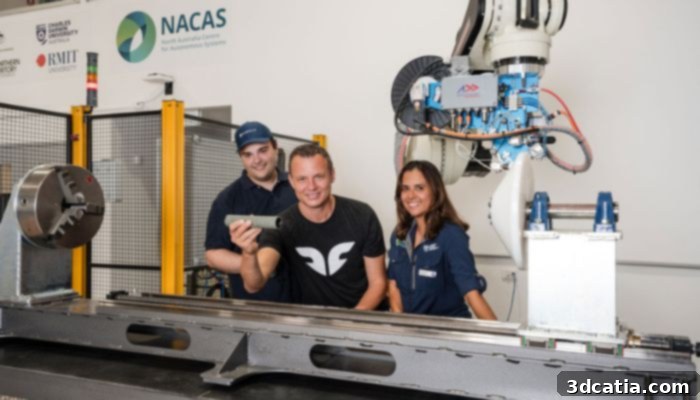
The Blueflite team collaborating with the advanced industrial robot, showcasing the cutting-edge technology behind their hydrogen-powered drone development.
The industrial robot employed in this project is truly unique, being the only one of its kind in Australia. This state-of-the-art equipment is fundamental to the successful manufacture of lightweight, yet exceptionally high-pressure-resistant, hydrogen tanks. The AFP process allows for unparalleled precision in material deposition, resulting in composite structures that offer an optimal strength-to-weight ratio, crucial for airborne applications. Furthermore, CDU’s Energy Resource Institute plays a critical role in this collaborative effort. They are actively involved in carrying out rigorous tests related to hydrogen production and the subsequent filling of the meticulously manufactured tanks, ensuring safety, efficiency, and reliability throughout the system. At a later, crucial stage of the project, Blueflite will proceed with the integration of these advanced hydrogen tanks into their proprietary UAVs, marking a significant step towards their operational deployment.
While the project is still in its nascent stages, the underlying technology and development processes are being meticulously engineered to ensure that the resulting UAVs are both safe and highly reliable for commercial and humanitarian applications. Blueflite is also demonstrating its long-term commitment to the region by establishing a new office in Darwin, further cementing its presence and investment in the Northern Territory. The company’s ambitious goals extend beyond merely developing high-performance hydrogen tanks; they aim to significantly increase sales of their innovative drone solutions and create substantial new employment opportunities within the region. Over the next five years, Blueflite anticipates generating additional revenues of approximately AUD 600,000 and, crucially, plans to hire 17 new professionals. These roles will span across engineering, manufacturing, logistics, and operational support, contributing to a vibrant, high-tech economy in Northern Australia.
This pioneering initiative highlights the transformative power of combining innovative fuel sources with advanced manufacturing techniques. The synergy between hydrogen power and additive manufacturing, particularly Advanced Fiber Placement, enables the creation of drones that are not only capable of unprecedented range but also contribute significantly to environmental sustainability. By leveraging these technologies, Blueflite and its partners are setting a new benchmark for the drone industry, paving the way for a future where long-distance, eco-friendly aerial logistics are commonplace.
“The long-term goal for Blueflite® and our partners in Darwin is to coalesce a range of skills, knowledge and capability to position the NT as a leader in sustainable aviation and manufacturing, with ripple effects across various sectors, industries and the Top End economy,” concludes Franck Noppel, CEO of Blueflite. This statement encapsulates the broader vision of the project: to establish the Northern Territory as a global hub for sustainable aviation, fostering economic growth, technological advancement, and a skilled workforce for generations to come. You can find out more about the project and Blueflite’s mission HERE.
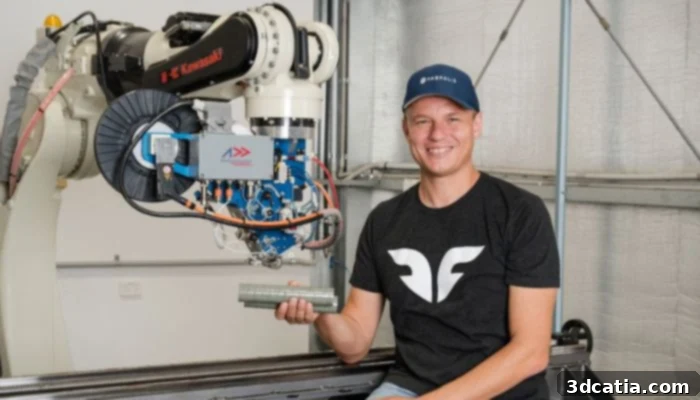
Frank Noppel, the visionary CEO of Blueflite, leading the charge in hydrogen-powered drone innovation.
What are your thoughts on the groundbreaking Blueflite project and the immense impact that advanced 3D printing and additive manufacturing techniques are having on the evolution of drone manufacturing? We invite you to share your insights and comments below, or engage with us on our social media platforms. Join the conversation on our LinkedIn, Facebook, and Twitter pages! Don’t forget to sign up for our free weekly newsletter here to receive the very latest 3D printing news and innovations delivered straight to your inbox! You can also explore all our compelling videos and in-depth content on our dedicated YouTube channel.
*All Photo Credits: Blueflite